
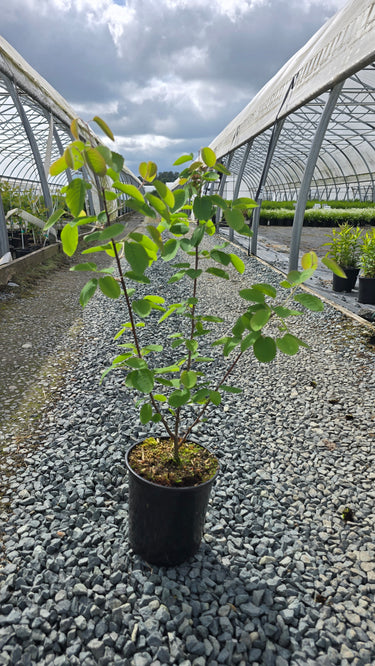

Smokey Saskatoon Berry
Canadian-bred serviceberry renowned for large, sweet edible berries alongside stunning white spring blooms and brilliant orange-red fall foliage. (Amelanchier alnifolia 'Smokey')
$27.60
/
Shipping calculated at checkout.
Amelanchier alnifolia 'Smokey' is a select cultivar of the native western serviceberry prized for its large, sweet, blueberry-like fruits, ornamental white spring blossoms, and multi-season interest. Bred in Canada, ‘Smokey’ is one of the most fruit-productive and flavorful saskatoon cultivars, ideal for edible landscaping, wildlife gardens, and native hedgerows.
In stock (347)
Payment & Security
Your payment information is processed securely. We do not store credit card details nor have access to your credit card information.
Growing Information
Growing zone guide
Growing Zone
Zone 2,
Zone 3,
Zone 4,
Zone 5,
Zone 6
Sunlight
Bright light to partial shade
Type of Soil
Slightly acidic to neutral
Mature Height
Maintenance Level
Water Requirement
Learn more about this plant
Additional Information
| Growth Rate | |
|---|---|
| Colorful Leaves | Yes |
| Flowering | |
| Bloom Color | White |
| Ornamental Berries | Blue berries |
| Disease resistant | |
| Cold Tolerant | |
| Heat Tolerant | |
| Drought Tolerant | |
| Deer Resistant | |
| Edible | |
| Wildlife Attraction | |
| Self-pollinating | Self-pollinating |
| Seasonality | |
| Ideal For | |
| Leaf Description | |
| Flower Description | |
| Pruning & Maintenance | |
| Water Needs | |
| Light Needs | |
| Harvesting | |
| Fertilizing | |
| Additional Care Tips | N/A |
| Pollination | |
| Companion Plants |
Flowering and Seasonality
Pet Friendly
Yes
Growing Zone
- Zone 2
- Zone 3
- Zone 4
- Zone 5
- Zone 6
Click to enlarge
Growing Zone

You may also like

William Baffin Explorer Rose
$51.00
/

Picobella Rosso Weigela
$45.24
/


Magical Daydream Winterberry
$51.00
/

Princess Kate Clematis
$30.96
/

