|
Growth Rate
|
Moderate growth rate.
Reaches approximately 2–3 feet tall and 3–4 feet wide at maturity.
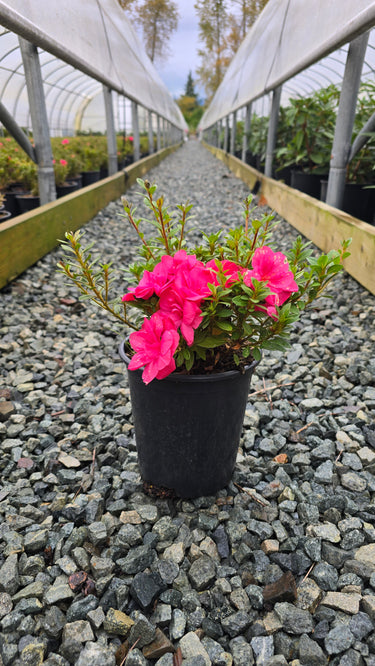
Naturally forms a dense, rounded, compact habit, ideal for small gardens or foundation plantings.
|
|
Colorful leaves
|
|
|
Flowering
|
Yes |
|
Bloom Color
|
|
|
Disease resistant
|
Yes |
|
Cold Tolerant
|
Yes |
|
Heat Tolerant
|
Yes |
|
Drought Tolerant
|
No |
|
Deer Resistant
|
Yes |
|
Edible
|
No |
|
Wildlife Attraction
|
- Attracts bees, butterflies, and hummingbirds with its continuous blooms.
Provides nectar sources throughout the growing season thanks to its reblooming nature.
Foliage is generally avoided by deer and rabbits due to mild toxicity.
|
|
Self-pollinating
|
|
|
Seasonality
|
Spring: Major bloom flush (April–May).
Summer to Fall: Repeat flowering continues intermittently through cooler months.
Winter: Evergreen foliage provides structure and contrast.
|
|
Ideal For
|
Foundation plantings, borders, woodland gardens, shaded beds, containers, and mass plantings for continuous color |
|
Leaf Description
|
Evergreen to semi-evergreen, depending on climate.
Leaves are oval, leathery, and glossy deep green, offering structure year-round.
Foliage remains dense and attractive even when not in bloom.
|
|
Flower Description
|
- Blooms are vibrant magenta-pink with subtle purple undertones, large and showy, about 2½–3 inches wide.
Flowers are funnel-shaped with a soft ruffle and slightly darker throat.
The Déjà Bloom® series is known for repeat flowering, with multiple bloom cycles—main flush in spring and continued flowering from summer into fall.
Creates a striking color contrast against its rich green foliage.
|
|
Planting Instructions
|
- Plant in spring or early fall, allowing the root system to establish before extreme heat or cold.
Choose a location with well-drained, acidic soil (pH 4.5–6.0) enriched with organic matter such as pine bark, leaf mold, or peat moss.
Dig a hole twice the width of the root ball but no deeper; position the top of the root ball slightly above ground level to prevent rot.
Backfill with a mix of native soil and compost, water thoroughly, and apply a 2–3 inch layer of mulch to retain moisture and regulate soil temperature.
Keep mulch a few inches away from the stem to avoid crown rot.
|
|
Pruning & Maintenance
|
- Light pruning can be done immediately after a major flush of blooms, usually after the spring flowering cycle.
Remove dead or damaged wood and spent flowers to maintain shape and encourage new buds.
Avoid pruning late in the season, as this can remove next year’s bloom buds.
|
|
Water Needs
|
- Keep soil consistently moist but not soggy.
Water deeply once or twice a week, depending on weather and soil drainage.
Azaleas are shallow-rooted and benefit from mulching to retain moisture and prevent root stress.
Prefer rainwater or slightly acidic water to maintain soil chemistry.
|
|
Light Needs
|
- Prefers partial sun to partial shade — morning sunlight with afternoon protection is ideal.
Can tolerate more sun in cooler regions, but in hot climates, ensure it’s shielded from harsh afternoon rays.
Too much shade may reduce repeat blooming performance.
|
|
Harvesting
|
Not grown for harvest.
May produce small, dry, non-showy seed capsules, though reproduction by seed is rare.
|
|
Fertilizing
|
- Use a slow-release, acid-forming fertilizer (for azaleas, rhododendrons, or camellias) in early spring before active growth begins.
Apply again after the first bloom cycle to support reblooming.
Avoid high-nitrogen fertilizers, which reduce flowering.
Maintain soil acidity using sulfur or iron sulfate if leaves show yellowing (chlorosis).
|
|
Pollination
|
Insect-pollinated — primarily by bees and butterflies.
As a hybrid cultivar, it is self-fertile but typically grown for ornamental flowering rather than seed production.
Flowers may produce minimal sterile seed capsules, but propagation is typically by cuttings.
|
|
Companion Plants
|
- Shrubs: Rhododendron, Pieris japonica, Leucothoe, and Ilex crenata.
Perennials: Hosta, Heuchera, Ferns, Astilbe, and Tiarella for texture and color contrast.
Groundcovers: Ajuga, Pachysandra, or Lamium to complement its compact form.
Seasonal color partners: Camellia, Hydrangea, or Japanese Maple for multi-season layering.
|