Growing Information

Growing zone guide
Growing Zone Zone 6, Zone 7, Zone 8, Zone 9
Sunlight Partial shade
Type of Soil Acidic
Mature Height 2 to 3 ft.
Maintenance Level Low maintenance
Water Requirement High water needs (twice a week)

Learn more about this plant

Additional Information
Growth Rate

Moderate growth rate.


Reaches approximately 2–3 feet tall and 3–4 feet wide at maturity.


Naturally forms a dense, rounded, compact habit, ideal for small gardens or foundation plantings.

Colorful Leaves No
Flowering Yes
Bloom Color Pink
Ornamental Berries N/A
Disease resistant Yes
Cold Tolerant Yes
Heat Tolerant Yes
Drought Tolerant No
Deer Resistant Yes
Edible No
Wildlife Attraction
  • Attracts bees, butterflies, and hummingbirds with its continuous blooms.

  • Provides nectar sources throughout the growing season thanks to its reblooming nature.

  • Foliage is generally avoided by deer and rabbits due to mild toxicity.

Self-pollinating Self-pollinating
Seasonality

Spring: Major bloom flush (April–May).


Summer to Fall: Repeat flowering continues intermittently through cooler months.


Winter: Evergreen foliage provides structure and contrast.

Ideal For

Foundation plantings, borders, woodland gardens, shaded beds, containers, and mass plantings for continuous color

Leaf Description

Evergreen to semi-evergreen, depending on climate.


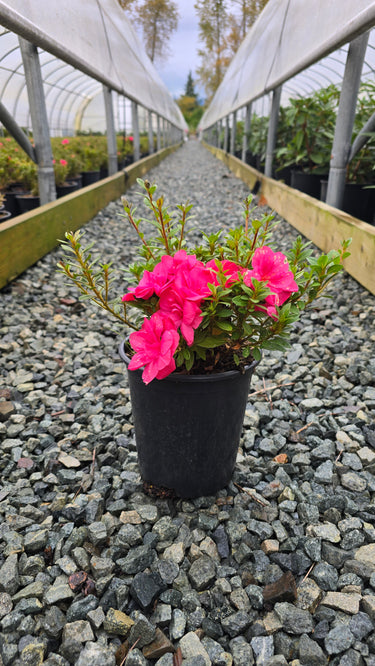
Leaves are oval, leathery, and glossy deep green, offering structure year-round.


Foliage remains dense and attractive even when not in bloom.

Flower Description
  • Blooms are vibrant magenta-pink with subtle purple undertones, large and showy, about 2½–3 inches wide.

  • Flowers are funnel-shaped with a soft ruffle and slightly darker throat.

  • The Déjà Bloom® series is known for repeat flowering, with multiple bloom cycles—main flush in spring and continued flowering from summer into fall.

  • Creates a striking color contrast against its rich green foliage.
Pruning & Maintenance
  • Light pruning can be done immediately after a major flush of blooms, usually after the spring flowering cycle.

  • Remove dead or damaged wood and spent flowers to maintain shape and encourage new buds.

  • Avoid pruning late in the season, as this can remove next year’s bloom buds.
Water Needs
  • Keep soil consistently moist but not soggy.

  • Water deeply once or twice a week, depending on weather and soil drainage.

  • Azaleas are shallow-rooted and benefit from mulching to retain moisture and prevent root stress.

  • Prefer rainwater or slightly acidic water to maintain soil chemistry.
Light Needs
  • Prefers partial sun to partial shade — morning sunlight with afternoon protection is ideal.

  • Can tolerate more sun in cooler regions, but in hot climates, ensure it’s shielded from harsh afternoon rays.

  • Too much shade may reduce repeat blooming performance.
Harvesting

Not grown for harvest.


May produce small, dry, non-showy seed capsules, though reproduction by seed is rare.

Fertilizing
  • Use a slow-release, acid-forming fertilizer (for azaleas, rhododendrons, or camellias) in early spring before active growth begins.

  • Apply again after the first bloom cycle to support reblooming.

  • Avoid high-nitrogen fertilizers, which reduce flowering.

  • Maintain soil acidity using sulfur or iron sulfate if leaves show yellowing (chlorosis).
Additional Care Tips N/A
Pollination

Insect-pollinated — primarily by bees and butterflies.


As a hybrid cultivar, it is self-fertile but typically grown for ornamental flowering rather than seed production.


Flowers may produce minimal sterile seed capsules, but propagation is typically by cuttings.

Companion Plants
  • Shrubs: Rhododendron, Pieris japonica, Leucothoe, and Ilex crenata.

  • Perennials: Hosta, Heuchera, Ferns, Astilbe, and Tiarella for texture and color contrast.

  • Groundcovers: Ajuga, Pachysandra, or Lamium to complement its compact form.

  • Seasonal color partners: Camellia, Hydrangea, or Japanese Maple for multi-season layering.
Flowering and Seasonality

Spring: Major bloom flush (April–May).


Summer to Fall: Repeat flowering continues intermittently through cooler months.


Winter: Evergreen foliage provides structure and contrast.

  • Blooms are vibrant magenta-pink with subtle purple undertones, large and showy, about 2½–3 inches wide.

  • Flowers are funnel-shaped with a soft ruffle and slightly darker throat.

  • The Déjà Bloom® series is known for repeat flowering, with multiple bloom cycles—main flush in spring and continued flowering from summer into fall.

  • Creates a striking color contrast against its rich green foliage.
Pet Friendly

No

Growing Zone
  • Zone 6
  • Zone 7
  • Zone 8
  • Zone 9

Click to enlarge