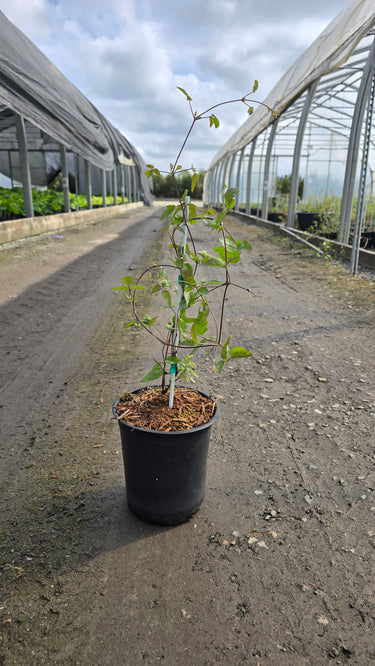
Growing Information

Growing zone guide
Growing Zone Zone 6, Zone 7, Zone 8, Zone 9
Sunlight Bright light to partial shade
Type of Soil Alkaline to neutral
Mature Height 6 to 8 ft.
Maintenance Level Moderate maintenance
Water Requirement High water needs (twice a week)

Learn more about this plant

Additional Information
Growth Rate
  • Moderate to fast growth once established

  • Climbs 6–8 feet tall (1.8–2.5 m) in one season

  • Twining stems cling best to supports thinner than 1 inch in diameter

Colorful Leaves No
Flowering Yes
Bloom Color White
Ornamental Berries N/A
Disease resistant No
Cold Tolerant Yes
Heat Tolerant No
Drought Tolerant No
Deer Resistant No
Edible No
Wildlife Attraction

Attracts bees and pollinators to its open, showy flowers


Provides light cover for small birds in trellised plantings

Self-pollinating Cross-pollinating
Seasonality

Spring: foliage emerges, vine begins climbing


Summer: peak bloom in mid to late summer with repeat flowering into early fall


Fall: flowering continues until frost; top growth declines thereafter


Winter: completely dormant, stems cut back

Ideal For

– Climbing over trellises, arbors, pergolas, and fences – Bright focal point in mixed borders – Container gardening with proper support – Elegant pairing with climbing roses or dark-foliaged companions


Leaf Description

Medium green, divided leaves arranged opposite on stems


Deciduous, dying back in winter and re-emerging in spring

Flower Description

Distinctive, semi-double to fully double pure white blooms with ruffled petals, sometimes showing green veining near the center


Flowers measure 3–4 inches across and appear in midsummer through early fall


Striking, layered form creates a frilly, luminous effect that stands out in borders and containers

Pruning & Maintenance

Belongs to Clematis Group 3 (late-flowering, hard-prune type)


In early spring, cut back all stems to 12–18 inches above ground, just above a healthy pair of buds


Prune after flowering only to tidy if needed during the season


Regular pruning encourages vigorous new growth and abundant blooms

Water Needs

Needs consistently moist but well-drained soil


Water deeply once or twice weekly, especially during hot, dry periods


Avoid waterlogging which can cause root rot

Light Needs
  • Full sun to partial shade is best; requires at least 6 hours of sun for optimal flowering

  • Afternoon shade is helpful in hot climates to protect flowers from fading

  • Base/root zone should be shaded and kept cool

Harvesting

Flowers can be cut for arrangements, best harvested when half open


Vase life is short to moderate; typically 4–6 days


Not generally grown for cutting, but its blooms add elegance to fresh displays

Fertilizing

Apply a balanced, slow-release fertilizer in early spring when growth begins


Supplement monthly during the growing season with a liquid feed high in potassium (e.g., tomato fertilizer) to encourage flowering


Top-dress with compost or well-rotted manure in spring for steady nutrition

Additional Care Tips N/A
Pollination

Pollinated by bees and other insects; flowers are fertile but ornamental value is primary


Seed heads may form but are not reliable for propagation; clematis are usually propagated by cuttings or grafting

Companion Plants

Shallow-rooted, shade-providing perennials such as Hosta, Heuchera, Lamium, Geranium, or low grasses to keep roots cool


Other flowering vines like climbing roses make excellent companions on the same trellis for extended bloom


Works beautifully over arches, pergolas, fences, obelisks, or as a flowering accent in large containers

Flowering and Seasonality

Spring: foliage emerges, vine begins climbing


Summer: peak bloom in mid to late summer with repeat flowering into early fall


Fall: flowering continues until frost; top growth declines thereafter


Winter: completely dormant, stems cut back

Distinctive, semi-double to fully double pure white blooms with ruffled petals, sometimes showing green veining near the center


Flowers measure 3–4 inches across and appear in midsummer through early fall


Striking, layered form creates a frilly, luminous effect that stands out in borders and containers

Pet Friendly

No

Growing Zone
  • Zone 6
  • Zone 7
  • Zone 8
  • Zone 9

Click to enlarge