Growing Information

Growing zone guide
Growing Zone Zone 6, Zone 7, Zone 8, Zone 9
Sunlight Bright light to partial shade
Type of Soil Neutral to alkaline
Mature Height 8 to 12 ft.
Maintenance Level Moderate maintenance
Water Requirement High water needs (twice a week)

Learn more about this plant

Additional Information
Growth Rate

Moderate to fast-growing climber once established


Typically reaches 8–12 feet tall (2.5–3.5 m) with support


Produces numerous twining stems that climb quickly over structures

Colorful Leaves No
Flowering Yes
Bloom Color White , Purple & Lavender
Ornamental Berries N/A
Disease resistant No
Cold Tolerant Yes
Heat Tolerant No
Drought Tolerant No
Deer Resistant No
Edible No
Wildlife Attraction

Attracts bees, butterflies, and other beneficial insects with its open flowers


Provides vertical cover for birds when grown on trellises or fences

Self-pollinating Cross-pollinating
Seasonality

Spring: new shoots emerge and begin climbing


Summer: prolific flowering begins midseason


Fall: continues blooming until early autumn, then growth slows


Winter: dormant; prune back hard in early spring

Ideal For

– Vertical accent on trellises, pergolas, arbors, and fences – Pairing with climbing roses – Adding exotic color to cottage gardens – Containers with proper support – Contrasting against dark foliage or evergreens

Leaf Description

Deciduous foliage with medium to dark green, ovate to lanceolate leaflets


Leaves form a fresh, contrasting backdrop to the striking flowers

Flower Description

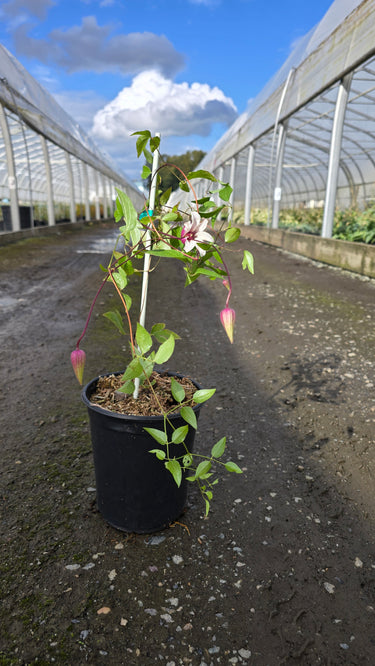
Unique tulip-shaped flowers, white on the inside with striking purple-pink outer petals


Each bloom is about 2–3 inches long, held upright or slightly nodding on wiry stems


Blooms profusely from midsummer into early fall


Flowers stand out for their unusual bicolor, bell-like form, unlike most flat-petaled clematis

Pruning & Maintenance

Falls into Clematis Group 3 (late-flowering type)


In early spring, cut stems back to 12–18 inches above the ground, just above healthy buds


After flowering, light pruning may be done to shape or tidy the plant


Hard pruning annually encourages strong new growth and abundant flowering

Water Needs

Requires evenly moist but well-drained soil; do not allow soil to dry completely


Water deeply once or twice a week during hot and dry spells


Mulching helps conserve soil moisture and keep roots cool

Light Needs

Full sun to part shade; prefers at least 6 hours of direct sun daily


In hot climates, afternoon shade helps protect flowers and foliage from stress


Roots prefer to remain shaded, while the vine top flourishes in ligh

Harvesting

Flowers may be cut for fresh arrangements; harvest when flowers are just opening


Blooms last moderately well in vases but are best appreciated on the plant


Not generally grown as a cut flower crop

Fertilizing

Apply a balanced slow-release fertilizer in early spring when new shoots appear


Supplement monthly during summer with a potassium-rich liquid fertilizer (tomato-type feed) for optimal flowering


Top-dress annually with compost or aged manure to improve soil fertility and structure

Additional Care Tips N/A
Pollination

Pollinated primarily by bees and insects


Flowers are fertile but seed production is not reliable and not ornamental


Grown for its flowers, not fruit

Companion Plants

Pair with climbing roses for a striking vertical combination


Underplant with Hostas, Geraniums, Heucheras, or other shallow-rooted groundcovers to shade roots


Combines well with other clematis varieties of complementary color for layered seasonal bloom


Works beautifully in cottage gardens, mixed borders, or near dark-foliaged shrubs to enhance flower contrast

Flowering and Seasonality

Spring: new shoots emerge and begin climbing


Summer: prolific flowering begins midseason


Fall: continues blooming until early autumn, then growth slows


Winter: dormant; prune back hard in early spring

Unique tulip-shaped flowers, white on the inside with striking purple-pink outer petals


Each bloom is about 2–3 inches long, held upright or slightly nodding on wiry stems


Blooms profusely from midsummer into early fall


Flowers stand out for their unusual bicolor, bell-like form, unlike most flat-petaled clematis

Pet Friendly

No

Growing Zone
  • Zone 6
  • Zone 7
  • Zone 8
  • Zone 9

Click to enlarge