
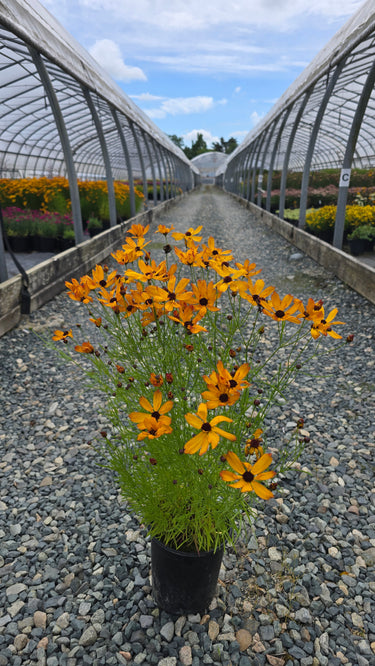

Sweet Tart Coreopsis
Bicoloured raspberry-pink and yellow daisies flower from late spring through frost on thread-leaf foliage — an incredibly long-blooming, drought-tolerant perennial for sunny borders. (Coreopsis PermaThread Sweet Tart)
Coreopsis PermaThread™ 'Sweet Tart' is a vibrant, long-blooming perennial known for its dynamic flower coloration and finely textured foliage. This cultivar produces masses of single, raspberry pink flowers that lighten toward the yellow centers, creating a striking contrast against its bright green, thread-like leaves. The plant maintains a compact, uniform habit, reaching approximately 15–18 inches in height and spread, making it ideal for borders, mass plantings, or container gardens. 'Sweet Tart' thrives in full sun and well-drained soils, exhibiting excellent drought tolerance once established. Its extended blooming period from early summer to frost, coupled with its attractiveness to pollinators and resistance to deer and rabbits, makes it a valuable addition to various garden settings.
Your payment information is processed securely. We do not store credit card details nor have access to your credit card information.
Growing Information
Growing zone guideLearn more about this plant
Additional Information
| Growth Rate | |
|---|---|
| Colorful Leaves | No |
| Flowering | |
| Bloom Color | Pink |
| Ornamental Berries | N/A |
| Disease resistant | |
| Cold Tolerant | |
| Heat Tolerant | |
| Drought Tolerant | |
| Deer Resistant | |
| Edible | |
| Wildlife Attraction | |
| Self-pollinating | Cross-pollinating |
| Seasonality | |
| Ideal For | |
| Leaf Description | |
| Flower Description | |
| Pruning & Maintenance | |
| Water Needs | |
| Light Needs | |
| Harvesting | |
| Fertilizing | |
| Additional Care Tips | N/A |
| Pollination | |
| Companion Plants |
Flowering and Seasonality
Pet Friendly
Yes
Growing Zone
- Zone 4
- Zone 5
- Zone 6
- Zone 7
- Zone 8
- Zone 9
Click to enlarge
Growing Zone

You may also like


