Growing Information

Growing zone guide
Growing Zone Zone 3, Zone 4, Zone 5, Zone 6, Zone 7
Sunlight Bright light
Type of Soil Alkaline to neutral
Mature Height 3 to 5 ft.
Maintenance Level High maintenance
Water Requirement High water needs (twice a week)

Learn more about this plant

Additional Information
Growth Rate

Moderate to fast once established; forms strong clumps with thick, upright flowering stems in the second season.

Colorful Leaves No
Flowering Yes
Bloom Color Blue , Purple & Lavender, Pink , White
Ornamental Berries N/A
Disease resistant No
Cold Tolerant Yes
Heat Tolerant No
Drought Tolerant No
Deer Resistant Yes
Edible No
Wildlife Attraction

Attracts bumblebees and other pollinators; generally avoided by deer and rabbits due to natural toxicity.

Self-pollinating Cross-pollinating
Seasonality

Main bloom late spring to early summer; dependable late-summer rebloom with prompt deadheading and light feeding.


Winter dormant; hardy and long-lived with good crown care and drainage.

Ideal For

– Cottage gardens, mixed perennial borders, cutting gardens, backdrop plantings, and showy focal displays. Excellent for floral arrangements and pollinator gardens.

Leaf Description

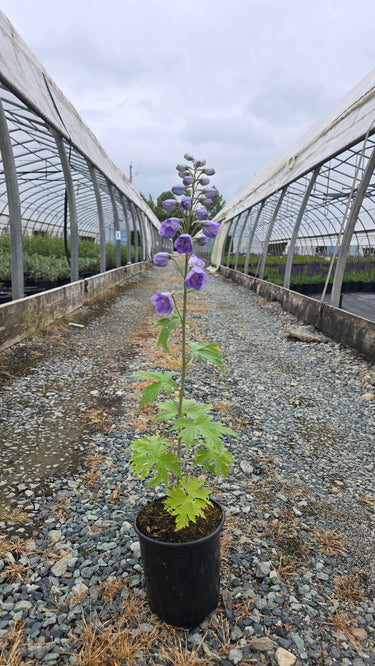
Deeply lobed, palmate leaves; medium to dark green; forms a handsome, bushy base that sets off the tall, architectural spikes.

Flower Description

Tall, densely packed racemes with large, semi-double to fully double florets.


The ‘Super Stars’ mix covers luminous blues, indigos, purples, lilacs, pinks, and whites; many blooms feature a contrasting “bee” (eye) in white or black.


Stems are thicker than older strains, giving better garden performance and cutting quality.

Pruning & Maintenance

After the first flush, cut spent spikes down to the first strong basal leaves to encourage a late-summer rebloom.


Remove weak side shoots early to channel energy into primary spikes if you want show bench-worthy stems.


In late fall after frost blackens foliage, cut stems to just above ground level and re-mulch lightly for winter.

Water Needs

Keep evenly moist—about 1–1.5 in (2.5–4 cm) of water per week, more during heat waves.


Water deeply at the base; avoid overhead watering to reduce mildew and foliar disease.

Light Needs

Full sun is ideal (6+ hours). In hotter summer regions, provide light afternoon shade to prevent stress and prolong bloom.

Harvesting

Cut when the lower 1/3 to 1/2 of florets are open; strip lower leaves.


Sear cut ends briefly in hot water or lightly flame to improve vase life; use clean water and preservative.


Typical vase life 5–8 days depending on harvest stage and conditioning.

Fertilizing

Heavy feeder: apply a balanced fertilizer in early spring (e.g., 10-10-10), then side-dress with compost or a low-nitrogen bloom booster after the first bloom to fuel rebloom.


Avoid excessive nitrogen, which can cause floppy growth; ensure adequate potassium for sturdy stems.

Additional Care Tips N/A
Pollination

Nectar-rich spurred florets are primarily visited by bumblebees and other long-tongued bees; occasional hummingbird visits occur.


Not grown for fruit set; seed can form if flowers are not deadheaded, but colors may not come true from seed in a mixed strain.

Companion Plants

Peony, rose (shrub or hybrid tea), Campanula, Shasta daisy (Leucanthemum), Phlox paniculata, Salvia nemorosa, Nepeta, Digitalis, Veronica, lilies, and fine grasses like Festuca ‘Beyond Blue’—all emphasize vertical spikes and fill the base, while sharing similar cultural needs.

Flowering and Seasonality

Main bloom late spring to early summer; dependable late-summer rebloom with prompt deadheading and light feeding.


Winter dormant; hardy and long-lived with good crown care and drainage.

Tall, densely packed racemes with large, semi-double to fully double florets.


The ‘Super Stars’ mix covers luminous blues, indigos, purples, lilacs, pinks, and whites; many blooms feature a contrasting “bee” (eye) in white or black.


Stems are thicker than older strains, giving better garden performance and cutting quality.

Pet Friendly

No

Growing Zone
  • Zone 3
  • Zone 4
  • Zone 5
  • Zone 6
  • Zone 7

Click to enlarge