
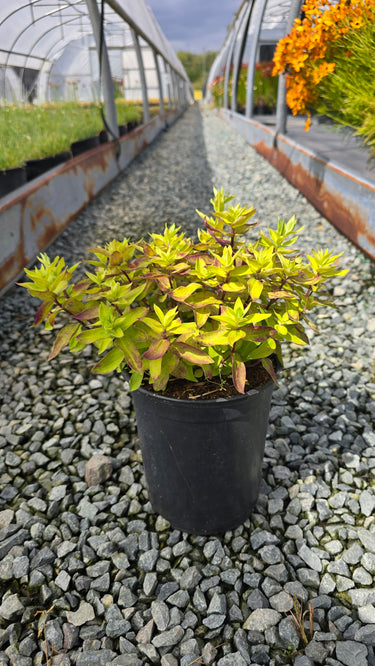

Little Pinkie Gentian
Compact mounding gentian with vivid pink trumpet flowers in late summer and fall — a rare and precious colour in the garden when few other perennials are in bloom. (Gentiana hybrid Little Pinkie)
– Gentiana 'Little Pinkie®' is a compact, cushion-forming perennial known for its profusion of vibrant pink, trumpet-shaped flowers that bloom from summer into fall.
– Developed by breeder Edmond R. Morgan, this cultivar is well-suited for rock gardens, containers, and border fronts.
– It thrives in full sun to partial shade and prefers humus-rich, moist but well-drained soils.
– Hardy in USDA Zones 5a–8, 'Little Pinkie®' is also attractive to pollinators, making it a valuable addition to pollinator-friendly gardens.
Your payment information is processed securely. We do not store credit card details nor have access to your credit card information.
Growing Information
Growing zone guideLearn more about this plant
Additional Information
| Growth Rate | |
|---|---|
| Colorful Leaves | No |
| Flowering | |
| Bloom Color | Pink |
| Ornamental Berries | N/A |
| Disease resistant | |
| Cold Tolerant | |
| Heat Tolerant | |
| Drought Tolerant | |
| Deer Resistant | |
| Edible | |
| Wildlife Attraction | |
| Self-pollinating | Cross-pollinating |
| Seasonality | |
| Ideal For | |
| Leaf Description | |
| Flower Description | |
| Pruning & Maintenance | |
| Water Needs | |
| Light Needs | |
| Harvesting | |
| Fertilizing | |
| Additional Care Tips | N/A |
| Pollination | |
| Companion Plants |
Flowering and Seasonality
Pet Friendly
Yes
Growing Zone
- Zone 4
- Zone 5
- Zone 6
- Zone 7
- Zone 8
Click to enlarge
Growing Zone

You may also like


