Growing Information

Growing Zone Zone 3, Zone 4, Zone 5, Zone 6, Zone 7, Zone 8, Zone 9,
Sunlight Partial shade to full shade,
Type of Soil Slightly acidic to neutral,
Mature Height 18 inches
Maintenance Level Low maintenance
Water Requirement Moderate watering (once a week)

Learn more about this plant

Additional Information
Growth Rate

– Moderate

– Reaches mature size in 2–3 years

– Mature height: 14–18 inches

– Mature spread: 24–30 inches

– Forms a dense, rounded mound

Colorful Leaves Yes
Flowering Yes
Bloom Colour Purple & Lavender
Ornamental Berries N/A
Disease resistant Yes
Cold Tolerant Yes
Heat Tolerant No
Drought Tolerant No
Deer Resistant No
Edible No
Wildlife Attraction

– Flowers attract bees and other pollinators

– Foliage is susceptible to slugs and deer without protection

Self-pollinating Cross-pollinating
Seasonality

– Emerges in mid-spring

– Provides vibrant blue foliage from spring through fall

– Blooms mid to late summer

– Dormant in winter; foliage dies back completely after frost

Ideal For

– Blue-themed gardens
– Shady borders
– Contrast with yellow-leaved hostas
– Containers and woodland gardens

Leaf Description

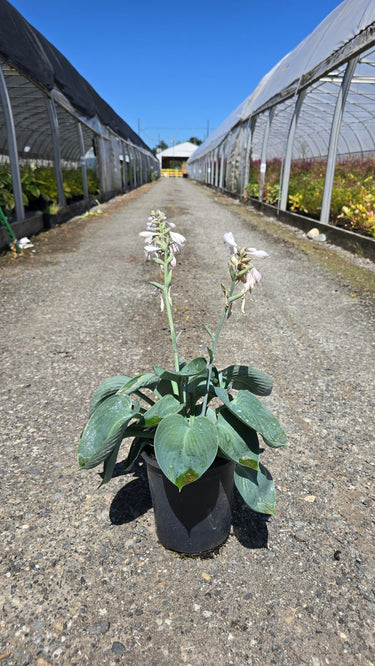
– Intensely blue, heart-shaped leaves with a powdery glaucous coating

– Thick, seersucker-textured surface enhances shade garden texture

– Foliage holds its blue color well in shaded conditions

– Leaves maintain a crisp, compact habit through the season

Flower Description

– Pale lavender to white bell-shaped flowers

– Appear in midsummer on slender, upright scapes (24–30 inches tall)

– Subtle and airy, providing seasonal contrast above the foliage

Planting Instructions

– Plant in spring or fall in a location sheltered from intense afternoon sun

– Choose soil that is moist, well-draining, and rich in organic matter

– Plant crown level with the soil surface and firm in gently

– Space plants 24–30 inches apart to allow for mature spread

– Mulch with compost or shredded bark to conserve moisture and protect roots

Pruning & Maintenance

– Remove any damaged or yellowing leaves during the season

– Cut back entire clump to ground level after the first frost in fall

– Deadhead flower scapes after blooming unless collecting seed

Water Needs

– Requires consistently moist soil; do not allow to dry out

– Water deeply 1–2 times per week during dry spells

– Mulch to conserve soil moisture and prevent root stress

Light Needs

– Prefers partial to full shade

– Tolerates some morning sun, which may enhance blue leaf tones

– Avoid direct afternoon sun, which can fade the glaucous leaf coating

Harvesting

– Can be divided in spring or fall for propagation

– Flowers may be cut for small arrangements but are not the main feature

Fertilizing

– Apply balanced slow-release fertilizer in early spring

– Supplement with organic compost or leaf mold to enrich soil

– Avoid excess nitrogen which can diminish blue leaf color

Additional Care Tips N/A
Pollination

– Pollinated by bees; flowers attract a range of pollinators

– May produce seed pods, though 'Hadspen Blue' is primarily propagated by division

– Not typically used for breeding due to its foliage-focused appeal

Companion Plants

– Brunnera for similar leaf color and spring flowers

– Pulmonaria for speckled foliage and early blooms

– Astilbe for vertical texture and bright flower spikes

– Tiarella for low-growing, dense ground coverage

– Ferns for layered texture and natural woodland combinations

Flowering and Seasonality

– Emerges in mid-spring

– Provides vibrant blue foliage from spring through fall

– Blooms mid to late summer

– Dormant in winter; foliage dies back completely after frost

– Pale lavender to white bell-shaped flowers

– Appear in midsummer on slender, upright scapes (24–30 inches tall)

– Subtle and airy, providing seasonal contrast above the foliage

Planting Instructions

– Plant in spring or fall in a location sheltered from intense afternoon sun

– Choose soil that is moist, well-draining, and rich in organic matter

– Plant crown level with the soil surface and firm in gently

– Space plants 24–30 inches apart to allow for mature spread

– Mulch with compost or shredded bark to conserve moisture and protect roots

Care Tips