Growing Information

Growing zone guide
Growing Zone Zone 5, Zone 6, Zone 7, Zone 8, Zone 9
Sunlight Bright light to partial shade
Type of Soil Slightly acidic to neutral
Mature Height 3 to 4 ft.
Maintenance Level Low maintenance
Water Requirement Moderate watering (once a week)

Learn more about this plant

Additional Information
Growth Rate

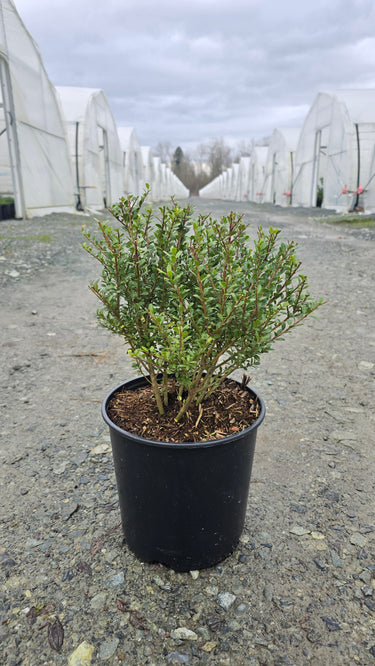
Slow to moderate, maintaining a compact, mounding shape.


Mature size: approximately 3–4 feet tall and 3–4 feet wide.


Naturally dense growth makes it ideal for low hedges or formal borders.

Colorful Leaves No
Flowering Yes
Bloom Color White
Ornamental Berries N/A
Disease resistant Yes
Cold Tolerant Yes
Heat Tolerant Yes
Drought Tolerant No
Deer Resistant Yes
Edible No
Wildlife Attraction

Bees and beneficial insects visit the small flowers.


Provides cover for small birds and wildlife due to its dense structure.

Self-pollinating N/A
Seasonality

Evergreen year-round, offering consistent color and structure in all seasons.


Flowers in late spring; foliage remains lush through winter.

Ideal For

– Low hedges, borders, foundation plantings, containers, and formal garden edges

Leaf Description

Evergreen, small, glossy leaves that are rich green year-round.


Rounded and slightly convex with smooth edges, giving a refined, tidy appearance.


Maintains color and foliage density even through winter.

Flower Description

Tiny white flowers appear in late spring to early summer (May–June).


Fragrant but subtle, nestled close to the stems.


Not ornamental but beneficial for pollinators.

Pruning & Maintenance

Requires minimal pruning; naturally grows dense and rounded.


If shaping is desired, prune in late spring or early summer after new growth has matured.


Remove damaged or crossing branches as needed to maintain shape.

Water Needs

Keep soil evenly moist but well-drained; water deeply during the first growing season to establish roots.


Once established, moderately drought tolerant but performs best with regular watering during prolonged dry periods.


Avoid waterlogged soil, which can lead to root rot.

Light Needs

Performs best in full sun to partial shade (at least 4–6 hours of light daily).


Tolerates light shade but develops denser foliage and richer color in brighter light.

Harvesting

Does not produce berries; male cultivar.


Non-edible foliage; mildly toxic if ingested.


Low litter—excellent for tidy landscapes and hardscaped areas.

Fertilizing

Feed in early spring with a balanced slow-release fertilizer for acid-loving plants (e.g., 10-6-4).


Optionally, apply a light compost dressing after pruning to boost nutrients.


Avoid overfertilizing, which can cause weak, leggy growth.

Additional Care Tips N/A
Pollination

Dioecious species — separate male and female plants.


Lucky Marble® is male, so it does not produce berries but can pollinate nearby female Ilex crenata cultivars.


Small flowers attract bees and other pollinators.

Companion Plants

Evergreens: Boxwood (Buxus microphylla), Juniper (Juniperus chinensis), or dwarf conifers for formal structure.


Flowering shrubs: Azalea, Rhododendron, or Hydrangea for seasonal contrast.


Perennials: Hosta, Heuchera, or ornamental grasses for texture at the base.


Landscape pairings: Excellent foundation plant or border companion alongside compact varieties like Ilex crenata ‘Sky Pencil’ or Pieris japonica ‘Cavatine’.

Flowering and Seasonality

Evergreen year-round, offering consistent color and structure in all seasons.


Flowers in late spring; foliage remains lush through winter.

Tiny white flowers appear in late spring to early summer (May–June).


Fragrant but subtle, nestled close to the stems.


Not ornamental but beneficial for pollinators.

Pet Friendly

No

Growing Zone
  • Zone 5
  • Zone 6
  • Zone 7
  • Zone 8
  • Zone 9

Click to enlarge