Growing Information

Growing zone guide
Growing Zone Zone 5, Zone 6, Zone 7, Zone 8
Sunlight Bright light to partial shade
Type of Soil Slightly acidic to neutral
Mature Height 3 to 4 ft.
Maintenance Level Low maintenance
Water Requirement Moderate watering (once a week)

Learn more about this plant

Additional Information
Growth Rate

Moderate

– Reaches approximately 3–4 feet tall and wide over time

– Can be maintained smaller with pruning

Colorful Leaves No
Flowering Yes
Bloom Color White
Ornamental Berries N/A
Disease resistant Yes
Cold Tolerant Yes
Heat Tolerant Yes
Drought Tolerant No
Deer Resistant Yes
Edible No
Wildlife Attraction

Non-fruiting cultivar – does not attract birds via berries

Pollinator-friendly in spring (small flowers may attract bees)

Deer resistant – foliage is unpalatable to deer

Self-pollinating Self-pollinating
Seasonality

Spring: New growth emerges; subtle flowering

Summer: Dense, glossy foliage remains vibrant

Fall: No color change – evergreen presence

Winter: Evergreen leaves persist; provides structural interest in the landscape

Ideal For

– Low hedging – formal borders – topiary – foundation planting – evergreen structure in gardens – boxwood substitute – containers in courtyards or entryways

Leaf Description

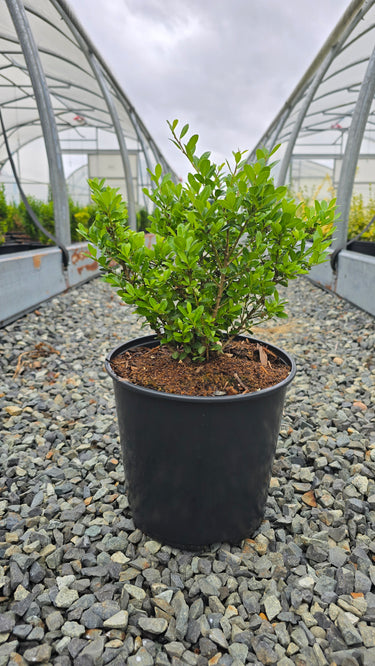
– Small, dark green, glossy, evergreen leaves

– Resemble boxwood but with better disease resistance

– Oval, finely serrated margins, dense foliage habit

– Maintains color and structure year-round

Flower Description

– Tiny white flowers appear in late spring

– Not showy; often hidden in foliage

– Typically go unnoticed, with minimal visual impact

Pruning & Maintenance

When: Prune in late winter or early spring before new growth starts

How: Can be shaped or sheared for formality (hedges or topiary) or left to grow naturally

– Tolerates heavy pruning and shearing well

Water Needs

– Requires regular watering during establishment (first season)

– Once established, is moderately drought tolerant but benefits from consistent moisture

– Avoid soggy or waterlogged conditions

Light Needs

– Grows best in full sun to partial shade

– In cooler regions, full sun promotes denser growth; in hotter areas, light afternoon shade prevents leaf scorch

Harvesting

– Not harvested; strictly ornamental

– No culinary, medicinal, or craft uses

Fertilizing

– Apply a balanced, slow-release fertilizer in early spring

– Acid-loving plant fertilizers (like those for azaleas) work well

– Avoid over-fertilizing; too much nitrogen can reduce density

Additional Care Tips N/A
Pollination

Self-pollinating, but produces no fruit

– One of the key traits of LUXUS™ ('Anny’s 5') is no berry production, making it very clean and low-maintenance

– Flowers are inconspicuous, appearing in spring

Companion Plants

Boxwood (Buxus spp.) – similar form, complementary foliage

Hydrangea paniculata – contrast in texture and seasonal blooms

Azalea and Rhododendron – similar pH and moisture needs

Heuchera – foliage contrast beneath shrubs

Carex or Liriope – ornamental grasses that tolerate shade and acidic soil

Flowering and Seasonality

Spring: New growth emerges; subtle flowering

Summer: Dense, glossy foliage remains vibrant

Fall: No color change – evergreen presence

Winter: Evergreen leaves persist; provides structural interest in the landscape

– Tiny white flowers appear in late spring

– Not showy; often hidden in foliage

– Typically go unnoticed, with minimal visual impact

Pet Friendly

Yes

Growing Zone
  • Zone 5
  • Zone 6
  • Zone 7
  • Zone 8

Click to enlarge