Growing Information

Growing zone guide
Growing Zone Zone 3, Zone 4, Zone 5, Zone 6, Zone 7, Zone 8, Zone 9
Sunlight Bright light
Type of Soil Slightly acidic to neutral
Mature Height 1–2 feet
Maintenance Level Low maintenance
Water Requirement Low to moderate (once a week in hot climate, once every 2 weeks in regular climate)

Learn more about this plant

Additional Information
Growth Rate

  • Speed: Slow to Moderate; Wiltonii spreads gradually but steadily, with a growth rate of 4-6 inches per year.
  • Mature Size: Reaches a height of 4-6 inches and spreads 6-8 feet, making it an excellent choice for ground cover or erosion control on slopes.
Colorful Leaves Yes
Flowering No
Bloom Color N/A
Ornamental Berries N/A
Disease resistant Yes
Cold Tolerant Yes
Heat Tolerant Yes
Drought Tolerant Yes
Deer Resistant Yes
Edible No
Wildlife Attraction

While Juniperus horizontalis 'Wiltonii' is not a significant attractor of pollinators or wildlife, its dense growth provides shelter for small animals and birds. The small, bluish berries it produces are occasionally eaten by birds.

Self-pollinating Self-pollinating
Seasonality
  • Flowering Season: Blue Rug Juniper does not produce significant or ornamental flowers.
  • Seasonality: Evergreen year-round, providing consistent color and texture through all seasons.
Ideal For

Groundcover: One of the best low-growing evergreens for suppressing weeds and covering large areas with dense, trailing foliage.

Erosion Control: Ideal for slopes and banks due to its mat-forming habit and soil-stabilizing roots.

Rock Gardens: Naturally fits into rockeries, spilling attractively over stones and walls.

Foundation Planting: Adds texture and evergreen color at the base of buildings or along walkways.

Container Planting: Can be used to spill over the edges of pots or raised beds in sunny areas.

Xeriscaping and Drought-Tolerant Gardens: Performs well in dry, sunny conditions once established.

Grave or Memorial Plantings: Used for its tidy, low profile and year-round color in formal or commemorative settings.

Between Stepping Stones or Borders: Provides soft, low, trailing coverage that contrasts well with hard surfaces.

Leaf Description

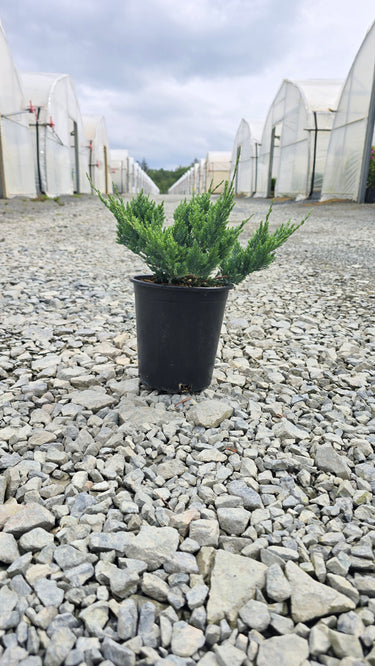
The foliage is needle-like, soft to the touch, and a striking silvery-blue in color. In colder climates, the foliage may take on a purplish hue in winter, adding seasonal interest. The leaves grow densely along the stems, forming a thick, carpet-like mat.

Flower Description

As an ornamental plant, Blue Rug Juniper is not noted for its flowers, which are insignificant. It is primarily grown for its attractive foliage.

Pruning & Maintenance

Pruning is generally not required but can be done to control its spread or maintain shape. Light trimming can be performed in early spring or late fall to keep the plant tidy. Remove any dead or damaged branches as needed.

Water Needs

Blue Rug Juniper is highly drought-tolerant once established. It requires regular watering during its first growing season but needs minimal watering after that. Water during extended dry periods for best results.

Light Needs

This juniper thrives in full sun, requiring at least 6 hours of direct sunlight per day. It may tolerate light shade but performs best in bright, sunny locations where it can maintain its vibrant color and dense growth habit.

Harvesting

Not applicable; Blue Rug Juniper is an ornamental ground cover and does not require harvesting.

Fertilizing

Fertilize in early spring with a balanced, slow-release fertilizer to encourage healthy growth. Wiltonii junipers are low-maintenance and do not require heavy feeding.

Additional Care Tips
  • Mulching: Apply a 2-3 inch layer of mulch around the base to retain moisture and reduce weeds.
  • Pest and Disease Resistance: This juniper is highly resistant to deer, drought, and most common garden pests. It may be susceptible to juniper blight if grown in poorly drained conditions.
  • Winter Hardiness: Blue Rug Juniper is extremely cold-hardy and retains its color through the winter, making it a great evergreen ground cover in cold climates.
Pollination

Pollination Type: Junipers are gymnosperms, meaning they reproduce via cones, not flowers.

Dioecious Species: Juniperus horizontalis is dioecious, so:

  • Individual plants are either male (producing pollen cones) or female (producing fleshy seed cones, often called berries).
  • ‘Wiltonii’ is typically a female cultivar, so it can produce small, bluish berries—but only if a male juniper is nearby for pollination.

Pollination Method: Wind-pollinated, not insect-dependent.

Companion Plants

Sedum 'Dragon’s Blood' or 'Angelina' – Low, drought-tolerant, and offers color contrast with red or golden tones.

Lavandula angustifolia (Lavender) – Tall, fragrant spikes contrast beautifully with the blue mat-forming juniper.

Coreopsis 'Zagreb' – Bright yellow blooms stand out above the cool blue foliage.

Heuchera 'Lime Marmalade' or 'Obsidian' – Adds bright or deep foliage contrast around or behind the rug juniper.

Festuca glauca (Blue Fescue) – Repeats and enhances the blue tones in upright grassy form.

Echinacea purpurea – Tall blooms add height and pollinator appeal above the low juniper mat.

Thymus serpyllum (Creeping Thyme) – Another low grower that can blend or patch with contrasting textures.

Artemisia 'Silver Mound' – Soft, silvery foliage complements the blue tones in a feathery form.

Flowering and Seasonality
  • Flowering Season: Blue Rug Juniper does not produce significant or ornamental flowers.
  • Seasonality: Evergreen year-round, providing consistent color and texture through all seasons.

As an ornamental plant, Blue Rug Juniper is not noted for its flowers, which are insignificant. It is primarily grown for its attractive foliage.

Pet Friendly

Yes

Growing Zone
  • Zone 3
  • Zone 4
  • Zone 5
  • Zone 6
  • Zone 7
  • Zone 8
  • Zone 9

Click to enlarge

You may also like