Growing Information

Growing zone guide
Growing Zone Zone 6, Zone 7, Zone 8, Zone 9
Sunlight Bright light to partial shade
Type of Soil Slightly acidic to neutral
Mature Height 4 to 6 ft.
Maintenance Level Low maintenance
Water Requirement Moderate watering (once a week)

Learn more about this plant

Additional Information
Growth Rate

– Moderate growth rate.

– Typically establishes quickly with proper care and steady watering during the first season.

Colorful Leaves Yes
Flowering Yes
Bloom Color White
Ornamental Berries Red berries
Disease resistant Yes
Cold Tolerant Yes
Heat Tolerant Yes
Drought Tolerant No
Deer Resistant Yes
Edible No
Wildlife Attraction

– Flowers attract bees and other pollinators.

– Bright berries attract birds, although they are mildly toxic and not highly consumed.

Self-pollinating Cross-pollinating
Seasonality

Spring: New growth emerges golden-yellow; flowers bloom in clusters.

Summer: Foliage remains bright; fruits begin forming after flowering.

Fall: Maintains golden-green foliage; berries mature to red.

Winter: Evergreen foliage continues to provide color and structure.

Ideal For

Foundation plantings – bright accent shrub – container gardens – mixed borders – evergreen hedges – woodland gardens

Leaf Description

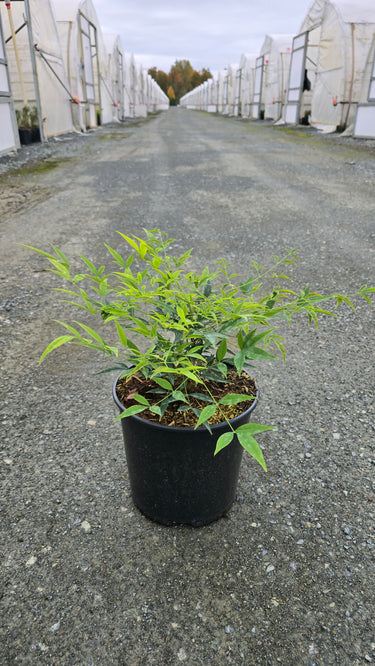
– Upright, evergreen shrub with narrow, lance-shaped foliage.

– ‘Bright Light’ features vivid lime to chartreuse-yellow leaves that remain colorful year-round.

– New growth emerges golden, maturing into light green tones.

Flower Description

– Produces clusters of small, star-shaped white flowers in late spring to early summer.

– While not showy compared to the foliage, they add delicate seasonal interest.

Pruning & Maintenance

– Minimal pruning required.

– Remove dead, weak, or crossing stems in late winter to early spring.

– Can be lightly shaped after new growth appears.

– Cutting older stems at the base every few years encourages fresh foliage.

Water Needs

– Moderate watering needs.

– Keep evenly moist, especially during establishment.

– Once mature, it is relatively drought-tolerant but performs best with regular watering.

Light Needs

– Prefers full sun to partial shade.

– Best foliage color develops in full sun.

– Tolerates partial shade but may appear less vibrant.

Harvesting

– Primarily ornamental; not harvested for culinary purposes.

– Branches with foliage and berries can be cut for floral arrangements.

Fertilizing

– Apply a balanced, slow-release fertilizer in early spring.

– Supplement with compost or organic mulch annually to enrich soil.

– Avoid over-fertilizing, as this encourages leggy growth.

Additional Care Tips N/A
Pollination

Cross-pollinated by insects.

– Small flowers are fertile and lead to fruit set when multiple nandinas are nearby.

Companion Plants

Hosta and Heuchera – add contrasting foliage textures.

Azaleas and Rhododendrons – thrive in similar acidic soils.

Camellias – provide year-round structure with seasonal blooms.

Ferns – create a lush understory complementing nandina’s upright form.

Hydrangeas – balance nandina’s fine texture with large bold flowers.

Flowering and Seasonality

Spring: New growth emerges golden-yellow; flowers bloom in clusters.

Summer: Foliage remains bright; fruits begin forming after flowering.

Fall: Maintains golden-green foliage; berries mature to red.

Winter: Evergreen foliage continues to provide color and structure.

– Produces clusters of small, star-shaped white flowers in late spring to early summer.

– While not showy compared to the foliage, they add delicate seasonal interest.

Pet Friendly

No

Growing Zone
  • Zone 6
  • Zone 7
  • Zone 8
  • Zone 9

Click to enlarge