
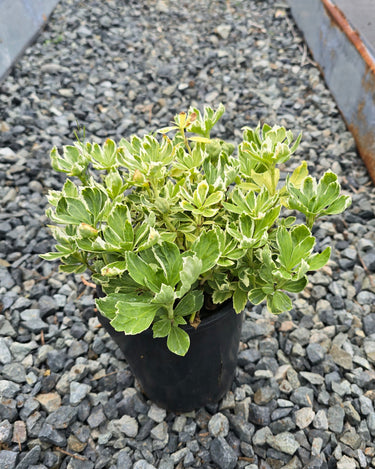

Silver Edge Pachysandra
Variegated pachysandra with crisp silver-white leaf margins that brighten shaded areas dramatically — more decorative than the standard form while offering the same vigorous reliable groundcover performance. (Pachysandra terminalis 'Silver Edge')
Pachysandra terminalis 'Silver Edge', commonly known as Variegated Japanese Spurge, is a low-maintenance, evergreen groundcover prized for its glossy green leaves edged in creamy white. Ideal for shaded areas, it forms dense mats that suppress weeds and add visual interest to the garden.
It is an excellent choice for gardeners seeking a reliable, attractive groundcover for shaded areas. Its variegated foliage adds visual interest year-round, and its low-maintenance nature makes it suitable for a variety of landscape applications, including underplanting for trees and shrubs, edging pathways, and covering slopes to prevent erosion.
Your payment information is processed securely. We do not store credit card details nor have access to your credit card information.
Growing Information
Growing zone guideLearn more about this plant
Additional Information
| Growth Rate | |
|---|---|
| Colorful Leaves | Yes |
| Flowering | |
| Bloom Color | White |
| Ornamental Berries | N/A |
| Disease resistant | |
| Cold Tolerant | |
| Heat Tolerant | |
| Drought Tolerant | |
| Deer Resistant | |
| Edible | |
| Wildlife Attraction | |
| Self-pollinating | Cross-pollinating |
| Seasonality | |
| Ideal For | |
| Leaf Description | |
| Flower Description | |
| Pruning & Maintenance | |
| Water Needs | |
| Light Needs | |
| Harvesting | |
| Fertilizing | |
| Additional Care Tips | N/A |
| Pollination | |
| Companion Plants |
Flowering and Seasonality
Pet Friendly
Yes
Growing Zone
- Zone 4
- Zone 5
- Zone 6
- Zone 7
- Zone 8
- Zone 9
Click to enlarge
Growing Zone

You may also like


