Growing Information

Growing zone guide
Growing Zone Zone 3, Zone 4, Zone 5, Zone 6, Zone 7, Zone 8
Sunlight Partial shade to full shade
Type of Soil Slightly acidic to neutral
Mature Height 10 to 14 inches
Maintenance Level Low maintenance
Water Requirement Moderate watering (once a week)

Learn more about this plant

Additional Information
Growth Rate

Moderate growth rate.


Forms tidy clumps that slowly expand via short rhizomes.

Colorful Leaves Yes
Flowering Yes
Bloom Color Pink , Blue
Ornamental Berries N/A
Disease resistant No
Cold Tolerant Yes
Heat Tolerant No
Drought Tolerant No
Deer Resistant Yes
Edible No
Wildlife Attraction

Excellent early nectar source for bees and pollinators.


Provides shelter for beneficial insects in shaded gardens.

Self-pollinating Self-pollinating, Cross-pollinating
Seasonality
  • Early spring blooming perennial.

  • Flowers typically appear March–May, depending on climate.

  • Foliage remains ornamental throughout spring, summer, and often into fall.

Ideal For

Detailed ideal uses


  • Woodland gardens

  • Shade borders

  • Underplanting beneath shrubs and trees

  • Cottage gardens

  • Pollinator gardens

  • Groundcover in shaded landscapes

  • Container plantings for shade patios
Leaf Description
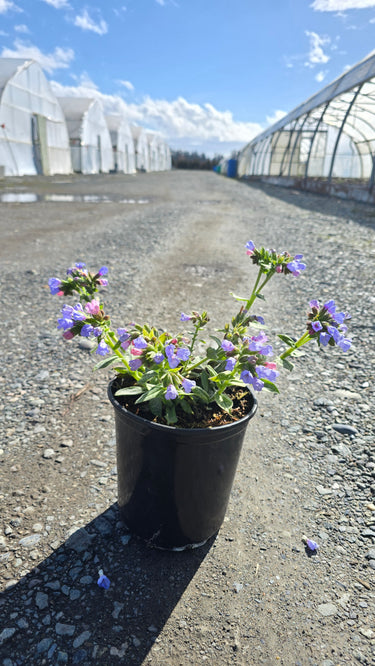
  • Broad, oval leaves with distinct silver spotting and mottling.

  • Foliage forms a low clump with a slightly textured surface.

  • Leaves remain attractive throughout the growing season and provide strong shade-garden interest.
Flower Description
  • Clusters of small bell-shaped flowers held above the foliage.

  • Flowers open pink and mature to soft blue or violet, creating a two-tone display.

  • Blooms appear in early spring and are highly attractive to pollinators.
Pruning & Maintenance

Remove damaged or winter-worn foliage in early spring to encourage fresh growth.


Deadhead faded flowers to tidy the plant and prevent seed production if desired.


Cut back old foliage in mid-summer if it becomes tired; fresh leaves often regenerate.

Water Needs

Prefers evenly moist soil.


Water regularly during dry periods, especially in summer.


Avoid allowing soil to completely dry out.

Light Needs
  • Best grown in partial shade to full shade.

  • Morning sun with afternoon shade is ideal.

  • Avoid strong afternoon sun which can scorch leaves and fade variegation.
Harvesting
  • Flowers may be cut for small spring bouquets, though they are delicate.

  • Leaves are ornamental and generally not harvested for culinary use.
Fertilizing

Apply compost or balanced slow-release fertilizer in early spring.


Additional fertilization is rarely needed if soil is rich in organic matter.


Avoid excessive fertilization which may encourage excessive foliage growth.

Additional Care Tips N/A
Pollination

Flowers are insect-pollinated, especially by bees and early spring pollinators.


Plants are capable of both self and cross pollination.


Pulmonaria flowers naturally change color as they age, signaling pollination status to insects.

Companion Plants

Ideal companions for woodland or shade gardens:


  • Hosta

  • Heuchera (Coral Bells)

  • Tiarella (Foamflower)

  • Ferns (Dryopteris, Athyrium)

  • Astilbe

  • Brunnera

  • Epimedium

  • Spring bulbs such as Snowdrops and Crocus

These plants share similar moisture and shade preferences.

Flowering and Seasonality
  • Early spring blooming perennial.

  • Flowers typically appear March–May, depending on climate.

  • Foliage remains ornamental throughout spring, summer, and often into fall.

  • Clusters of small bell-shaped flowers held above the foliage.

  • Flowers open pink and mature to soft blue or violet, creating a two-tone display.

  • Blooms appear in early spring and are highly attractive to pollinators.
Pet Friendly

Yes

Growing Zone
  • Zone 3
  • Zone 4
  • Zone 5
  • Zone 6
  • Zone 7
  • Zone 8

Click to enlarge