Growing Information

Growing zone guide
Growing Zone Zone 4, Zone 5, Zone 6, Zone 7, Zone 8
Sunlight Partial shade
Type of Soil Acidic
Mature Height 6 to 8 ft.
Maintenance Level Moderate maintenance
Water Requirement Moderate watering (once a week)

Learn more about this plant

Additional Information
Growth Rate

Moderate growth rate. Develops into a dense rounded evergreen shrub over time with increasing flower production as plants mature. Establishes steadily under proper acidic soil conditions.

Colorful Leaves No
Flowering Yes
Bloom Color Pink , Purple & Lavender
Ornamental Berries N/A
Disease resistant Yes
Cold Tolerant Yes
Heat Tolerant No
Drought Tolerant No
Deer Resistant No
Edible No
Wildlife Attraction

Flowers attract bees, butterflies, and beneficial pollinators during spring bloom season. Dense evergreen foliage provides shelter for birds and small wildlife. Moderately deer resistant, though browsing may occur in areas with high deer populations.

Self-pollinating Cross-pollinating
Seasonality

Evergreen foliage remains attractive year-round. Flower buds develop during the previous season and open in late spring to early summer. Lush foliage provides structure and color through summer, fall, and winter. Plants maintain strong winter presence even when not flowering.

Ideal For

Woodland gardens

Shade gardens


Foundation plantings

Evergreen screening

Privacy hedges


Accent shrub plantings

Cottage gardens

Mixed shrub borders

Naturalized landscapes

Pollinator-friendly gardens

Large-scale mass plantings

Japanese-inspired gardens

Woodland edge plantings

Pairing with shade perennials and ferns

Four-season evergreen structure in landscapes

Leaf Description

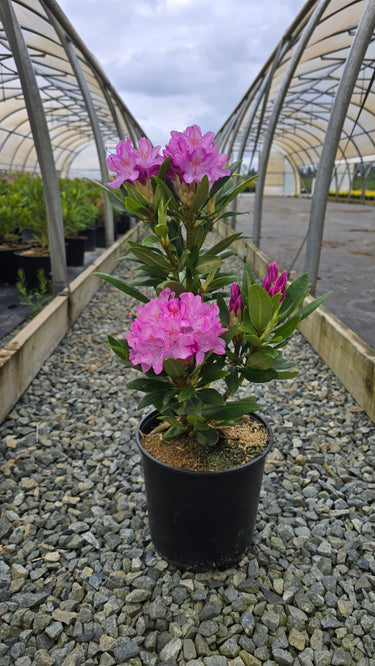
Features large leathery dark green evergreen leaves with a glossy surface and broad elliptical shape. Dense foliage creates year-round screening, texture, and structure in the landscape. Leaves remain attractive through winter and provide a rich backdrop for spring flowers.

Flower Description

Produces large rounded trusses of rosy lavender to rose-pink funnel-shaped flowers in late spring to early summer. Individual blooms may display subtle darker spotting inside the throat. Flower clusters create a dramatic display that nearly covers the shrub during peak bloom. Blooms provide soft romantic color and strong ornamental impact in woodland landscapes.

Pruning & Maintenance

Requires minimal pruning beyond removing dead, damaged, or crossing branches after flowering. Light shaping may be done immediately after blooming to avoid removing next year’s flower buds. Deadheading spent flower trusses can improve appearance and encourage stronger growth. Avoid heavy pruning into old wood unless rejuvenation is necessary.

Water Needs

Prefers consistently moist but well-drained soil. Water deeply during establishment and during dry weather, especially in summer and fall before winter. Shallow roots dry out quickly, so mulch is important for moisture conservation. Avoid soggy or poorly drained soils, which may lead to root problems.

Light Needs

Performs best in part shade with morning sun and afternoon shade. Tolerates filtered sunlight beneath tall trees and woodland conditions. Excessive direct afternoon sun may scorch foliage and reduce flower longevity, while dense shade may reduce blooming performance. Protection from hot drying winds improves foliage quality.

Harvesting

Primarily ornamental and not suitable for edible use due to plant toxicity. Small seed capsules may develop after flowering but are not ornamental. Flower trusses may occasionally be cut for decorative indoor arrangements, though plants are mainly valued for landscape beauty and evergreen structure.

Fertilizing

Feed lightly in spring using fertilizer formulated for acid-loving plants such as rhododendrons or azaleas. Organic mulches and compost help maintain soil acidity and improve moisture retention. Avoid excessive fertilization, especially high nitrogen products, which may damage roots or reduce flowering.

Additional Care Tips N/A
Pollination

Flowers attract bees, butterflies, and other pollinating insects that assist with cross-pollination. Blooms are nectar-rich and valuable to spring pollinators. Seed capsules may form after flowering if blooms are left on the plant.

Companion Plants

Combines beautifully with Hosta for bold foliage contrast, Athyrium and woodland ferns for texture, Heuchera for colorful foliage accents, Hydrangea for layered shrub borders, Pieris for evergreen structure, Kalmia for acid-loving woodland plantings, Hakonechloa for graceful movement, and Japanese maples such as Acer palmatum for elegant woodland combinations.

Flowering and Seasonality

Evergreen foliage remains attractive year-round. Flower buds develop during the previous season and open in late spring to early summer. Lush foliage provides structure and color through summer, fall, and winter. Plants maintain strong winter presence even when not flowering.

Produces large rounded trusses of rosy lavender to rose-pink funnel-shaped flowers in late spring to early summer. Individual blooms may display subtle darker spotting inside the throat. Flower clusters create a dramatic display that nearly covers the shrub during peak bloom. Blooms provide soft romantic color and strong ornamental impact in woodland landscapes.

Pet Friendly

No

Growing Zone
  • Zone 4
  • Zone 5
  • Zone 6
  • Zone 7
  • Zone 8

Click to enlarge