
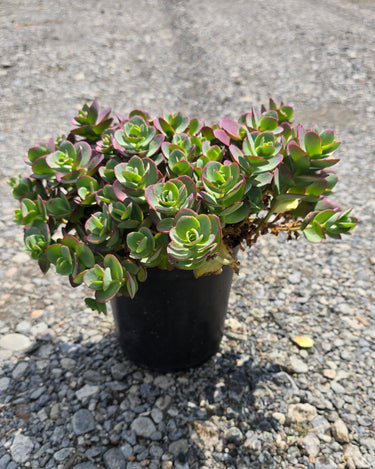

Lime Zinger Stonecrop
Vibrant chartreuse-yellow and ruby-red succulent foliage provides year-round colour — a Sunsparkler series sedum with electric bicolour leaves and rosy-red flower heads in late summer. (Sedum Sunsparkler Lime Zinger PP24632)
Sedum hybrid Sunsparkler® 'Lime Zinger' PP24632 is a striking, low-growing succulent groundcover known for its vivid lime-green foliage rimmed in cherry red. A standout member of the Sunsparkler® series, it forms neat, dense mats of foliage that remain vibrant from spring through fall. In late summer, it adds a flush of soft pink starry flowers that attract pollinators while maintaining its clean appearance.
This cultivar is perfect for sunny borders, containers, or dry, low-maintenance landscapes where color and texture are needed without demanding care. With its bright, cheerful foliage and tidy habit, ‘Lime Zinger’ brings bold contrast and reliable performance to modern garden designs.
Your payment information is processed securely. We do not store credit card details nor have access to your credit card information.
Growing Information
Growing zone guideLearn more about this plant
Additional Information
| Growth Rate | |
|---|---|
| Colorful Leaves | Yes |
| Flowering | |
| Bloom Color | Pink |
| Ornamental Berries | N/A |
| Disease resistant | |
| Cold Tolerant | |
| Heat Tolerant | |
| Drought Tolerant | |
| Deer Resistant | |
| Edible | |
| Wildlife Attraction | |
| Self-pollinating | Self-pollinating |
| Seasonality | |
| Ideal For | |
| Leaf Description | |
| Flower Description | |
| Pruning & Maintenance | |
| Water Needs | |
| Light Needs | |
| Harvesting | |
| Fertilizing | |
| Additional Care Tips | N/A |
| Pollination | |
| Companion Plants |
Flowering and Seasonality
Pet Friendly
Yes
Growing Zone
- Zone 4
- Zone 5
- Zone 6
- Zone 7
- Zone 8
- Zone 9
Click to enlarge
Growing Zone

You may also like


