Growing Information

Growing zone guide
Growing Zone Zone 5, Zone 6, Zone 7, Zone 8
Sunlight Medium to bright light
Type of Soil Slightly acidic to neutral
Mature Height 3–4 feet
Maintenance Level Moderate maintenance
Water Requirement Low to moderate (once a week in hot climate, once every 2 weeks in regular climate)

Learn more about this plant

Additional Information
Growth Rate

Slow to moderate – Grows approximately 2–4 inches per year.

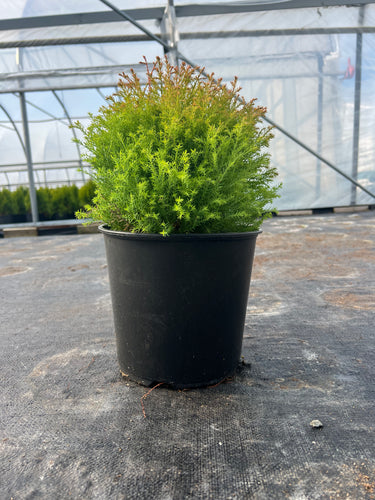
Mature size: Around 3–4 feet tall and wide, maintaining a compact, globe form.

Colorful Leaves Yes
Flowering No
Bloom Color N/A
Ornamental Berries N/A
Disease resistant Yes
Cold Tolerant Yes
Heat Tolerant No
Drought Tolerant No
Deer Resistant No
Edible No
Wildlife Attraction

Provides shelter for small birds and insects.

Not a major attractor of pollinators due to lack of showy flowers.

Foliage is aromatic, which can deter some pests.

Self-pollinating Self-pollinating
Seasonality

Evergreen year-round – maintains foliage color through all seasons.

Shows seasonal variation: bright golden-green in summer and orange-bronze blush in fall/winter.

Ideal For
  • Accent Plant – Bright foliage makes it a standout focal point.
  • Foundation Planting – Compact globe shape suits low borders near buildings.
  • Low Hedges or Borders – Adds structure and year-round color.
  • Formal Gardens – Ideal for symmetrical or evergreen design layouts.
  • Rock Gardens – Fits well in smaller garden spaces and mixed textures.
  • Container Gardening – Slow growth and compact form are excellent for pots or raised beds.

Leaf Description

Soft, flat, scale-like needles.

Dense, fine-textured foliage arranged in flattened sprays.

Vibrant golden-green in spring and summer, with coppery-red tints in fall and winter.

Flower Description

Not known for flowers.

Produces tiny, yellowish-green male cones and small, upright female cones in spring.

Inconspicuous and non-ornamental.

Pruning & Maintenance

Minimal pruning required – naturally maintains a dense, globe shape.

Lightly prune in early spring to maintain size or shape.

Remove any dead or damaged wood anytime.

Water Needs
  • Regular watering, especially in the first 1–2 growing seasons.
  • Once established, it is moderately drought tolerant.
  • Avoid soggy soil—good drainage is essential.

Light Needs

Full sun to partial shade

– Performs best in 6+ hours of direct sunlight.

– Tolerates some afternoon shade, especially in hot climates (which may help preserve foliage color).

Harvesting

Foliage can be clipped in late fall or early winter for use in holiday décor.

Use only the outer branch tips; avoid deep cuts into woody stems.

No large-scale harvesting is common—primarily valued as a live ornamental.

Fertilizing

Apply a balanced, slow-release fertilizer in early spring (e.g., 10-10-10 or 14-14-14).

Avoid over-fertilizing; excessive nitrogen can lead to overly lush growth that’s more prone to disease.

Additional Care Tips N/A
Pollination

Monoecious – Produces both male and female cones on the same plant.

Pollinated by wind, not by insects.

Does not require another plant for reproduction.

Companion Plants

Heuchera ‘Peach Flambé’ or ‘Lime Rickey’ – Offers vivid foliage that complements 'Fire Chief’s' golden and copper tones.

Salvia nemorosa – Spiky purple flowers provide contrast and attract pollinators.

Festuca glauca (Blue Fescue) – Blue-gray tones play beautifully off 'Fire Chief’s' warm hues.

Spiraea 'Goldmound' or 'Magic Carpet' – Echoes the golden tones and offers pink flowers for contrast.

Sedum 'Autumn Joy' – Late-season blooms and fleshy foliage add seasonal balance.

Flowering and Seasonality

Evergreen year-round – maintains foliage color through all seasons.

Shows seasonal variation: bright golden-green in summer and orange-bronze blush in fall/winter.

Not known for flowers.

Produces tiny, yellowish-green male cones and small, upright female cones in spring.

Inconspicuous and non-ornamental.

Pet Friendly

Yes

Growing Zone
  • Zone 5
  • Zone 6
  • Zone 7
  • Zone 8

Click to enlarge