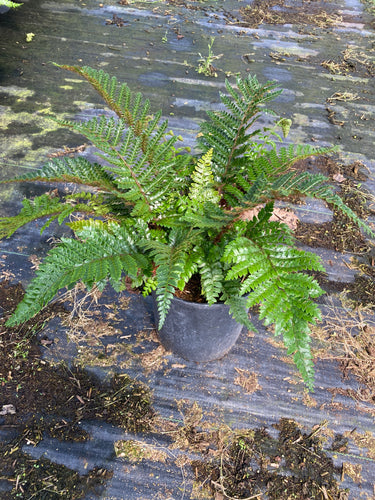
Growing Information

Growing zone guide
Growing Zone Zone 5, Zone 6, Zone 7, Zone 8
Sunlight Partial shade to full shade
Type of Soil Slightly acidic to neutral
Mature Height 18 to 24 inches
Maintenance Level Low maintenance
Water Requirement Moderate watering (once a week)

Learn more about this plant

Additional Information
Growth Rate
  • Speed: Moderate grower, with new fronds emerging in spring.

  • Mature Growth: Grows to a height of 24-30 inches and spreads 24-36 inches wide, forming a dense, arching mound.
Colorful Leaves No
Flowering No
Bloom Color N/A
Ornamental Berries N/A
Disease resistant Yes
Cold Tolerant Yes
Heat Tolerant No
Drought Tolerant No
Deer Resistant Yes
Edible No
Wildlife Attraction
  • Attracts: Provides shelter for small wildlife but does not attract pollinators or insects as it reproduces through spores.

Wildlife Resistant: Deer and rabbits typically avoid this fern due to its tough, leathery fronds.

Self-pollinating N/A
Seasonality

Foliage Season: Evergreen, providing year-round interest.

  • Flowering Season: Ferns do not produce flowers; they reproduce through spores.
  • Hardiness Zones: USDA Zones 5-8
Ideal For
  • Woodland gardens
  • Shaded borders
  • Ground cover
  • Containers
  • Fern gardens
Leaf Description
  • Color: New fronds emerge bright coppery-red and gradually mature to glossy dark green.

  • Form: Triangular, arching fronds that are finely divided with a leathery texture.

  • Fall/Winter Interest: Evergreen in mild climates, semi-evergreen in colder regions. The striking bronze-to-green color transition provides multi-seasonal visual appeal.
Flower Description
  • Like all ferns, Polystichum polyblepharum does not produce true flowers.

Instead, it reproduces via spores, which are located on the underside of mature fronds in sori (small brownish clusters).

Pruning & Maintenance

  • Timing: Prune in late winter or early spring before new growth emerges.

  • Method: Remove old or damaged fronds at the base to make room for fresh growth. No heavy pruning is required, as the fern maintains a tidy shape.
Water Needs
  • Watering Frequency: Water regularly during the first growing season to establish roots. Keep the soil consistently moist, especially during dry periods.

  • Soil Moisture: Prefers moist, well-drained soil. Avoid letting the soil dry out completely but ensure good drainage to prevent root rot.
Light Needs

Thrives in partial to full shade. In hotter climates, it prefers deeper shade, while in cooler regions, it can tolerate dappled sunlight. Avoid direct sunlight, which can scorch the fronds.

Harvesting

Foliage Harvesting:

  • Fronds can be cut for floral arrangements due to their strong structure and glossy texture.
  • Harvest only a few fronds at a time to maintain plant health.
  • Best time to harvest is late spring to early summer when fronds are fully unfurled and fresh.

Spore Harvesting (for propagation):

  • Spores appear in late summer to early fall.
  • To collect spores:
  1. Cut a mature frond with visible brown sori.

  2. Place it sori-side down on a sheet of paper in a dry area.

  3. Wait 1–2 days; the spores will fall as fine brown dust.

  4. Store spores in a paper envelope until sowing on moist peat mix under plastic cover.
Fertilizing

  • Fertilization Time: Apply fertilizer in early spring when new growth begins.

  • Fertilizer Type: Use a balanced, slow-release fertilizer or enrich the soil with organic compost to encourage healthy growth. Avoid over-fertilizing, as it can lead to weak or floppy fronds.
Additional Care Tips
  • Mulching: Apply a 2-3 inch layer of organic mulch around the base to help retain moisture and suppress weeds. Keep mulch away from the crown to prevent rot.

  • Drought Tolerance: Once established, Polystichum polyblepharum is relatively drought-tolerant, but it still prefers consistently moist soil for optimal growth.

  • Pests and Diseases: Generally pest and disease-free, though it may be susceptible to slugs and snails. Good air circulation helps prevent fungal diseases, especially in humid conditions.
Pollination

Ferns do not rely on pollination; they reproduce via spores, which are produced on the undersides of the fronds in late summer to early fall.

Companion Plants
  • Hosta
  • Heuchera (Coral Bells)
  • Astilbe
  • Tiarella (Foamflower)
Flowering and Seasonality

Foliage Season: Evergreen, providing year-round interest.

  • Flowering Season: Ferns do not produce flowers; they reproduce through spores.
  • Hardiness Zones: USDA Zones 5-8
  • Like all ferns, Polystichum polyblepharum does not produce true flowers.

Instead, it reproduces via spores, which are located on the underside of mature fronds in sori (small brownish clusters).

Pet Friendly

Yes

Growing Zone
  • Zone 5
  • Zone 6
  • Zone 7
  • Zone 8

Click to enlarge