Growing Information

Growing zone guide
Growing Zone Zone 4, Zone 5, Zone 6, Zone 7, Zone 8
Sunlight Partial shade to full shade
Type of Soil Slightly acidic to neutral
Mature Height 30 to 60 inches
Maintenance Level Moderate maintenance
Water Requirement High water needs (twice a week)

Learn more about this plant

Additional Information
Growth Rate
  • Growth Rate: Moderate, with the plant steadily filling out to form a compact, mounded shape.

  • Mature Growth: At maturity, 'Black Pearls' reaches 18-24 inches in height and spreads 12-18 inches wide. Its upright flower spikes rise above the dense foliage, creating a dramatic focal point in the garden.
Colorful Leaves No
Flowering Yes
Bloom Color Purple & Lavender
Ornamental Berries N/A
Disease resistant Yes
Cold Tolerant Yes
Heat Tolerant No
Drought Tolerant No
Deer Resistant Yes
Edible No
Wildlife Attraction

'Black Pearls' is known for attracting pollinators, particularly bees and butterflies, which are drawn to its nectar-rich flowers. Its dense foliage can also provide shelter for small insects, adding biodiversity to your garden.

Self-pollinating Self-pollinating
Seasonality

– Active growth begins in spring

– Blooms in mid to late summer (typically July to early August)

– Foliage remains attractive through early fall

– Dormant in winter

Ideal For

– Shaded or partially shaded borders

– Woodland gardens

– Moist perennial beds

– Near water features or streams

– Cut flower gardens (plumes are suitable for fresh or dried use)

Leaf Description

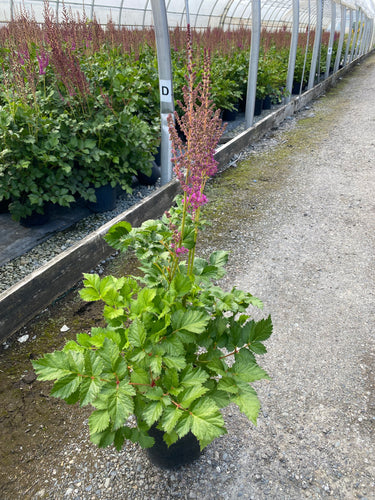
'Black Pearls' has dark green, finely divided, fern-like leaves that form a dense, bushy mound. The glossy foliage provides a rich backdrop to the plant’s dramatic flower spikes and remains attractive throughout the growing season, offering texture and contrast to surrounding plants.

Flower Description
  • Flowering Season: Mid to late summer (July to August).
  • Flower Description: Astilbe 'Black Pearls' produces stunning, upright flower spikes of deep purple-black blooms. The fluffy, plume-like flowers rise above the foliage, creating an elegant and eye-catching display. These blooms last for several weeks and attract pollinators like bees and butterflies.
Pruning & Maintenance

Deadhead spent flowers to encourage prolonged blooming and maintain a neat appearance. Cut back the foliage to ground level in late fall or early spring to make room for new growth.

Water Needs

Astilbe 'Black Pearls' requires consistently moist soil. Water deeply and regularly to keep the soil evenly moist, especially during hot or dry periods. It is not drought-tolerant, so ensure the plant receives adequate moisture throughout the growing season. Mulching around the base will help retain soil moisture.

Light Needs

Partial shade to full shade. 'Black Pearls' thrives in shaded or partially shaded areas, where it adds a splash of color to darker parts of the garden. In cooler climates, it can tolerate some morning sun, but in warmer climates, it should be planted in full shade to prevent leaf scorch.

Harvesting

– Cut flower spikes just before full bloom for longest vase life

– Can be used fresh or dried – hang upside down in a dry, airy place

– Remove spent blooms to promote tidy appearance (optional, as seed heads are ornamental)

– Foliage can be trimmed back in late fall or early spring

Fertilizing

Apply a balanced, slow-release fertilizer in early spring as new growth emerges. Additional compost or organic matter can be added to the soil in mid-summer to boost flowering and maintain soil fertility. Avoid over-fertilizing, as this can lead to excessive leafy growth at the expense of flowers.

Additional Care Tips
  • Mulching: Apply a 2-3 inch layer of organic mulch around the base of the plant to help retain moisture, suppress weeds, and regulate soil temperature. Mulching is especially important in warmer climates to protect the roots from heat stress.

  • Winter Care: 'Black Pearls' is cold-hardy and does not require special winter protection. In colder zones, the plant will go dormant after the first frost, and the foliage can be cut back to the ground. New growth will emerge in spring.

  • Pest and Disease Resistance: Astilbe 'Black Pearls' is generally pest and disease resistant, making it a low-maintenance choice for shady areas. Good air circulation and consistent watering help prevent common issues like powdery mildew.
Pollination

Astilbe 'Black Pearls' is pollinated by bees, butterflies, and other beneficial insects. Its flowers provide a valuable source of nectar for pollinators, helping to support biodiversity in the garden. The plant is self-sufficient and does not require assistance with pollination.

Companion Plants

– Ferns (e.g., Athyrium, Dryopteris) – contrast with fine, airy fronds

– Heuchera (Coral Bells) – pairs well in shade gardens

– Hosta – bold foliage contrasts nicely with Astilbe plumes

– Pulmonaria – adds spring interest and complements similar conditions

– Ligularia – dramatic foliage and similar moisture needs

– Tiarella – for textured ground cover in part shade

– Brunnera – attractive foliage that thrives in similar light and soil

Flowering and Seasonality

– Active growth begins in spring

– Blooms in mid to late summer (typically July to early August)

– Foliage remains attractive through early fall

– Dormant in winter

  • Flowering Season: Mid to late summer (July to August).
  • Flower Description: Astilbe 'Black Pearls' produces stunning, upright flower spikes of deep purple-black blooms. The fluffy, plume-like flowers rise above the foliage, creating an elegant and eye-catching display. These blooms last for several weeks and attract pollinators like bees and butterflies.
Pet Friendly

Yes

Growing Zone
  • Zone 4
  • Zone 5
  • Zone 6
  • Zone 7
  • Zone 8

Click to enlarge