Growing Information

Growing zone guide
Growing Zone Zone 4, Zone 5, Zone 6, Zone 7, Zone 8, Zone 9
Sunlight Partial shade to full shade
Type of Soil Slightly acidic to neutral
Mature Height 12 to 16 inches
Maintenance Level Low maintenance
Water Requirement High water needs (twice a week)

Learn more about this plant

Additional Information
Growth Rate

'Little Vision in Pink' has a moderate growth rate, establishing itself within the first growing season. Once established, it forms a dense, compact clump of foliage with abundant flower spikes in the summer.

  • Mature Growth:At maturity, Astilbe chinensis 'Little Vision in Pink' reaches a height of 12-16 inches and a spread of 12-18 inches. Its compact size makes it ideal for smaller garden spaces, borders, or container planting.
Colorful Leaves Yes
Flowering Yes
Bloom Color Pink
Ornamental Berries N/A
Disease resistant Yes
Cold Tolerant Yes
Heat Tolerant No
Drought Tolerant No
Deer Resistant Yes
Edible No
Wildlife Attraction

'Little Vision in Pink' is highly attractive to pollinators, including bees, butterflies, and other beneficial insects. The flowers provide a rich source of nectar during the summer months. This variety is also deer-resistant, making it a great choice for gardens where deer browsing is a concern.

Self-pollinating Self-pollinating
Seasonality

'Little Vision in Pink' is a deciduous perennial, emerging in spring and blooming throughout summer before going dormant in winter. Its foliage provides texture even after the blooms have faded.

Ideal For

Shady borders

Woodland gardens

Moist, low-lying areas

Mass planting or edging

Container gardens (with adequate moisture)

Leaf Description

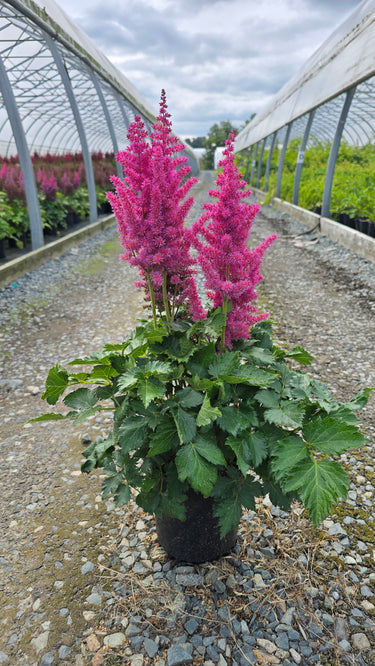
The foliage of Astilbe chinensis 'Little Vision in Pink' is deep green and finely cut, resembling ferns. The leaves form a dense, compact mound that stays attractive throughout the growing season. Its foliage texture adds interest to shaded areas even when the plant is not in bloom.

Flower Description
  • Flowering Season: This Astilbe blooms in mid to late summer, typically from June to August. The flower spikes last for several weeks, creating a long-lasting display of soft pink, plume-like flowers.
  • Flower Description: The flowers of 'Little Vision in Pink' are dense, fluffy plumes of soft pink blooms that rise above the foliage on sturdy stems. Each flower plume reaches about 10-12 inches in length, creating a striking contrast against the deep green foliage. The flowers are also excellent for cutting and are long-lasting in floral arrangements.
Pruning & Maintenance

Pruning is minimal for this Astilbe. Deadhead spent flower spikes to encourage a tidy appearance and prevent self-seeding. In late fall, cut back the foliage to the ground once it dies back to prepare the plant for winter dormancy.

Water Needs

Astilbe 'Little Vision in Pink' prefers consistently moist, well-drained soil. Water regularly, especially during dry periods, to keep the soil evenly moist. This variety is more drought-tolerant than other Astilbe varieties, but consistent moisture is still important for optimal blooming.

Light Needs

This plant thrives in partial shade to full shade. While it can tolerate some morning sun, it performs best when protected from harsh afternoon sunlight. In areas with more sun exposure, ensure that the soil stays moist to prevent leaf scorch.

Harvesting

The flower plumes of 'Little Vision in Pink' make excellent cut flowers. To harvest, cut the stems when the flowers are fully open, and place them in water immediately. The flowers can also be used in dried arrangements, retaining their soft pink color.

Fertilizing

Fertilize in early spring with a balanced, slow-release fertilizer or compost to promote healthy growth and abundant blooming. Avoid over-fertilizing, as this can lead to excessive foliage growth at the expense of flowers.

Additional Care Tips
  • Mulching: Apply a 2-3 inch layer of organic mulch around the base of the plant to help retain moisture, suppress weeds, and regulate soil temperature.
  • Soil: Prefers rich, consistently moist, well-drained soil that is slightly acidic to neutral. Adding compost or organic matter will improve soil structure and fertility.
  • Disease Resistance: Astilbe 'Little Vision in Pink' is generally resistant to pests and diseases, though proper spacing and airflow help prevent fungal issues such as powdery mildew.
Pollination

This plant is pollinated by bees and butterflies, though it does not require cross-pollination to produce its blooms. The flowers are self-fertile, and the presence of pollinators can enhance overall garden health.

Companion Plants

 Perennials:

  • Hosta – Broad, lush foliage contrasts beautifully with feathery astilbe plumes
  • Ferns (e.g., Japanese Painted Fern, Lady Fern) – Add graceful texture and thrive in similar shade/moisture
  • Heuchera (Coral Bells) – Offers colorful foliage and low mound form beneath astilbe
  • Brunnera macrophylla – Heart-shaped leaves and blue spring flowers provide seasonal layering
  • Pulmonaria – Spotted foliage and early blooms that complement astilbe’s summer display
  • Ligularia – Tall, bold foliage and yellow blooms for late-season interest
  • Tiarella (Foamflower) – Spring flowers and decorative leaves for woodland effect


 Shrubs:

  • Hydrangea macrophylla or Hydrangea arborescens – Thrive in similar soil and light; larger blooms provide focal contrast
  • Rhododendron or Azalea – Early spring bloomers with overlapping shade/moisture preferences
  • Clethra alnifolia (Summersweet) – Fragrant summer flowers and adaptable shade tolerance

 Grasses & Groundcovers:

  • Hakonechloa macra (Japanese Forest Grass) – Golden cascading form contrasts foliage texture
  • Carex (Sedge) – Shade-tolerant grass-like plant for edging or underplanting
  • Ajuga reptans – Forms a mat of foliage with blue flowers in spring
Flowering and Seasonality

'Little Vision in Pink' is a deciduous perennial, emerging in spring and blooming throughout summer before going dormant in winter. Its foliage provides texture even after the blooms have faded.

  • Flowering Season: This Astilbe blooms in mid to late summer, typically from June to August. The flower spikes last for several weeks, creating a long-lasting display of soft pink, plume-like flowers.
  • Flower Description: The flowers of 'Little Vision in Pink' are dense, fluffy plumes of soft pink blooms that rise above the foliage on sturdy stems. Each flower plume reaches about 10-12 inches in length, creating a striking contrast against the deep green foliage. The flowers are also excellent for cutting and are long-lasting in floral arrangements.
Pet Friendly

Yes

Growing Zone
  • Zone 4
  • Zone 5
  • Zone 6
  • Zone 7
  • Zone 8
  • Zone 9

Click to enlarge