Growing Information

Growing zone guide
Growing Zone Zone 4, Zone 5, Zone 6, Zone 7, Zone 8, Zone 9
Sunlight Partial shade to full shade
Type of Soil Slightly acidic to neutral
Mature Height 18 to 24 inches
Maintenance Level Low maintenance
Water Requirement High water needs (twice a week)

Learn more about this plant

Additional Information
Growth Rate
  • Growth Rate: Moderate, forming a compact, bushy mound of foliage and flowers over time.
  • Mature Growth: At maturity, 'Visions' reaches 12-18 inches in height and 12-15 inches in width, forming a neat and dense clump of foliage with tall flower spikes rising above.
Colorful Leaves Yes
Flowering Yes
Bloom Color Purple & Lavender, Pink
Ornamental Berries N/A
Disease resistant Yes
Cold Tolerant Yes
Heat Tolerant No
Drought Tolerant No
Deer Resistant Yes
Edible No
Wildlife Attraction

Astilbe 'Visions' attracts a variety of pollinators, including bees and butterflies, which are drawn to its nectar-rich flowers. It adds ecological value to any garden by supporting beneficial wildlife.

Self-pollinating Self-pollinating
Seasonality
  • Foliage Emerges: Early spring
  • Bloom Period: Mid to late summer (typically June to August)
  • Dormancy: Dies back in late fall; regrows in spring

Foliage Color: Green with bronze tints; holds attractive texture through the growing season

Ideal For

Shaded or part-shade perennial borders

Woodland gardens

Moist beds and borders

Containers in shaded areas

Mass planting for textural color blocks

Leaf Description

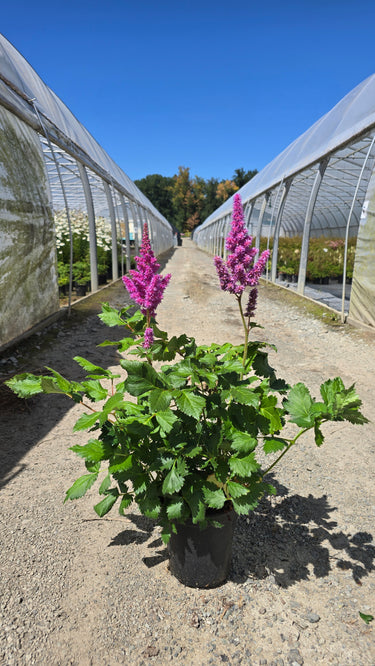
The foliage of 'Visions' is dark green, dense, and deeply divided, resembling fern-like leaves. The textured, glossy foliage creates a rich background that complements the bold, upright flower plumes. Even when not in bloom, the foliage provides a lush and attractive feature in the garden.

Flower Description
  • Flowering Season: Mid to late summer (July to August).
  • Flower Description: Astilbe 'Visions' produces vibrant, dense plumes of raspberry-pink flowers that stand tall above the foliage. The fluffy, compact blooms create an eye-catching display and provide a pop of color to shady garden areas. These long-lasting flowers are also great for cutting and using in floral arrangements.
Pruning & Maintenance

Deadhead spent flowers to encourage prolonged blooming and keep the plant looking neat. In late fall or early spring, cut back the foliage to ground level to allow new growth to emerge.

Water Needs

Astilbe 'Visions' prefers consistently moist soil. Water deeply and regularly, especially during dry spells or hot summer months. This variety is more drought-tolerant than other Astilbes but still requires regular watering to prevent stress and maintain healthy blooms. Mulching around the base helps retain soil moisture.

Light Needs

Partial shade to full shade. 'Visions' thrives in shaded areas but can tolerate some morning sun. In hotter climates, it is best grown in full shade to protect the foliage and flowers from intense sunlight.

Harvesting

Harvesting Season: Mid to late summer, typically July through August

Best Time to Cut: When the plumes are fully developed and show their characteristic rich rose-pink color

Harvest Method: Use clean, sharp pruners or scissors to cut flower stems at their base, ideally in the early morning when moisture content is highest

Use as Cut Flower: 'Visions' plumes are excellent in fresh bouquets, adding feathery texture and vibrant color

Drying: Suitable for drying—hang stems upside down in a dry, dark place with good airflow

Reblooming: Not typically reblooming; deadheading maintains tidy appearance but won't stimulate additional flowering

Post-Harvest Notes: Leave some flowers uncut for ornamental seed heads and wildlife interest into fall and winter

Fertilizing

Apply a balanced, slow-release fertilizer or organic compost in early spring to promote healthy growth and vibrant flowers. A second light feeding in mid-summer can help boost flower production. Avoid excessive fertilization, which can lead to lush foliage growth but fewer blooms.

Additional Care Tips
  • Mulching: Mulch around the base of the plant with organic material such as compost or shredded leaves to help retain moisture, regulate soil temperature, and suppress weeds. Mulching also provides the roots with additional protection during hot summers or cold winters.
  • Winter Care: 'Visions' is hardy and requires minimal winter care. In colder climates, the plant will go dormant after the first frost, and the foliage can be cut back. New growth will emerge in the spring.
  • Pest and Disease Resistance: This variety is generally pest- and disease-resistant, making it a low-maintenance option for gardeners. Ensure proper air circulation to prevent fungal issues such as powdery mildew.
Pollination

Astilbe 'Visions' is pollinated by bees and other insects. The nectar-rich flowers are an excellent source of food for pollinators, making this plant an important addition to wildlife-friendly gardens. It does not require additional pollination care.

Companion Plants

‘Visions’ thrives in part to full shade with consistent moisture and pairs beautifully with other shade-loving plants that contrast its bold, textured plumes.

 Ideal Companion Plants:

  • Hosta – Large, broad foliage contrasts beautifully with astilbe’s airy texture
  • Heuchera – Adds colorful, ruffled foliage underneath astilbe’s upright blooms
  • Ferns (e.g., Lady Fern, Japanese Painted Fern) – Provide graceful background texture
  • Brunnera macrophylla – Spring blooms and heart-shaped leaves enhance woodland designs
  • Pulmonaria – Early spring interest and similar cultural needs
  • Tiarella (Foamflower) – Compact, flowering groundcover with ornamental leaves
  • Hydrangea (shade-tolerant varieties) – Larger blooms for a dramatic layered look

Carex or Hakonechloa – Graceful grasses to soften edges around astilbe

Flowering and Seasonality
  • Foliage Emerges: Early spring
  • Bloom Period: Mid to late summer (typically June to August)
  • Dormancy: Dies back in late fall; regrows in spring

Foliage Color: Green with bronze tints; holds attractive texture through the growing season

  • Flowering Season: Mid to late summer (July to August).
  • Flower Description: Astilbe 'Visions' produces vibrant, dense plumes of raspberry-pink flowers that stand tall above the foliage. The fluffy, compact blooms create an eye-catching display and provide a pop of color to shady garden areas. These long-lasting flowers are also great for cutting and using in floral arrangements.
Pet Friendly

Yes

Growing Zone
  • Zone 4
  • Zone 5
  • Zone 6
  • Zone 7
  • Zone 8
  • Zone 9

Click to enlarge