Growing Information

Growing zone guide
Growing Zone Zone 4, Zone 5, Zone 6, Zone 7, Zone 8, Zone 9
Sunlight Partial shade to full shade
Type of Soil Slightly acidic to neutral
Mature Height 18 to 24 inches
Maintenance Level Low maintenance
Water Requirement High water needs (twice a week)

Learn more about this plant

Additional Information
Growth Rate
  • Growth Rate: Moderate; typically reaches its mature size within 2-3 growing seasons.
  • Mature Size: Grows to a height of 24-30 inches and a spread of 18-24 inches, forming a compact, upright habit.
Colorful Leaves No
Flowering Yes
Bloom Color White
Ornamental Berries N/A
Disease resistant Yes
Cold Tolerant Yes
Heat Tolerant No
Drought Tolerant No
Deer Resistant Yes
Edible No
Wildlife Attraction

Astilbe attracts pollinators such as bees and butterflies due to its nectar-rich flowers. Its dense foliage also provides shelter for small insects, contributing to its ecological value. Additionally, it is deer and rabbit-resistant, making it an excellent choice for gardens prone to wildlife damage.

Self-pollinating Self-pollinating
Seasonality
  • Seasonality: Herbaceous perennial; dies back in winter and regrows in spring.

Flowering Season: Mid-summer (June-July)

Ideal For

Shade or woodland borders

Moist garden beds and low-lying areas

Mixed perennial gardens

Light up darker garden areas with white plumes

Great for cut flower use

Leaf Description

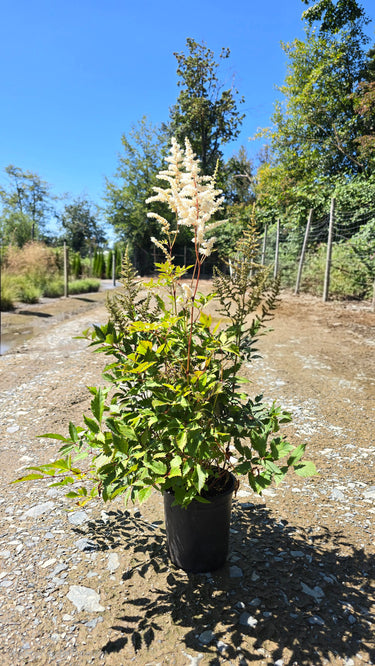
The foliage of 'Ellie' is fern-like, with finely divided, dark green leaves that provide texture and depth. The foliage stays lush and green throughout the growing season, even when the plant is not in bloom, offering excellent coverage and interest in shaded garden areas.

Flower Description

'Ellie' produces stunning, pure white, plume-like flowers on tall, upright stems. These feathery flower spikes rise above the plant’s dark green foliage, creating a striking display. The flowers bloom in dense clusters and remain for several weeks, making them a standout feature in shaded gardens. These blooms also attract pollinators such as bees and butterflies.

Pruning & Maintenance

Minimal pruning is required for 'Ellie'. Remove spent flower spikes after blooming to maintain a tidy appearance and encourage healthy growth. In late fall or early winter, cut back the foliage to the ground as the plant enters dormancy. Fresh new growth will emerge in the spring.

Water Needs

Astilbe hybrid 'Ellie' prefers consistently moist soil. Regular watering is essential, especially during dry spells or hot weather. The soil should remain evenly moist but not waterlogged. Mulching helps conserve soil moisture and reduces the need for frequent watering.

Light Needs

Thrives in partial shade to full shade. While 'Ellie' can tolerate some morning sun, it performs best in shaded or lightly filtered light. Full sun exposure can cause the foliage to dry out or scorch, especially in hot climates, so it's best suited for shaded areas.

Harvesting

The flowers of 'Ellie' are ideal for cut flower arrangements. Harvest the flower plumes when they are fully open for maximum vase life. Astilbe blooms can also be dried for long-lasting indoor arrangements—simply cut the flower stalks and hang them upside down in a well-ventilated area to dry.

Fertilizing

Fertilize in early spring with a balanced, slow-release fertilizer or compost to support healthy growth and vibrant blooms. A second light feeding after flowering can help sustain the plant through the summer. Avoid over-fertilizing, as it can lead to excessive foliage growth at the expense of flowers.

Additional Care Tips
  • Mulching: Apply a 2-3 inch layer of mulch around the plant to retain moisture, reduce weeds, and regulate soil temperature. This is especially important in warmer climates where soil tends to dry out faster.

  • Pest and Disease Resistance: Astilbe is generally resistant to pests and diseases but may experience powdery mildew in overly humid conditions. Ensuring good air circulation around the plant helps prevent this issue.

  • Winter Care: In colder climates, apply a layer of mulch or compost over the root zone to protect the plant from frost. 'Ellie' will die back in winter but regrow in spring.
Pollination

Pollination Type:  Self-pollinating

Mechanism:

  • Contains both male and female parts in each flower
  • Insects (bees, flies) help transfer pollen, enhancing seed production but not required for bloom

Seed Production:

  • While seeds can form, Astilbes are more commonly propagated by division for reliability
Companion Plants

Astilbe ‘Ellie’ is a shade-loving, moisture-dependent perennial with elegant white plumes and dark green foliage. It pairs beautifully with plants that either highlight its color or complement its texture.

 Ideal Companion Plants:

🌱 Shade-Loving Perennials:

  • Hosta – Large, bold leaves contrast well with astilbe’s feathery texture
  • Heuchera (Coral Bells) – Colorful mounded foliage adds richness and contrast
  • Ferns (e.g., Japanese Painted Fern, Lady Fern) – Bring airiness and movement to the space
  • Tiarella (Foamflower) – Attractive foliage and light flower spikes make a great border combo
  • Brunnera macrophylla – Heart-shaped, silver-frosted leaves shine beneath Ellie’s white blooms
  • Pulmonaria (Lungwort) – Spotted leaves and early flowers extend seasonal interest
  • Dicentra (Bleeding Heart) – Romantic spring blooms with graceful arching stems
  • Ligularia – Large foliage and yellow blooms pair well in moist, shady beds

🌿 Moisture-Loving Shrubs:

  • Hydrangea macrophylla or arborescens – Large flowering heads complement astilbe’s fine texture
  • Clethra alnifolia (Summersweet) – Fragrant white or pink blooms in late summer with similar needs
  • Rhododendrons and Azaleas – Evergreen structure and early blooms enhance shade gardens

🌾 Ornamental Grasses:

  • Hakonechloa macra (Japanese Forest Grass) – Offers a cascading habit with golden tones
  • Carex species (Sedge) – Low-growing, grass-like foliage for edging or contrast

Flowering and Seasonality
  • Seasonality: Herbaceous perennial; dies back in winter and regrows in spring.

Flowering Season: Mid-summer (June-July)

'Ellie' produces stunning, pure white, plume-like flowers on tall, upright stems. These feathery flower spikes rise above the plant’s dark green foliage, creating a striking display. The flowers bloom in dense clusters and remain for several weeks, making them a standout feature in shaded gardens. These blooms also attract pollinators such as bees and butterflies.

Pet Friendly

Yes

Growing Zone
  • Zone 4
  • Zone 5
  • Zone 6
  • Zone 7
  • Zone 8
  • Zone 9

Click to enlarge