Growing Information

Growing zone guide
Growing Zone Zone 4, Zone 5, Zone 6, Zone 7, Zone 8
Sunlight Partial shade to full shade
Type of Soil Acidic
Mature Height 24 to 30 inches
Maintenance Level Low maintenance
Water Requirement High water needs (twice a week)

Learn more about this plant

Additional Information
Growth Rate

Moderate growth speed

– Forms tidy clumps with upright flower stalks

– Mature height: 24–30 inches tall, 18–24 inches wide

Colorful Leaves Yes
Flowering Yes
Bloom Color White
Ornamental Berries N/A
Disease resistant Yes
Cold Tolerant Yes
Heat Tolerant No
Drought Tolerant No
Deer Resistant Yes
Edible No
Wildlife Attraction

– Flowers attract bees and pollinators

– Foliage is typically deer and rabbit resistant

Self-pollinating Cross-pollinating
Seasonality

Spring: New foliage emerges, buds form

Summer: Showy bloom in midseason

Fall: Foliage yellows and dies back

Winter: Dormant root system; mulch in colder zones

Ideal For

– Woodland borders – moisture-loving garden beds – mass planting for dramatic floral effect – shade borders

Leaf Description

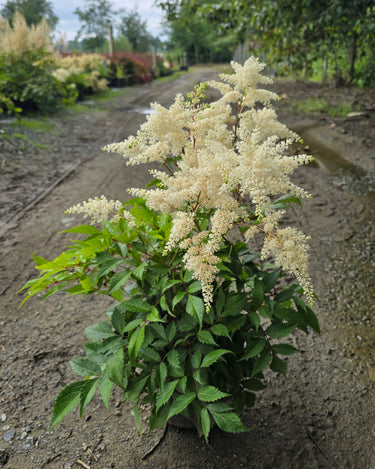
Deep green, serrated foliage with a fern-like appearance

– Textured and finely divided, forming an attractive mound

– Remains visually appealing through most of the season

Flower Description

Elegant white, feathery plumes

Arching and airy, giving a “firework” display above the foliage

– Strong, upright flower stems

– Blooms in mid to late summer (typically July–August, depending on region)

Pruning & Maintenance

– Remove spent flower plumes after bloom to keep tidy

– Cut back all foliage to the crown in late fall or early spring

– Trim off any scorched or ragged leaves during the season

Water Needs

– Requires consistently moist soil—do not let dry out

– More drought-tolerant than some Astilbe types (chinensis are generally tougher)

– Apply mulch to preserve moisture in summer heat

Light Needs

– Thrives in partial shade to full shade

– Can tolerate full sun if soil remains consistently moist

– Ideal for morning sun and afternoon shade exposure

Harvesting

– Plumes are excellent for cut or dried flower arrangements

– No edible or ornamental fruit

– Divide clumps every 3–4 years to maintain health and vigor

Fertilizing

– Feed in early spring with a balanced fertilizer (10-10-10) or compost

– Supplemental feeding in midsummer helps in poor soils

– Organic mulch improves fertility over time

Additional Care Tips N/A
Pollination

– Attracts bees, hoverflies, and other beneficial pollinators

– Flowers may produce seed, though rarely used for propagation

– Propagate through division every few years

Companion Plants

– Pairs well with Hosta, Heuchera, Brunnera, Ferns, and Tiarella

– Complements bold foliage plants like Ligularia or Rodgersia

– Great under deciduous shrubs like Hydrangea or Cornus

– Enhances streambanks, boggy beds, and shaded borders with brightness

Flowering and Seasonality

Spring: New foliage emerges, buds form

Summer: Showy bloom in midseason

Fall: Foliage yellows and dies back

Winter: Dormant root system; mulch in colder zones

Elegant white, feathery plumes

Arching and airy, giving a “firework” display above the foliage

– Strong, upright flower stems

– Blooms in mid to late summer (typically July–August, depending on region)

Pet Friendly

Yes

Growing Zone
  • Zone 4
  • Zone 5
  • Zone 6
  • Zone 7
  • Zone 8

Click to enlarge