Growing Information

Growing zone guide
Growing Zone Zone 4, Zone 5, Zone 6, Zone 7, Zone 8
Sunlight Partial shade
Type of Soil Slightly acidic to neutral
Mature Height 20 to 26 inches
Maintenance Level Low maintenance
Water Requirement High water needs (twice a week)

Learn more about this plant

Additional Information
Growth Rate

Moderate; reaches mature height (about 18–24") within 1–2 seasons

– Non-invasive, clump-forming habit

Colorful Leaves Yes
Flowering Yes
Bloom Color White
Ornamental Berries N/A
Disease resistant No
Cold Tolerant Yes
Heat Tolerant No
Drought Tolerant No
Deer Resistant Yes
Edible No
Wildlife Attraction

Bees and pollinators are drawn to its early-season nectar

Deer and rabbit resistant thanks to coarse texture and unpalatable foliage

Self-pollinating Cross-pollinating
Seasonality

Spring: Fresh green foliage emerges

Summer: White blooms appear early; plumes last several weeks

Fall: Foliage turns yellow or bronze before going dormant

Winter: Dormant; dry flower stalks may persist if not removed

Ideal For

– Woodland gardens – borders – water edges

Leaf Description

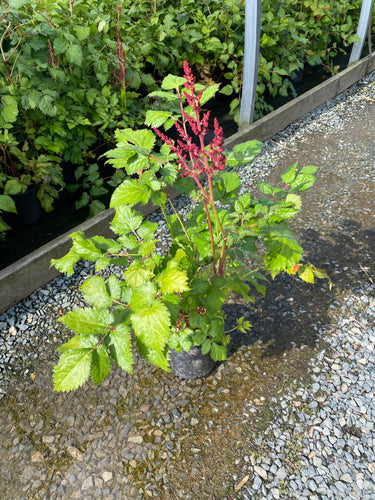
Deep green, fern-like foliage with fine serration

– Forms a tidy, bushy mound

– Bronze tint may appear on emerging spring growth

– Holds up well throughout the season, even after bloom

Flower Description

– Dense, upright plumes of bright white flowers

– Flowering begins early to mid-summer (typically June to early July)

– Strong stems resist flopping

– Flowers are excellent for fresh-cut or dried arrangements

Pruning & Maintenance

Deadhead flower stalks after bloom if desired for tidiness

– Foliage can be left for structure through summer and removed in late fall or early spring

– Divide clumps every 3–4 years to rejuvenate bloom strength and manage size

Water Needs

– Requires consistent soil moisture—do not allow to dry out

– Water deeply once or twice per week in dry spells

– Ideal for moist borders, woodland beds, and rain gardens

Light Needs

– Performs best in part shade to full shade

– Can tolerate morning sun or full sun in cooler northern zones if kept consistently moist

– Avoid afternoon sun in hot climates to prevent leaf scorch

Harvesting

– Cut flower stalks when plumes are 50–75% open for longest vase life

– Hang upside down in a cool, dry location if drying

– Not harvested for culinary or medicinal purposes

Fertilizing

– In spring, apply a slow-release balanced fertilizer or compost topdressing

– Avoid high-nitrogen fertilizers that promote leafy growth over blooms

– Regular mulching will support nutrient retention and soil health

Additional Care Tips N/A
Pollination

Self-pollinating

– Flowers attract bees, hoverflies, and some butterflies

– Seed production is minimal; plants are usually propagated by division

Companion Plants

Heuchera, Hosta, Tiarella, Pulmonaria, Brunnera, Ferns, Ligularia

– Ideal beneath shrubs like Hydrangea arborescens, Cornus sericea, or Viburnum nudum

– Beautiful paired with dark-leaved perennials for contrast or silver-foliaged shade plants

Flowering and Seasonality

Spring: Fresh green foliage emerges

Summer: White blooms appear early; plumes last several weeks

Fall: Foliage turns yellow or bronze before going dormant

Winter: Dormant; dry flower stalks may persist if not removed

– Dense, upright plumes of bright white flowers

– Flowering begins early to mid-summer (typically June to early July)

– Strong stems resist flopping

– Flowers are excellent for fresh-cut or dried arrangements

Pet Friendly

Yes

Growing Zone
  • Zone 4
  • Zone 5
  • Zone 6
  • Zone 7
  • Zone 8

Click to enlarge