
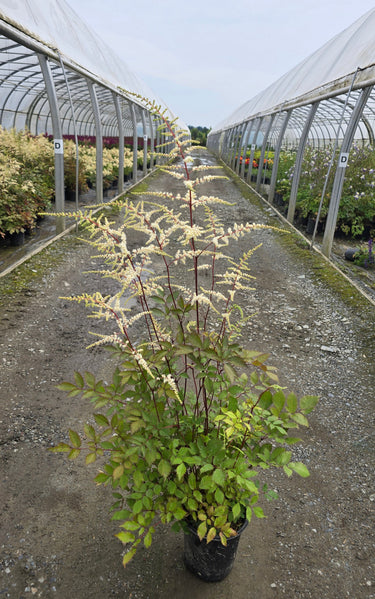

Moccachino Astilbe
Unique rich chocolate-brown foliage forms the backdrop for soft pink plumes in midsummer — a sophisticated, designer-look astilbe for shaded modern borders and gardens. (Astilbe hybrid 'Moccachino')
Astilbe hybrid 'Moccachino' is a striking perennial admired for its dramatic foliage and soft, creamy-white flower plumes. Known for its deep chocolate-bronze leaves and airy blooms that appear in mid to late summer, this shade-loving plant adds elegant contrast and texture to woodland gardens and moist borders. ‘Moccachino’ is both deer-resistant and cold-hardy, thriving in cooler climates with consistent moisture. Its bold foliage color and refined flowering habit make it an excellent choice for shady beds, containers, or as a foliage accent among ferns and hostas. Ideal for gardeners seeking a low-maintenance perennial with both foliage interest and seasonal bloom.
Your payment information is processed securely. We do not store credit card details nor have access to your credit card information.
Growing Information
Growing zone guideLearn more about this plant
Additional Information
| Growth Rate | |
|---|---|
| Colorful Leaves | Yes |
| Flowering | |
| Bloom Color | White |
| Ornamental Berries | N/A |
| Disease resistant | |
| Cold Tolerant | |
| Heat Tolerant | |
| Drought Tolerant | |
| Deer Resistant | |
| Edible | |
| Wildlife Attraction | |
| Self-pollinating | Self-pollinating |
| Seasonality | |
| Ideal For | |
| Leaf Description | |
| Flower Description | |
| Pruning & Maintenance | |
| Water Needs | |
| Light Needs | |
| Harvesting | |
| Fertilizing | |
| Additional Care Tips | N/A |
| Pollination | |
| Companion Plants |
Flowering and Seasonality
Pet Friendly
Yes
Growing Zone
- Zone 4
- Zone 5
- Zone 6
- Zone 7
- Zone 8
- Zone 9
Click to enlarge
Growing Zone

You may also like


