Growing Information

Growing zone guide
Growing Zone Zone 4, Zone 5, Zone 6, Zone 7, Zone 8
Sunlight Partial shade to full shade
Type of Soil Acidic
Mature Height 16 to 20 inches
Maintenance Level Low maintenance
Water Requirement High water needs (twice a week)

Learn more about this plant

Additional Information
Growth Rate

Fast-growing and early blooming

– Compact and bushy clump-forming habit

– Mature size: 12–18 inches tall and 12–18 inches wide

Colorful Leaves Yes
Flowering Yes
Bloom Color Red
Ornamental Berries N/A
Disease resistant Yes
Cold Tolerant Yes
Heat Tolerant No
Drought Tolerant No
Deer Resistant Yes
Edible No
Wildlife Attraction

Attracts pollinators, including bees and hoverflies

Deer and rabbit resistant

Self-pollinating Cross-pollinating
Seasonality

Spring: Foliage emerges and buds form

Summer: Main bloom period in June–July, sometimes with light rebloom

Fall: Foliage may persist; cut back before winter

Winter: Root crown remains dormant; mulch if in colder zones

Ideal For

– Compact borders – woodland gardens – containers – mass planting for color impact

Leaf Description

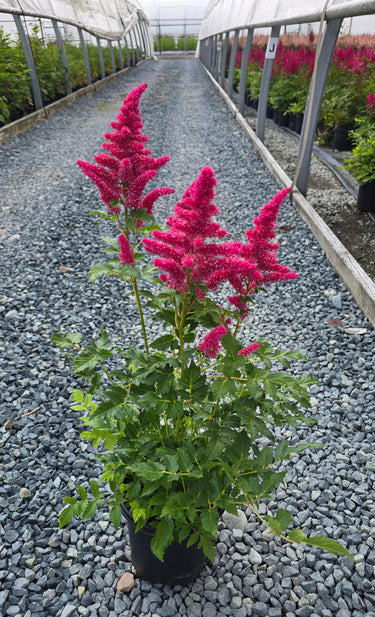
Lush green, fern-like foliage that’s finely divided

– Forms a neat, dense mound beneath the flowers

– Maintains attractive texture even out of bloom

Flower Description

Carmine-red plumes that are dense, upright, and feathery

Blooms earlier than many other Astilbe—usually early to midsummer

– High bloom count for a compact cultivar

– Excellent for cutting or drying

Pruning & Maintenance

Hosta, Heuchera, Brunnera, Pulmonaria, and Ferns

Tiarella, Alchemilla mollis, or Dicentra for spring layering

– Works well under Hydrangea, Japanese Maple, or Dogwood

– Great in container combinations with trailing or upright foliage plants

Water Needs

– Requires consistently moist soil

– Mulch helps retain moisture during warmer months

Not drought tolerant—water regularly in summer

Light Needs

Partial shade is ideal

– Can tolerate full shade, though flower production may be lighter

– In cooler zones, tolerates morning sun if kept moist

– Avoid direct afternoon sun in hot climates

Harvesting

Flowers are harvestable for fresh or dried arrangements

Divide every 3–4 years to rejuvenate and propagate

Fertilizing

– Apply balanced fertilizer (10-10-10) or compost in early spring

– Optional second feed midseason for prolonged flowering

– Avoid excess nitrogen to reduce legginess

Additional Care Tips N/A
Pollination

– Pollinated by bees, hoverflies, and other small insects

– Flowers may produce seed, but propagation is usually done by division

Companion Plants

Hosta, Heuchera, Brunnera, Pulmonaria, and Ferns

Tiarella, Alchemilla mollis, or Dicentra for spring layering

– Works well under Hydrangea, Japanese Maple, or Dogwood

– Great in container combinations with trailing or upright foliage plants

Flowering and Seasonality

Spring: Foliage emerges and buds form

Summer: Main bloom period in June–July, sometimes with light rebloom

Fall: Foliage may persist; cut back before winter

Winter: Root crown remains dormant; mulch if in colder zones

Carmine-red plumes that are dense, upright, and feathery

Blooms earlier than many other Astilbe—usually early to midsummer

– High bloom count for a compact cultivar

– Excellent for cutting or drying

Pet Friendly

Yes

Growing Zone
  • Zone 4
  • Zone 5
  • Zone 6
  • Zone 7
  • Zone 8

Click to enlarge