
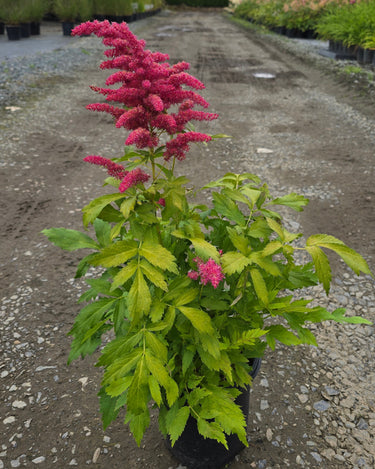

Younique Cerise Astilbe
Vivid cerise-pink plumes with a strong upright habit bloom prolifically in midsummer, offering exceptional longevity and weather resistance in shade and part-sun borders. (Astilbe hybrid Younique Cerise)
$25.00
/
Shipping calculated at checkout.
Astilbe Younique™ Cerise is a compact, early-blooming astilbe known for its vivid cerise-pink flower plumes that stand out brilliantly against deep green, finely cut foliage. Bred for high flower count and disease resistance, this cultivar is ideal for smaller spaces, containers, and shaded gardens, while offering reliable performance and strong visual impact.
In stock (500)
Payment & Security
Your payment information is processed securely. We do not store credit card details nor have access to your credit card information.
Growing Information
Growing zone guide
Growing Zone
Zone 4,
Zone 5,
Zone 6,
Zone 7,
Zone 8
Sunlight
Partial shade to full shade
Type of Soil
Slightly acidic to neutral
Mature Height
Maintenance Level
Water Requirement
Learn more about this plant
Additional Information
| Growth Rate | |
|---|---|
| Colorful Leaves | Yes |
| Flowering | |
| Bloom Color | Pink |
| Ornamental Berries | N/A |
| Disease resistant | |
| Cold Tolerant | |
| Heat Tolerant | |
| Drought Tolerant | |
| Deer Resistant | |
| Edible | |
| Wildlife Attraction | |
| Self-pollinating | Self-pollinating |
| Seasonality | |
| Ideal For | |
| Leaf Description | |
| Flower Description | |
| Pruning & Maintenance | |
| Water Needs | |
| Light Needs | |
| Harvesting | |
| Fertilizing | |
| Additional Care Tips | N/A |
| Pollination | |
| Companion Plants |
Flowering and Seasonality
Pet Friendly
Yes
Growing Zone
- Zone 4
- Zone 5
- Zone 6
- Zone 7
- Zone 8
Click to enlarge
Growing Zone

You may also like

Smokey Saskatoon Berry
$27.60
/

William Baffin Explorer Rose
$51.00
/

Picobella Rosso Weigela
$45.24
/


Magical Daydream Winterberry
$51.00
/

