Growing Information

Growing zone guide
Growing Zone Zone 7, Zone 8, Zone 9
Sunlight Partial shade
Type of Soil Acidic
Mature Height 12 to 24 inches
Maintenance Level Low maintenance
Water Requirement Moderate watering (once a week)

Learn more about this plant

Additional Information
Growth Rate

Slow-growing

– Typically grows 2–4 inches per year, forming a dense, low mound

Colorful Leaves No
Flowering Yes
Bloom Color White
Ornamental Berries N/A
Disease resistant No
Cold Tolerant Yes
Heat Tolerant No
Drought Tolerant No
Deer Resistant No
Edible No
Wildlife Attraction

– Attracts bees and butterflies during bloom

– Not a major attractant for birds or mammals

Generally deer-resistant, though not entirely deer-proof

Self-pollinating Self-pollinating
Seasonality

Spring: Foliage greens up; main bloom season (late spring)

Summer: Maintains attractive evergreen foliage

Fall: Foliage remains; may take on subtle bronze hues

Winter: Evergreen structure adds year-round garden presence

Ideal For

– Front of borders – foundation plantings – low hedges – Japanese or woodland gardens – containers – mass planting under trees – courtyards and shaded patios

Leaf Description

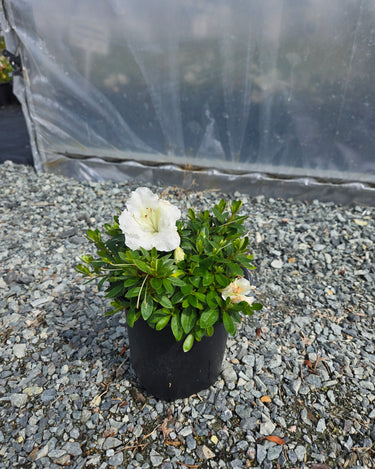
Small, glossy evergreen leaves, deep green in color

– Dense, compact foliage gives the plant a tidy, refined look year-round

– Leaves may bronze slightly in cold winters

Flower Description

– Large, snow-white blooms with delicate ruffled edges

– Blooms are semi-double to single

– Flowers often measure 2–3 inches wide – showy for a dwarf azalea

– Appears in late spring to early summer, often later than most azaleas

Pruning & Maintenance

When: Right after flowering (late spring to early summer)

How: Lightly prune to shape and remove spent flowers or deadwood

– Avoid hard pruning or late-season cuts, as this removes next year’s buds

Water Needs

– Requires consistent moisture, especially in warm weather

– Soil should be evenly moist but not soggy

– Mulch helps conserve moisture; avoid overhead watering to prevent disease

Light Needs

– Thrives in partial shade – ideal with morning sun and dappled afternoon light

– Can tolerate full sun in cooler climates with adequate moisture

– Avoid deep shade, which reduces blooming

Harvesting

– Not grown for harvest

– Flowers are ornamental only and not edible

– No commercial or culinary harvesting

Fertilizing

– Apply a slow-release, acid-forming fertilizer for azaleas in early spring

– Optional light refeeding just after bloom

– Avoid fertilizers with high nitrogen to prevent excessive leaf growth at the expense of flowers

Additional Care Tips N/A
Pollination

– Pollinated by bees and small insects

– Self-fertile, but fruit set is minimal and not significant

– Flowers are nectar-rich, contributing to pollinator habitats

Companion Plants

Hosta – bold leaves contrast beautifully with low azalea mounds

Ferns – offer soft texture and thrive in similar conditions

Heuchera – colorful foliage pairs well with white blooms

Japanese Forest Grass (Hakonechloa) – graceful and shade-loving

Pieris japonica, Camellia, and Hydrangea macrophylla – for staggered bloom and structural layering in acidic shade beds

Flowering and Seasonality

Spring: Foliage greens up; main bloom season (late spring)

Summer: Maintains attractive evergreen foliage

Fall: Foliage remains; may take on subtle bronze hues

Winter: Evergreen structure adds year-round garden presence

– Large, snow-white blooms with delicate ruffled edges

– Blooms are semi-double to single

– Flowers often measure 2–3 inches wide – showy for a dwarf azalea

– Appears in late spring to early summer, often later than most azaleas

Pet Friendly

No

Growing Zone
  • Zone 7
  • Zone 8
  • Zone 9

Click to enlarge