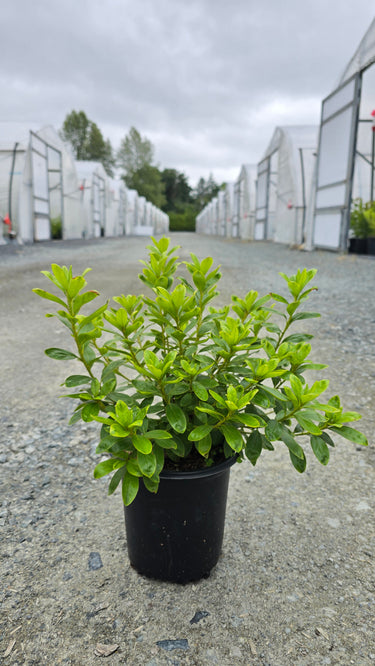
Growing Information

Growing zone guide
Growing Zone Zone 6, Zone 7, Zone 8, Zone 9
Sunlight Partial shade
Type of Soil Acidic
Mature Height 2 to 3 ft.
Maintenance Level Low maintenance
Water Requirement Moderate watering (once a week)

Learn more about this plant

Additional Information
Growth Rate

Moderate

– Reaches mature size of approximately 2–3 feet tall and wide in several years

Colorful Leaves No
Flowering Yes
Bloom Color White
Ornamental Berries N/A
Disease resistant No
Cold Tolerant Yes
Heat Tolerant No
Drought Tolerant No
Deer Resistant No
Edible No
Wildlife Attraction

Attracts bees and butterflies

– Provides nectar in early to mid-spring

– Generally not favored by deer, but may be browsed in winter if food is scarce

Self-pollinating Self-pollinating
Seasonality

Spring: Heavy bloom display in mid-spring

Summer: Evergreen foliage remains dense

Fall/Winter: Leaves persist; some bronzing in colder areas adds seasonal character

Ideal For

– Foundation plantings – low hedges – shaded garden borders – woodland gardens – Asian or Japanese-themed landscapes – containers in shaded patios – mass plantings under trees

Leaf Description

Evergreen – small, elliptical, glossy dark green leaves

– Dense foliage maintains structure and color through all seasons

– May exhibit slight bronzing in colder winter climates

Flower Description

– Clusters of pure white blooms

– Small to medium-sized, single flowers with delicate, open form

– Elegant contrast against dark foliage

– Bloom time: mid-spring, earlier than late-blooming types

Pruning & Maintenance

When: Right after flowering, before new buds form (late spring)

How: Lightly shape or remove old blooms; avoid hard pruning

– Avoid pruning late in the season, which removes flower buds for the next year

Water Needs

Evenly moist, well-drained soil is essential

– Water deeply during dry periods, especially during establishment

– Mulch helps maintain soil moisture and temperature

– Avoid soggy soil, which can cause root rot

Light Needs

Partial shade is ideal

– Can tolerate full sun in cooler climates, but prefers some afternoon shade in hot zones

– Avoid full deep shade, which will reduce flowering

Harvesting

Not harvested for any ornamental or edible use

– Grown strictly for display purposes

Fertilizing

– Fertilize in early spring with an acidic, slow-release fertilizer formulated for azaleas

– Avoid over-fertilization; apply again lightly after blooming if needed

– Do not fertilize after mid-summer to avoid forcing late-season growth

Additional Care Tips N/A
Pollination

Pollinated by bees and insects

– Self-fertile; produces seed capsules occasionally but not significant

– Flowers provide nectar support for pollinators

Companion Plants

Pieris japonica – evergreen with similar soil and light preferences

Heuchera – foliage color contrasts beautifully with white flowers

Ferns – for soft textures in part-shade beds

Hosta – lush foliage pairs well in shaded borders

Camellia, Hydrangea macrophylla, or Astilbe – for seasonal succession of bloom

Flowering and Seasonality

Spring: Heavy bloom display in mid-spring

Summer: Evergreen foliage remains dense

Fall/Winter: Leaves persist; some bronzing in colder areas adds seasonal character

– Clusters of pure white blooms

– Small to medium-sized, single flowers with delicate, open form

– Elegant contrast against dark foliage

– Bloom time: mid-spring, earlier than late-blooming types

Pet Friendly

No

Growing Zone
  • Zone 6
  • Zone 7
  • Zone 8
  • Zone 9

Click to enlarge