Growing Information

Growing zone guide
Growing Zone Zone 3, Zone 4, Zone 5, Zone 6, Zone 7, Zone 8
Sunlight Partial shade to full shade
Type of Soil Slightly acidic to neutral
Mature Height 12 to 15 inches
Maintenance Level Low maintenance
Water Requirement Moderate watering (once a week)

Learn more about this plant

Additional Information
Growth Rate
  • Growth Rate: Moderate; Bergenia 'Pink Dragonfly' typically reaches its mature size within 2-3 growing seasons.
  • Mature Size: Grows to a height of 12-16 inches with a spread of 12-18 inches, forming a dense, clump-forming mound.

Colorful Leaves Yes
Flowering Yes
Bloom Color Pink
Ornamental Berries N/A
Disease resistant Yes
Cold Tolerant Yes
Heat Tolerant No
Drought Tolerant No
Deer Resistant Yes
Edible No
Wildlife Attraction

Bergenia 'Pink Dragonfly' attracts pollinators such as bees and butterflies with its vibrant pink flowers. The dense foliage also offers shelter for small wildlife and insects, enhancing the ecological value of your garden. Deer and rabbits typically avoid this plant due to its tough, leathery leaves, making it an excellent choice for wildlife-prone areas.

Self-pollinating Self-pollinating
Seasonality
  • Seasonality: Semi-evergreen; retains some leaves throughout the year.
  • Flowering Season: Late winter to early spring (February-April)
Ideal For

Woodland gardens, shaded borders, rock gardens, groundcover, edging, and mixed perennial beds

Leaf Description

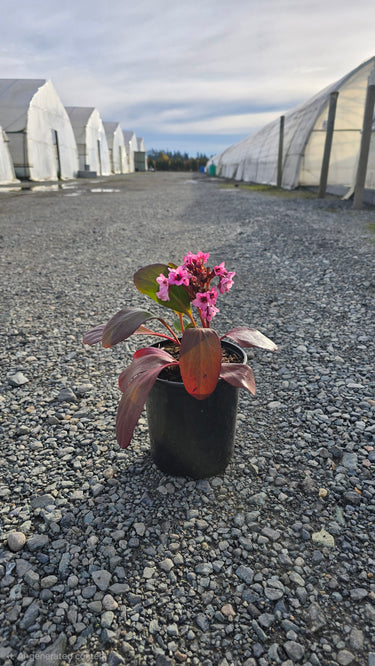
The large, leathery, rounded leaves of 'Pink Dragonfly' are a deep green during the growing season, turning a rich, reddish-bronze in fall and winter. The semi-evergreen foliage provides year-round interest and makes a bold statement in the garden. The leaves are thick and durable, forming a neat, clump-forming mound that adds texture and structure to borders and groundcovers.

Flower Description

Bergenia 'Pink Dragonfly' produces bold clusters of bright pink, bell-shaped flowers on upright, sturdy stems. These flowers bloom from late winter into early spring, creating a striking contrast against the dark green foliage. The blooms attract bees and other pollinators, making it a valuable addition to pollinator-friendly gardens.

Pruning & Maintenance

Pruning is minimal for Bergenia 'Pink Dragonfly'. Remove spent flower spikes after blooming to maintain a tidy appearance. In late fall or early spring, remove any dead or damaged leaves to encourage healthy new growth. No extensive pruning is needed, as the plant maintains its shape naturally.

Water Needs

While Bergenia 'Pink Dragonfly' prefers moderate watering, it is drought-tolerant once established. Water regularly during the first growing season to establish a deep root system. After that, water during dry spells, but avoid overwatering, as it prefers well-drained soil.

Light Needs

This versatile plant thrives in partial shade but can tolerate full sun in cooler climates. In hotter regions, plant 'Pink Dragonfly' in partial shade to protect its foliage from scorching. It will still bloom well in shaded conditions, making it a great option for woodland gardens and shaded borders.

Harvesting

The blooms of 'Pink Dragonfly' can be used in cut flower arrangements. Harvest the flowers when they are fully open for the best display in vases. The foliage can also be used as a bold element in floral arrangements, thanks to its rich color and texture.

Fertilizing

Fertilize in early spring with a balanced, slow-release fertilizer or a layer of organic compost. Avoid over-fertilizing, as Bergenia is relatively low-maintenance and thrives in moderately fertile soil. A second, light feeding after blooming can help maintain plant health throughout the growing season.

Additional Care Tips
  • Mulching: Apply a 2-3 inch layer of mulch around the base of the plant to retain moisture, regulate soil temperature, and reduce weeds. Mulching is especially important in hot or dry climates.
  • Pest and Disease Resistance: Bergenia 'Pink Dragonfly' is generally pest-free and disease-resistant. Its tough leaves deter deer and rabbits, and it is highly resistant to most garden pests.
  • Winter Care: This plant is hardy and does not require special winter care. In colder climates, the foliage will turn reddish-bronze and may die back slightly, but it will regrow in spring.
Pollination

Pollination Type: Insect-pollinated (entomophilous).


Primary Pollinators: Bees, butterflies, and hoverflies are attracted to its early-season pink blooms.


Reproductive Behavior: Self-fertile; capable of producing seed without another plant for cross-pollination, though cross-pollination enhances genetic diversity in mixed plantings.


Flowering Period: Early to mid-spring; flowers often emerge before many perennials bloom, providing one of the first nectar sources of the season.

Companion Plants

Hosta – Contrasts beautifully with Bergenia’s leathery leaves and pink blooms, especially in shaded beds.


Heuchera (Coral Bells) – Offers colorful foliage that pairs well with Bergenia’s deep green or bronze-red leaves.


Ferns – Provide soft, airy texture that complements Bergenia’s bold, glossy leaves in woodland gardens.


Brunnera macrophylla (Siberian Bugloss) – Blue spring flowers and heart-shaped leaves create a pleasing seasonal contrast.


Astilbe – Adds delicate, feathery blooms in similar shade-loving environments.


Pulmonaria (Lungwort) – Great for early spring color pairing; both thrive in cool, moist, semi-shaded areas.


Carex (Sedge) – Adds fine texture and movement around Bergenia’s dense foliage.


Ajuga reptans (Bugleweed) – Acts as a colorful, low-growing companion that fills in gaps and helps retain soil moisture.

Flowering and Seasonality
  • Seasonality: Semi-evergreen; retains some leaves throughout the year.
  • Flowering Season: Late winter to early spring (February-April)

Bergenia 'Pink Dragonfly' produces bold clusters of bright pink, bell-shaped flowers on upright, sturdy stems. These flowers bloom from late winter into early spring, creating a striking contrast against the dark green foliage. The blooms attract bees and other pollinators, making it a valuable addition to pollinator-friendly gardens.

Pet Friendly

Yes

Growing Zone
  • Zone 3
  • Zone 4
  • Zone 5
  • Zone 6
  • Zone 7
  • Zone 8

Click to enlarge