Growing Information

Growing zone guide
Growing Zone Zone 4, Zone 5, Zone 6, Zone 7, Zone 8, Zone 9
Sunlight Medium to bright light
Type of Soil Slightly acidic to neutral
Mature Height 2-3 feet
Maintenance Level Moderate maintenance
Water Requirement Moderate watering (once a week)

Learn more about this plant

Additional Information
Growth Rate

  • Speed: Slow to Medium; 'Green Mound' grows steadily, adding several inches per year.
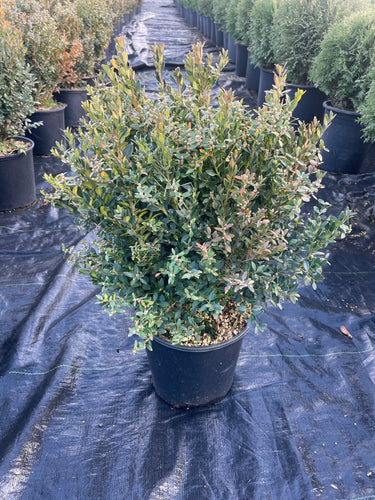
  • Mature Size: Reaches a height and spread of 2-3 feet, making it suitable for low hedges, borders, or container gardening.

Colorful Leaves No
Flowering No
Bloom Color Yellow , Green
Ornamental Berries N/A
Disease resistant Yes
Cold Tolerant No
Heat Tolerant No
Drought Tolerant No
Deer Resistant Yes
Edible No
Wildlife Attraction

Buxus hybrid 'Green Mound' does not specifically attract wildlife due to its lack of significant flowers or fruit. However, its dense foliage may provide shelter for small birds and insects.

Self-pollinating Self-pollinating
Seasonality
  • Flowering Season: 'Green Mound' produces small, inconspicuous flowers in early spring (March to April), which are not particularly ornamental.
  • Seasonality: As an evergreen, 'Green Mound' maintains its lush green foliage throughout the year, providing consistent color and structure to the garden.
Ideal For
  • Formal Borders & Low Hedges – Naturally rounded shape makes it perfect for clean, low edging
  • Foundation Planting – Compact and evergreen for year-round structure near buildings
  • Topiary & Container Gardens – Easily shaped into spheres, cones, or other formal forms
  • Mixed Shrub Beds – Offers texture and evergreen color in mixed plantings

    Knot Gardens & Parterres – Favored for tight growth and easy shearing in traditional designs
Leaf Description

The leaves of 'Green Mound' are small, rounded, and deep green with a glossy finish. The dense, compact foliage forms a neat, rounded shape that adds elegance and structure to any garden design.

Flower Description

The flowers are small, greenish-yellow, and not visually prominent. They appear in early spring but are secondary to the plant’s attractive foliage.

Pruning & Maintenance

Prune 'Green Mound' in late winter or early spring before new growth begins. Regular pruning helps maintain its shape and encourages dense, healthy growth. Remove any dead or damaged branches and trim to achieve the desired form.

Water Needs

'Green Mound' requires consistent moisture, especially during dry periods. Water deeply to keep the soil moist but not waterlogged. Ensure proper drainage to prevent root rot.

Light Needs

Thrives in full sun to partial shade. It can handle up to 4-6 hours of direct sunlight per day but also grows well in light shade, making it adaptable to various garden conditions.

Harvesting

Since 'Green Mound' is primarily grown for its foliage, no significant harvesting is required. Maintain the plant through regular pruning to shape and keep it healthy.

Fertilizing

Fertilize 'Green Mound' in early spring with a balanced, slow-release fertilizer. Avoid over-fertilizing, as this can lead to excessive growth or diminished foliage color. A light application once a year is typically sufficient.

Additional Care Tips
  • Mulching: Apply mulch around the base of the plant to help retain soil moisture, regulate temperature, and suppress weeds.
  • Winter Care: 'Green Mound' is hardy but may benefit from winter mulch in colder climates to protect roots from extreme frost. In harsh winter conditions, consider protecting the plant from strong winds and desiccating cold.
Pollination
  • Pollination Type: Monoecious – each plant produces both male and female flowers
  • Flowering: Small, inconspicuous greenish flowers in spring
  • Pollinators Attracted: Limited – primarily wind pollinated, though some minor insect activity may occur

    Fruits/Seeds: Rarely forms small seed capsules, not ornamental or messy
Companion Plants

Pair ‘Green Mound’ Boxwood with plants that provide seasonal color and contrast in texture or form:

🌸 Flowering Perennials & Shrubs

  • Hydrangea macrophylla – Adds summer blooms and broad foliage contrast
  • Lavandula angustifolia (English Lavender) – Drought-tolerant and aromatic, great with formal designs
  • Heuchera ‘Caramel’ or ‘Palace Purple’ – Colorful foliage at the base of boxwood plantings
  • Salvia nemorosa – Vertical bloom spikes contrast well with boxwood mounds

🌾 Grasses & Evergreens

  • Carex oshimensis ‘Evergold’ – Soft arching blades and variegated color
  • Ilex crenata ‘Sky Pencil’ – Upright form complements the round shape of ‘Green Mound’
  • Picea glauca ‘Conica’ – Adds a conical evergreen contrast with fine texture

    Ferns or Hostas (in partial shade) – Add lush texture and foliage interest
Flowering and Seasonality
  • Flowering Season: 'Green Mound' produces small, inconspicuous flowers in early spring (March to April), which are not particularly ornamental.
  • Seasonality: As an evergreen, 'Green Mound' maintains its lush green foliage throughout the year, providing consistent color and structure to the garden.

The flowers are small, greenish-yellow, and not visually prominent. They appear in early spring but are secondary to the plant’s attractive foliage.

Pet Friendly

Yes

Growing Zone
  • Zone 4
  • Zone 5
  • Zone 6
  • Zone 7
  • Zone 8
  • Zone 9

Click to enlarge