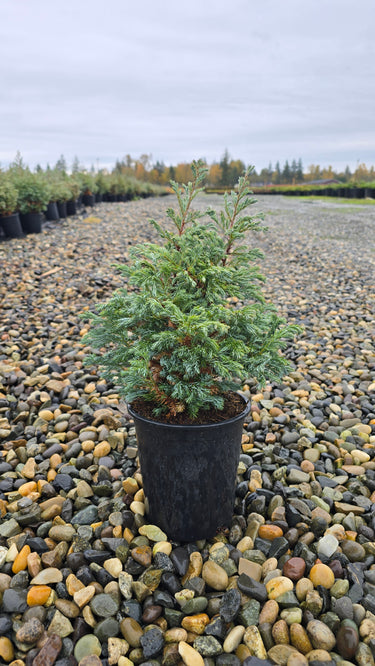
Growing Information

Growing zone guide
Growing Zone Zone 4, Zone 5, Zone 6, Zone 7, Zone 8
Sunlight Bright light to partial shade
Type of Soil Slightly acidic to neutral
Mature Height 6 to 8 ft.
Maintenance Level Low maintenance
Water Requirement High water needs (twice a week)

Learn more about this plant

Additional Information
Growth Rate
  • Slow to moderate growth rate.

  • Typically grows 4–6 inches per year, reaching about 6–8 ft tall and 3–4 ft wide over time.

  • Naturally forms a dense, conical to pyramidal shape with soft, feathery texture.
Colorful Leaves Yes
Flowering No
Bloom Color N/A
Ornamental Berries N/A
Disease resistant Yes
Cold Tolerant Yes
Heat Tolerant No
Drought Tolerant No
Deer Resistant Yes
Edible No
Wildlife Attraction

Provides year-round shelter for small birds and beneficial insects.


Dense foliage offers cover for nesting and protection from predators.


Cones may occasionally attract small seed-eating birds, though it’s not a significant food source.

Self-pollinating Self-pollinating
Seasonality

Evergreen year-round, maintaining color and texture in all seasons.


Spring: Male cones release pollen.


Summer: Vigorous new growth; maintains dense, vibrant foliage.


Fall/Winter: Foliage color deepens slightly; overall shape remains compact and structured.

Ideal For

Foundation plantings, mixed borders, conifer gardens, rock gardens, container specimens, and Japanese-style landscapes

Leaf Description
  • Evergreen, soft, feathery foliage arranged in fine, thread-like sprays.

  • Leaves are scale-like, overlapping tightly along the stems, creating a lush, textured appearance.

  • Color is a brilliant bluish-green to cyan-green, holding well through all seasons.

  • Foliage may take on a slightly deeper green tone in winter, depending on climate.
Flower Description

As a conifer, it does not produce true flowers.


Instead, it bears tiny pollen cones (male) and small rounded seed cones (female) in spring.


Male cones are yellowish and inconspicuous; female cones are green at first, maturing to brown.

Pruning & Maintenance
  • Requires minimal pruning due to its naturally dense, compact, pyramidal form.

  • If shaping is desired, prune lightly in early spring before new growth begins or after active growth slows in midsummer.

  • Avoid cutting into old wood, as new growth will not regenerate from heavily pruned branches.

  • Remove dead or damaged twigs to maintain health and airflow.
Water Needs
  • Prefers moist, well-drained soil; avoid soggy or standing water.

  • Water regularly during the first year until well established, then water deeply during extended dry periods.

  • Mulching helps retain moisture and protect shallow roots.

  • Sensitive to prolonged drought, particularly in high heat or windy conditions.
Light Needs

Prefers full sun to light shade.


In cooler regions, full sun encourages denser foliage and richer color.


In hotter climates, afternoon shade helps prevent foliage scorch or dehydration.

Harvesting
  • Not cultivated for harvest.

  • Produces small, rounded woody cones that mature to brown and persist through winter.

  • Cones contain seeds but are non-edible and have minimal ornamental value.

  • Propagation is typically by semi-hardwood cuttings or grafting, not seed.
Fertilizing

Apply a balanced slow-release conifer fertilizer (e.g., 10-10-10) in early spring before new growth begins.


Avoid over-fertilizing, as excessive nitrogen can lead to leggy growth.


In poor soils, supplement with organic compost or a layer of pine needles to maintain acidity.


Water well after fertilizing to help nutrients reach the roots.

Additional Care Tips N/A
Pollination
  • Wind-pollinated conifer species.

  • Produces both male and female cones on the same plant (monoecious).

  • Male cones release pollen in early spring, which fertilizes nearby female cones, resulting in small seed-bearing cones.
Companion Plants

Conifers: Picea pungens ‘Globosa’, Juniperus chinensis ‘Blue Point’, Thuja occidentalis ‘Degroot’s Spire’.


Broadleaf Evergreens: Buxus microphylla ‘Winter Gem’, Ilex crenata, or Rhododendron species.


Perennials: Heuchera, Hosta, Ferns, and ornamental grasses such as Carex or Festuca.


Flowering Shrubs: Hydrangea paniculata, Weigela, and Spiraea provide seasonal color contrast.


Pairs beautifully with rocks and evergreens in mixed borders, foundation plantings, or Japanese-style gardens.

Flowering and Seasonality

Evergreen year-round, maintaining color and texture in all seasons.


Spring: Male cones release pollen.


Summer: Vigorous new growth; maintains dense, vibrant foliage.


Fall/Winter: Foliage color deepens slightly; overall shape remains compact and structured.

As a conifer, it does not produce true flowers.


Instead, it bears tiny pollen cones (male) and small rounded seed cones (female) in spring.


Male cones are yellowish and inconspicuous; female cones are green at first, maturing to brown.

Pet Friendly

Yes

Growing Zone
  • Zone 4
  • Zone 5
  • Zone 6
  • Zone 7
  • Zone 8

Click to enlarge