Growing Information

Growing zone guide
Growing Zone Zone 4, Zone 5, Zone 6, Zone 7, Zone 8
Sunlight Bright light to partial shade
Type of Soil Slightly acidic to neutral
Mature Height 2 to 3 ft.
Maintenance Level Low maintenance
Water Requirement Moderate watering (once a week)

Learn more about this plant

Additional Information
Growth Rate

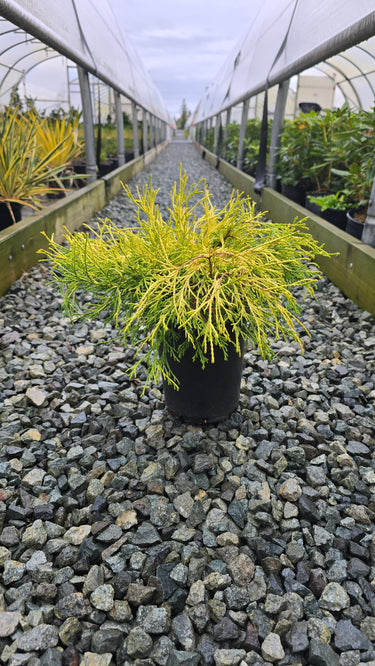
Slow-growing, adding approximately 3–6 inches per year. It typically reaches 2–3 feet tall and wide at maturity, forming a naturally rounded, mop-like mound.

Colorful Leaves Yes
Flowering No
Bloom Color N/A
Ornamental Berries N/A
Disease resistant Yes
Cold Tolerant Yes
Heat Tolerant No
Drought Tolerant No
Deer Resistant Yes
Edible No
Wildlife Attraction

Provides shelter and nesting cover for small birds but is not a primary food source for wildlife. Its aromatic foliage can deter deer, making it deer resistant.

Self-pollinating N/A
Seasonality

Evergreen year-round, retaining its vibrant golden color throughout the seasons. The foliage may deepen slightly in winter but remains colorful even in cold climates.

Ideal For

Excellent for foundation plantings, borders, rock gardens, mixed conifer beds, slopes, and low-maintenance landscapes. Adds bright year-round color and textural contrast to evergreen or perennial gardens.

Leaf Description

Foliage consists of soft, thread-like, golden-yellow branchlets that cascade gracefully in all directions, creating a textured, mop-like appearance. The color is brightest in full sun and maintains good vibrancy year-round, especially in cooler climates.

Flower Description

As a conifer, it does not produce showy flowers. Small, inconspicuous pollen and seed cones may appear, usually brownish and less than ¼ inch long.

Pruning & Maintenance

Requires little pruning. Lightly trim in late spring or early summer to maintain shape if needed. Avoid heavy pruning into old wood since new growth does not emerge from brown, bare stems. Remove any dead, broken, or winter-damaged branches in early spring.

Water Needs

Prefers moderate watering, especially during the first growing season to establish roots. Once established, it is moderately drought tolerant, but best color and vigor occur with consistent moisture. Avoid waterlogged or poorly drained soils. Water deeply during hot, dry spells.

Light Needs

Prefers full sun (6+ hours of direct light daily) for the best golden coloration, though it can tolerate partial shade. In too much shade, foliage color may turn chartreuse or greenish instead of bright gold.

Harvesting

Not applicable; this ornamental shrub is grown for its foliage, not for edible or harvestable parts. Tiny cones may appear but have no ornamental or practical value.

Fertilizing

Feed once each spring with a balanced, slow-release evergreen fertilizer (e.g., 10-8-6) or composted organic matter. Avoid over-fertilizing, which can cause excessive green growth and reduce the intensity of its golden foliage.

Additional Care Tips N/A
Pollination

This conifer does not rely on pollinators; reproduction occurs through wind pollination of cones. It is not known for ornamental flowers or fruit.

Companion Plants

Pairs beautifully with plants that contrast its golden, feathery texture and low mounding form. Ideal companions include:


  • Heuchera varieties (dark-leaved cultivars like ‘Obsidian’ or ‘Midnight Rose’)

  • Hosta cultivars (blue or variegated types)

  • Japanese Forest Grass (Hakonechloa macra ‘Aureola’)

  • Dwarf conifers such as Picea glauca ‘Conica’ or Juniperus horizontalis ‘Blue Chip’

  • Lavandula, Sedum, or Nepeta for contrasting texture and color.
Flowering and Seasonality

Evergreen year-round, retaining its vibrant golden color throughout the seasons. The foliage may deepen slightly in winter but remains colorful even in cold climates.

As a conifer, it does not produce showy flowers. Small, inconspicuous pollen and seed cones may appear, usually brownish and less than ¼ inch long.

Pet Friendly

Yes

Growing Zone
  • Zone 4
  • Zone 5
  • Zone 6
  • Zone 7
  • Zone 8

Click to enlarge