Growing Information

Growing zone guide
Growing Zone Zone 3, Zone 4, Zone 5, Zone 6, Zone 7, Zone 8
Sunlight Bright light to partial shade
Type of Soil Slightly acidic to neutral
Mature Height 5 to 6 feet
Maintenance Level Low maintenance
Water Requirement Moderate watering (once a week)

Learn more about this plant

Additional Information
Growth Rate

Growth Rate:

  • Speed: Moderate, with the shrub steadily filling out to form a dense, rounded shape over several growing seasons.
  • Mature Growth: At maturity, Ivory Halo® Dogwood reaches 5-6 feet in height and 5-6 feet in width, forming a compact, bushy shrub that is perfect for hedges, borders, or as a specimen plant.
Colorful Leaves Yes
Flowering Yes
Bloom Color White
Ornamental Berries White berries
Disease resistant Yes
Cold Tolerant Yes
Heat Tolerant No
Drought Tolerant No
Deer Resistant Yes
Edible No
Wildlife Attraction

The flowers and berries of 'Ivory Halo' attract a variety of pollinators, including bees and butterflies. In late summer, birds are drawn to the small white berries, making this shrub a valuable addition to wildlife-friendly gardens. The dense foliage also provides shelter for small animals and insects.

Self-pollinating Self-pollinating
Seasonality

Spring:

  • Emerges with variegated green and creamy-white foliage
  • Blooms with small creamy-white flowers

Summer:

  • Maintains bright variegated leaves
  • Begins developing bluish-white berries

Fall:

Leaves may take on pink to burgundy tones before dropping

Berries may persist into early fall

  • Winter:
  • Showcases striking red stems for exceptional winter interest
  • Best displayed when leaves have dropped, especially against snow or mulch

Ideal For
  •  Foundation plantings – Adds structure and foliage contrast near buildings.
  • Borders and hedges – Dense form works well in massed plantings.
  • Winter interestRed stems provide striking color when leaves drop.
  • Rain gardens or moist sites – Tolerates wetter soils well.
  • Mixed shrub borders – Great backdrop for perennials and other shrubs.

Leaf Description

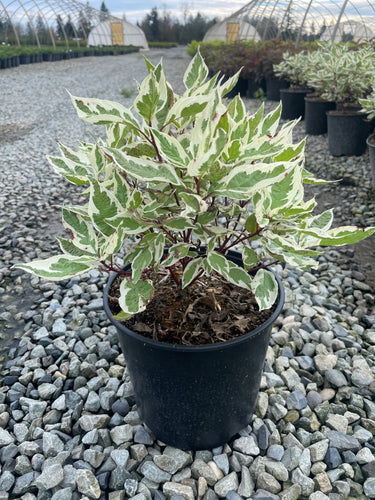
'Ivory Halo' features stunning, variegated leaves that are dark green with bright, creamy white margins. The foliage is dense and oval-shaped, adding both texture and color to the garden from spring through fall. The white-edged leaves remain fresh and vibrant throughout the growing season, offering a striking contrast to the rich red stems that become more prominent in winter.

Flower Description
  • Flowering Season: Late spring to early summer (May to June).
  • Flower Description: Ivory Halo® Dogwood produces small, flat-topped clusters of white flowers in late spring. Though not highly ornamental, the flowers attract pollinators and add subtle beauty to the shrub. These blooms are followed by small white berries in late summer that are loved by birds.
Pruning & Maintenance

Purning : Prune in late winter or early spring to remove any dead, damaged, or weak stems and to maintain its shape. To enhance the vibrant red stems, remove the older, thicker stems and encourage new growth. Pruning can also help control the size of the shrub if necessary.

Water Needs
  • Watering Requirements: 'Ivory Halo' prefers consistently moist soil, especially during its first growing season. Water regularly to keep the soil evenly moist but not waterlogged. Once established, it is relatively drought-tolerant but benefits from regular watering during extended dry periods.
Light Needs
  • Light Requirements: Full sun to partial shade. For the best foliage color and stem color, plant 'Ivory Halo' in full sun, where it will receive at least 6 hours of direct sunlight. It can also tolerate partial shade but may produce fewer flowers and less vibrant stem coloration.
Harvesting

Foliage:

  • Can be clipped lightly in early summer for small indoor arrangements or greenery bundles
  • Avoid heavy pruning during active growing season

Stems for Winter Decor:

  • Red stems are excellent for holiday or winter floral arrangements
  • Harvest in late fall to early winter, once foliage has dropped for brightest color
  • Use sharp pruners and cut only 1/3 of the stems to maintain plant health and shape

Fruits/Berries:

  • Not commonly harvested for ornamental or culinary use
  • Best left on the plant to attract birds or for natural winter decoration
Fertilizing

Fertilizing : Fertilize in early spring with a balanced, slow-release fertilizer or apply organic compost to promote healthy growth and vibrant foliage. Avoid over-fertilizing, as this can lead to excessive leafy growth at the expense of colorful stems.

Additional Care Tips
  • Mulching: Apply a 2-3 inch layer of organic mulch around the base of the plant to help retain moisture, regulate soil temperature, and suppress weeds. Mulching is especially important during the first growing season and in hot or dry climates.
  • Winter Care: The red stems of 'Ivory Halo' become more vibrant in winter, providing a splash of color to otherwise bare landscapes. No special winter care is needed, but mulching around the base can help protect the roots in colder climates.
  • Pest and Disease Resistance: Ivory Halo® Dogwood is generally pest- and disease-resistant, making it a low-maintenance shrub for most gardens. Ensure good air circulation and proper watering to avoid potential issues like powdery mildew or root rot.
Pollination

Pollination : 'Ivory Halo' is pollinated by bees and other beneficial insects that are attracted to its small, nectar-rich flowers. The shrub is self-pollinating and does not require any special pollination assistance to produce its attractive white berries in late summer.

Companion Plants

 Perennials

  • Hosta varieties – Broad, lush foliage pairs well in shaded or partly shaded sites.
  • Echinacea purpurea (Purple Coneflower) – Bold summer blooms stand out against the dogwood's subtle spring flowers.
  • Sedum ‘Autumn Joy’ – Adds late-season interest and structural contrast.
  • Astilbe – Airy flower plumes in partial shade areas complement dense dogwood foliage.

 Grasses and Groundcovers

  • Calamagrostis ‘Karl Foerster’ – Tall, upright ornamental grass adds movement and vertical balance.
  • Carex oshimensis ‘Evergold’ – Bright variegated grass echoing the cream margins of 'Ivory Halo’.
  • Ajuga reptans ‘Black Scallop’ – Deep purple foliage creates a dramatic groundcover under the shrub.

Flowering and Seasonality

Spring:

  • Emerges with variegated green and creamy-white foliage
  • Blooms with small creamy-white flowers

Summer:

  • Maintains bright variegated leaves
  • Begins developing bluish-white berries

Fall:

Leaves may take on pink to burgundy tones before dropping

Berries may persist into early fall

  • Winter:
  • Showcases striking red stems for exceptional winter interest
  • Best displayed when leaves have dropped, especially against snow or mulch

  • Flowering Season: Late spring to early summer (May to June).
  • Flower Description: Ivory Halo® Dogwood produces small, flat-topped clusters of white flowers in late spring. Though not highly ornamental, the flowers attract pollinators and add subtle beauty to the shrub. These blooms are followed by small white berries in late summer that are loved by birds.
Pet Friendly

Yes

Growing Zone
  • Zone 3
  • Zone 4
  • Zone 5
  • Zone 6
  • Zone 7
  • Zone 8

Click to enlarge