Growing Information

Growing zone guide
Growing Zone Zone 3, Zone 4, Zone 5, Zone 6, Zone 7, Zone 8
Sunlight Bright light to partial shade
Type of Soil Slightly acidic to neutral
Mature Height 6 to 8 feet
Maintenance Level Low maintenance
Water Requirement Moderate watering (once a week)

Learn more about this plant

Additional Information
Growth Rate

  • Growth Rate: This shrub has a moderate to fast growth rate, quickly filling in and reaching its mature size within a few growing seasons. Its vigorous growth makes it suitable for creating fast-growing hedges or screens.
  • Mature Growth: At maturity, Cornus alba 'Prairie Fire' reaches a height and spread of 6-8 feet, forming a dense, multi-stemmed shrub. Its upright, spreading habit makes it ideal for hedges, borders, or naturalized areas where its vibrant colors can be fully appreciated.
Colorful Leaves Yes
Flowering Yes
Bloom Color White
Ornamental Berries Blue berries
Disease resistant Yes
Cold Tolerant Yes
Heat Tolerant No
Drought Tolerant No
Deer Resistant Yes
Edible No
Wildlife Attraction

'Prairie Fire' is a valuable addition to wildlife gardens, attracting bees, butterflies, and other pollinators with its nectar-rich flowers in spring. The white berries that appear in late summer are a favorite among birds, providing a source of food as they prepare for winter. The dense branches also offer shelter for small animals and nesting sites for birds.

Self-pollinating Cross-pollinating
Seasonality

This shrub blooms in late spring to early summer, typically from May to June. The flowers are small, white, and grow in clusters, providing a soft contrast to the dark green foliage. In the summer it has berries and lush green foliage in summer. Fall brings bright red, orange, and purple foliage, and in winter, the fiery red stems are the focal point of the garden.

Ideal For

❄️ Winter Interest / Colorful Stems

  • Its brilliant red stems shine brightest in winter, especially against snow or dark evergreens.
  • Use in mass plantings or repetitive groupings for maximum winter impact.

🏞 Naturalized & Native Plant Gardens

  • A hardy, adaptable shrub that supports local pollinators and wildlife.
  • Blends seamlessly into wild borders, meadows, or wetland restoration projects.

💧 Rain Gardens / Wet Areas

  • Thrives in moist or poorly drained soils—ideal for low spots, streambanks, or stormwater basins.

🪵 Hedging & Screening

  • Dense branching and suckering growth make it effective for informal privacy screens and windbreaks.
  • Can be pruned to shape or allowed to spread naturally.

🌸 Mixed Shrub Borders

  • Adds seasonal contrast with its red stems in winter, white spring flowers, and lush green foliage during the growing season.

🐦 Wildlife Gardens

  • Offers berries for birds and nectar for pollinators.
  • Provides nesting habitat in dense thickets.

Leaf Description

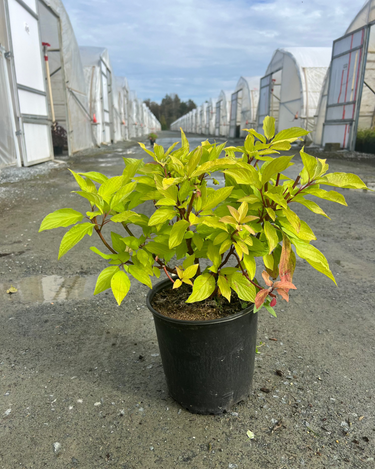
The leaves of 'Prairie Fire' are simple, ovate, and bright green during the growing season. In the fall, the foliage transforms into a stunning display of reds, oranges, and purples, adding warmth and color to the landscape. The leaves drop in winter, revealing the bold red stems that provide dramatic winter interest.

Flower Description

The flowers of Cornus alba 'Prairie Fire' are small, creamy-white blooms arranged in flat clusters. While the flowers are not overly showy, they contribute to the overall seasonal interest and attract pollinators like bees and butterflies.

Pruning & Maintenance

Pruning is essential to maintaining the vibrant red color of the stems. For best results, prune back one-third of the oldest stems to the ground in early spring to encourage new growth. Every few years, you can rejuvenate the shrub by cutting it back to the ground in early spring. Regular pruning ensures that the newest stems will be the brightest red.

Water Needs

Cornus alba 'Prairie Fire' prefers consistently moist, well-drained soil. It thrives in wetter areas and can tolerate soggy soils, making it ideal for rain gardens, wet meadows, or planting near water features. Water regularly during the first growing season to establish a strong root system. Once established, it can handle occasional drought but performs best with consistent moisture.

Light Needs

'Prairie Fire' thrives in full sun to partial shade. For the best stem color and fall foliage display, plant in a location that receives at least 6 hours of direct sunlight per day. In shadier spots, the foliage and stem color may not be as intense.

Harvesting

The bold red stems of 'Prairie Fire' can be harvested in late winter and used in winter floral arrangements or wreaths. The stems hold their color well and add a striking structural element to any display.

Fertilizing

Fertilize in early spring with a balanced, slow-release fertilizer or compost to support healthy growth. While 'Prairie Fire' is not a heavy feeder, annual fertilization helps maintain vibrant stem color and overall plant vigor.

Additional Care Tips
  • Mulching: Apply a 2-3 inch layer of organic mulch around the base of the plant to retain moisture, suppress weeds, and regulate soil temperature.
  • Soil: 'Prairie Fire' prefers moist, well-drained soil but is adaptable to a wide range of soil types, including clay, sandy, and loamy soils. It can tolerate both acidic and neutral pH levels.
  • Disease Resistance: This shrub is generally resistant to pests and diseases, though good air circulation and proper spacing help prevent issues such as powdery mildew or leaf spot. Prune regularly to maintain healthy airflow within the plant.
Pollination

'Prairie Fire' is pollinated by bees and other insects that are attracted to its nectar-rich flowers. The plant is self-fertile, meaning it does not need another shrub for berry production, but pollinators help improve fruit set, leading to more berries for birds to enjoy.

Companion Plants

When designing with Cornus 'Prairie Fire', choose companions that match its moisture tolerance, sun exposure (full sun to part shade), and enhance its seasonal displays:

🍃 For Structure and Contrast

  • Amelanchier alnifolia (Serviceberry) – similar habitat needs, offers spring flowers and edible fruit.
  • Ilex verticillata (Winterberry Holly) – produces red berries that echo Cornus stem color.

🟢 Evergreens for Winter Backdrop

  • Thuja occidentalis (Arborvitae) – dark green foliage highlights red stems.
  • Pinus mugo (Dwarf Mugo Pine) – low evergreen mass that contrasts beautifully in winter.

🌸 For Bloom Interest

  • Hydrangea arborescens (Smooth Hydrangea) – summer blooms follow Cornus' spring flowers.
  • Spiraea douglasii – native shrub with summer pink blooms and a similar love for moist soils.

🌾 For Texture and Ground Cover

  • Carex stricta (Tussock Sedge) – ideal for rain gardens and softening the base.
  • Matteuccia struthiopteris (Ostrich Fern) – provides lush green texture in moist, shaded settings.

🐝 Pollinator-Friendly Partners

  • Monarda fistulosa (Wild Bergamot) – great for attracting bees and hummingbirds.
  • Eutrochium purpureum (Joe Pye Weed) – tall summer bloomer perfect for moist borders.

Flowering and Seasonality

This shrub blooms in late spring to early summer, typically from May to June. The flowers are small, white, and grow in clusters, providing a soft contrast to the dark green foliage. In the summer it has berries and lush green foliage in summer. Fall brings bright red, orange, and purple foliage, and in winter, the fiery red stems are the focal point of the garden.

The flowers of Cornus alba 'Prairie Fire' are small, creamy-white blooms arranged in flat clusters. While the flowers are not overly showy, they contribute to the overall seasonal interest and attract pollinators like bees and butterflies.

Pet Friendly

Yes

Growing Zone
  • Zone 3
  • Zone 4
  • Zone 5
  • Zone 6
  • Zone 7
  • Zone 8

Click to enlarge