Growing Information

Growing zone guide
Growing Zone Zone 4, Zone 5, Zone 6, Zone 7, Zone 8
Sunlight Bright light
Type of Soil Neutral to alkaline
Mature Height 3 to 4 ft.
Maintenance Level Low maintenance
Water Requirement Low to moderate (once a week in hot climate, once every 2 weeks in regular climate)

Learn more about this plant

Additional Information
Growth Rate

Moderate, forming a dense, rounded mound. ‘Lilla’ grows much smaller than standard smoke bush varieties, reaching mature size within 3–4 years.

Colorful Leaves Yes
Flowering Yes
Bloom Color Pink , Yellow
Ornamental Berries N/A
Disease resistant Yes
Cold Tolerant Yes
Heat Tolerant Yes
Drought Tolerant Yes
Deer Resistant Yes
Edible No
Wildlife Attraction

Attracts bees and pollinating insects when in bloom. The airy flower clusters also provide light cover for small beneficial insects.

Self-pollinating Cross-pollinating
Seasonality

Offers multi-season interest: colorful spring foliage, smoky summer blooms, and striking autumn tones. Deciduous in winter, dropping leaves after frost.

Ideal For

Small gardens, borders, foundation plantings, mixed shrub beds, containers, and modern landscapes

Leaf Description

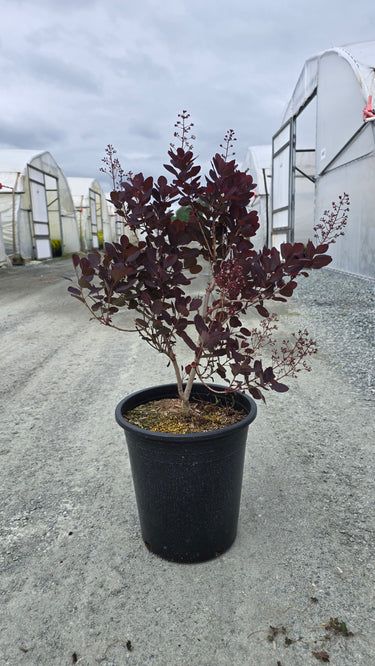
The standout feature of ‘Lilla’ is its brilliant, multi-tonal foliage. New leaves emerge bright orange-red, maturing to deep wine-purple through summer, and finally turning fiery orange and red in fall. Leaves are oval, smooth-edged, and densely arranged, creating a rich, full texture.

Flower Description

Produces delicate clusters of small yellow-pink flowers in early summer, followed by silky, smoky-pink seed plumes that give the shrub its name. These plumes hover above the foliage, creating a cloud-like appearance that lasts for weeks.

Pruning & Maintenance

Minimal pruning required. Prune in late winter or early spring to maintain a compact shape or rejuvenate older plants by cutting them back to 6–12 inches above ground (a technique called stooling). This encourages vigorous new growth and intensifies foliage color. After flowering, spent blooms can be trimmed for tidiness if desired.

Water Needs

Water regularly during the first growing season to establish roots. Once established, it is drought-tolerant and prefers moderately dry to average soil. Avoid heavy or waterlogged conditions.

Light Needs

Prefers full sun (6+ hours per day) to achieve the richest leaf color and densest growth. Can tolerate light shade, but foliage color becomes less intense.

Harvesting

The seed plumes can be cut for use in floral arrangements, both fresh and dried. Small seed capsules form after flowering but are not typically harvested or ornamental.

Fertilizing

Apply a balanced, slow-release fertilizer in early spring or amend the soil with compost. Avoid heavy feeding, as overly fertile soil can lead to lanky growth and reduced leaf coloration.

Additional Care Tips N/A
Pollination

Pollinated by wind and insects. The small flowers produce fine hairs that create the “smoky” effect, but the plant’s ornamental appeal comes primarily from these airy seed plumes rather than pollination activity.

Companion Plants

Complements sun-loving plants with contrasting colors and textures such as Perovskia (Russian Sage), Nepeta, Sedum, Salvia, Spiraea, Hydrangea paniculata, and ornamental grasses like Panicum or Calamagrostis. The dark purple foliage provides dramatic contrast against silver, green, or chartreuse plants.

Flowering and Seasonality

Offers multi-season interest: colorful spring foliage, smoky summer blooms, and striking autumn tones. Deciduous in winter, dropping leaves after frost.

Produces delicate clusters of small yellow-pink flowers in early summer, followed by silky, smoky-pink seed plumes that give the shrub its name. These plumes hover above the foliage, creating a cloud-like appearance that lasts for weeks.

Pet Friendly

Yes

Growing Zone
  • Zone 4
  • Zone 5
  • Zone 6
  • Zone 7
  • Zone 8

Click to enlarge