Growing Information

Growing zone guide
Growing Zone Zone 3, Zone 4, Zone 5, Zone 6, Zone 7, Zone 8, Zone 9
Sunlight Partial shade to full shade
Type of Soil Slightly acidic to neutral
Mature Height 12 to 18 inches
Maintenance Level Low maintenance
Water Requirement Moderate watering (once a week)

Learn more about this plant

Additional Information
Growth Rate

Moderate – establishes within one growing season and spreads gradually by rhizomes

– Forms neat clumps without becoming invasive

Colorful Leaves Yes
Flowering Yes
Bloom Color Pink
Ornamental Berries N/A
Disease resistant Yes
Cold Tolerant Yes
Heat Tolerant No
Drought Tolerant No
Deer Resistant Yes
Edible No
Wildlife Attraction

– Attracts bees and beneficial pollinators

– Generally not visited by birds or large wildlife

Deer and rabbits tend to avoid Dicentra

Self-pollinating Cross-pollinating
Seasonality

Spring – emerges early with foliage and blooms

Summer – continues blooming, remains lush

Fall – blooming slows; cut back after first frost

Winter – goes dormant; crown remains underground

Ideal For

Woodland gardens

Shade borders

Understory planting

Native and pollinator gardens

Leaf Description

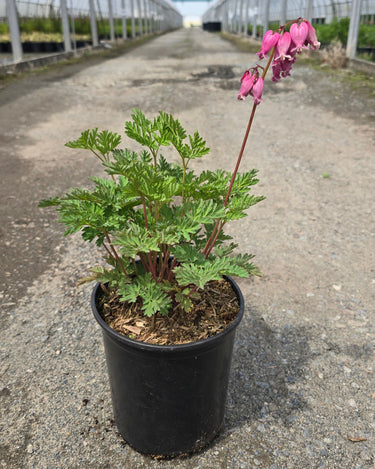
Fern-like, deeply lobed blue-green foliage

– Dense and mounding, adds texture to shade gardens

– Foliage remains attractive throughout the growing season (unlike bleeding hearts that go dormant)

Flower Description

Rose-pink heart-shaped flowers with delicate white tips

– Held in arching sprays above the foliage

– Blooms continuously from late spring to early fall, unlike other Dicentras that bloom only in spring

Pruning & Maintenance

Deadhead spent flowers to encourage prolonged blooming

Cut back old foliage in late fall or early spring to tidy the plant and promote new growth

– No major pruning required; forms natural mounds

Water Needs

– Requires consistently moist, well-drained soil

– Does not tolerate drought well; keep evenly watered in dry weather

– Avoid soggy conditions, which can cause crown rot

Light Needs

– Thrives in part shade to full shade.

– In cooler climates, it tolerates morning sun but should be protected from harsh afternoon sun.

Harvesting

– Occasionally used in small spring arrangements, but stems are delicate

– Best appreciated in the garden rather than as a cut flower

– Not commonly harvested for drying or floral trade

Fertilizing

– Apply compost or balanced slow-release fertilizer in early spring

– Avoid high-nitrogen fertilizers, which may promote excessive foliage at the expense of flowers

– Feed once yearly unless soil is very poor

Additional Care Tips N/A
Pollination

– Pollinated by bees, especially bumblebees, and occasionally butterflies

– Flowers are shaped to encourage pollinator visitation

– Can self-pollinate but insect activity improves seed development

Companion Plants

Hosta – large, broad leaves contrast nicely with Dicentra’s delicate foliage

Heuchera (Coral Bells) – complements with colorful foliage and similar moisture needs

Brunnera macrophylla – shade-tolerant and adds silvery foliage contrast

Pulmonaria (Lungwort) – spring blooms and spotted leaves harmonize with Dicentra

Ferns (Dryopteris, Athyrium) – pair well in woodland settings with textural contrast

Tiarella (Foamflower) – groundcover option with similar cultural requirements

Epimedium – offers drought tolerance for dry shade spots and subtle bloom timing

Flowering and Seasonality

Spring – emerges early with foliage and blooms

Summer – continues blooming, remains lush

Fall – blooming slows; cut back after first frost

Winter – goes dormant; crown remains underground

Rose-pink heart-shaped flowers with delicate white tips

– Held in arching sprays above the foliage

– Blooms continuously from late spring to early fall, unlike other Dicentras that bloom only in spring

Pet Friendly

No

Growing Zone
  • Zone 3
  • Zone 4
  • Zone 5
  • Zone 6
  • Zone 7
  • Zone 8
  • Zone 9

Click to enlarge