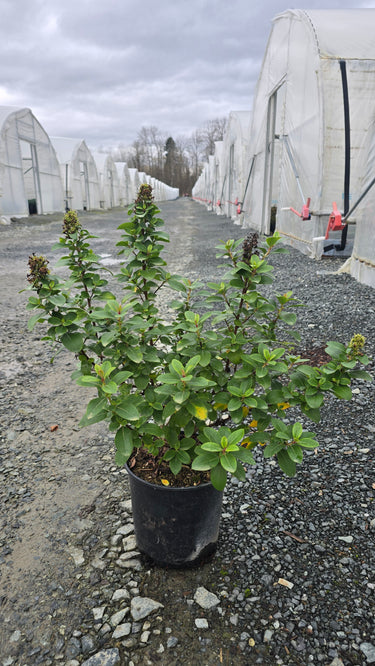
Growing Information

Growing zone guide
Growing Zone Zone 7, Zone 8, Zone 9
Sunlight Bright light to partial shade
Type of Soil Slightly acidic to neutral
Mature Height 3 to 4 ft.
Maintenance Level Low maintenance
Water Requirement Moderate watering (once a week)

Learn more about this plant

Additional Information
Growth Rate

Moderate to fast; typically grows 1–2 ft per year under favorable conditions.


Mature size approximately 3–4 ft tall and wide, forming a dense, mounding habit ideal for compact spaces or low hedges.

Colorful Leaves No
Flowering Yes
Bloom Color Pink
Ornamental Berries N/A
Disease resistant Yes
Cold Tolerant Yes
Heat Tolerant Yes
Drought Tolerant Yes
Deer Resistant Yes
Edible No
Wildlife Attraction

Highly attractive to bees, butterflies, and other pollinators due to its nectar-rich blooms.


Occasionally provides shelter for small birds thanks to its dense, evergreen structure.

Self-pollinating Self-pollinating
Seasonality

Main flowering season: late spring to mid-summer.


Evergreen foliage offers year-round visual interest, even when not in bloom.

Ideal For

– Low hedge, foundation planting, seaside gardens, mixed shrub borders, pollinator-friendly landscapes, and decorative containers

Leaf Description

Glossy, evergreen leaves, small and leathery with serrated edges.


Deep dark green color providing year-round texture and contrast.


Foliage emits a pleasant, slightly resinous scent when brushed.

Flower Description

Dense clusters of rosy pink to soft pink tubular flowers cover the plant in early to mid-summer.


Blooms are fragrant, long-lasting, and borne at branch tips, often attracting clouds of pollinators.


In favorable climates, a light repeat bloom may occur in late summer.

Pruning & Maintenance

Prune lightly after flowering to shape and encourage fresh, dense growth.


Remove spent flowers to promote a tidier appearance and potential secondary blooms.


Avoid hard pruning in late summer or fall, as it may affect next season’s flower buds.

Water Needs

Requires regular watering during establishment (first growing season).


Once established, it is moderately drought-tolerant, thriving with weekly deep watering during dry spells.


Ensure good drainage to prevent root rot—Escallonia dislikes “wet feet.”

Light Needs

Prefers full sun for best flowering and compact form.


Tolerates partial shade, especially in hot climates, but too much shade reduces bloom density.

Harvesting N/A
Fertilizing

Apply a balanced, slow-release fertilizer (10-10-10 or similar) in early spring.


For container-grown plants, use a liquid feed every 4–6 weeks through summer.


Avoid over-fertilizing; excessive nitrogen may reduce flowering.

Additional Care Tips N/A
Pollination

Self-fertile shrub; pollinated primarily by bees and butterflies attracted to its fragrant blossoms.


Produces small seed capsules, though fruiting is not ornamental.

Companion Plants

Shrubs: Hebe ‘Red Edge’, Ceanothus ‘Victoria’, Choisya ternata, Berberis ‘Crimson Pygmy’, or Spiraea japonica.


Perennials: Lavender, Salvia, Nepeta, Coreopsis, and Echinacea — all sharing similar sunlight and soil preferences.


Evergreen structure companions: Pittosporum tenuifolium, Euonymus fortunei, and dwarf Photinia cultivars.


Design tip: Combine with silver foliage plants (lavender, artemisia) to highlight the vivid pink flowers.

Flowering and Seasonality

Main flowering season: late spring to mid-summer.


Evergreen foliage offers year-round visual interest, even when not in bloom.

Dense clusters of rosy pink to soft pink tubular flowers cover the plant in early to mid-summer.


Blooms are fragrant, long-lasting, and borne at branch tips, often attracting clouds of pollinators.


In favorable climates, a light repeat bloom may occur in late summer.

Pet Friendly

Yes

Growing Zone
  • Zone 7
  • Zone 8
  • Zone 9

Click to enlarge