Growing Information

Growing zone guide
Growing Zone Zone 6, Zone 7, Zone 8, Zone 9
Sunlight Bright light to partial shade
Type of Soil Alkaline to neutral
Mature Height 12 to 18 inches
Maintenance Level Low maintenance
Water Requirement Moderate watering (once a week)

Learn more about this plant

Additional Information
Growth Rate

Moderate; forms dense clumps over several seasons through short creeping rhizomes.


Mature size around 12–18 inches tall and wide.

Colorful Leaves Yes
Flowering Yes
Bloom Color Yellow
Ornamental Berries N/A
Disease resistant Yes
Cold Tolerant Yes
Heat Tolerant Yes
Drought Tolerant Yes
Deer Resistant Yes
Edible No
Wildlife Attraction

Nectar-rich bracts attract bees, hoverflies, and other pollinators in spring.


Deer and rabbits generally avoid it due to the bitter sap.

Self-pollinating Self-pollinating
Seasonality

Main bloom: Mid-spring through early summer.


Foliage interest: Year-round in mild climates; winter tones deepen to burgundy.


Ideal For

– Woodland gardens, shaded borders, perennial beds, mixed containers, underplanting for trees or shrubs, and contrast plant for colorful foliage displays

Leaf Description

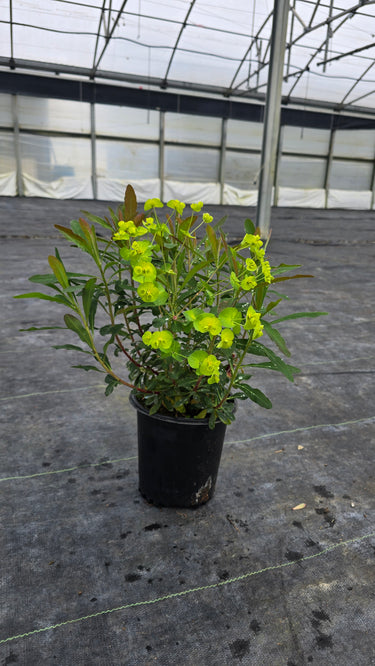
Evergreen to semi-evergreen leaves that are lance-shaped and glossy, emerging deep purple-bronze and often maturing to a dusky greenish-purple.


Foliage color intensifies in cool weather, adding strong winter interest.

Flower Description

Bright chartreuse-yellow bracts (true flowers are tiny within them) form dense clusters above the purple stems in spring to early summer.


The vivid contrast of greenish-yellow blooms against dark stems and foliage makes a striking display.

Pruning & Maintenance

After flowering (late spring to early summer), cut back flowered stems to the base—this encourages new purple shoots and keeps the clump compact.


Wear gloves when pruning; Euphorbia sap is milky and can irritate skin or eyes.


Remove old or damaged leaves at any time to maintain a neat appearance.

Water Needs

Prefers moderate, regular moisture, particularly during establishment.


Once mature, it becomes fairly drought tolerant, especially in partial shade.


Avoid overwatering; ensure excellent drainage to prevent crown rot.

Light Needs

Thrives in partial shade to full sun; best leaf color (rich purple tones) develops with some sun exposure.


Tolerates deeper shade, though foliage becomes more green than purple.

Harvesting

Not a harvesting plant; not edible or used for cut-flower arrangements (sap can be irritating).


Produces small seed capsules that can self-sow mildly in favorable conditions, though not aggressively.


Seeds are not ornamental and are rarely collected intentionally.

Fertilizing

Generally low feeder; too much fertilizer can reduce foliage color intensity.


Apply a small amount of balanced slow-release fertilizer in early spring or topdress with compost.


Avoid nitrogen-heavy formulas which promote leggy green growth.

Additional Care Tips N/A
Pollination

Flowers are insect-pollinated, especially by bees and hoverflies.


Plant is self-fertile but not primarily grown for seed; ornamental value is in the bracts and foliage.

Companion Plants

Shade companions: Helleborus, Heuchera, Tiarella, Brunnera, and Pulmonaria.


Sun-border companions: Nepeta, Salvia, Sedum, Geranium, and ornamental grasses.


Woodland pairings: Ferns, Epimedium, and Hostas blend beautifully with its dusky foliage.


Works well with silver or chartreuse foliage plants (e.g., Carex ‘Evergold’, Hakonechloa ‘Aureola’) for contrast.

Flowering and Seasonality

Main bloom: Mid-spring through early summer.


Foliage interest: Year-round in mild climates; winter tones deepen to burgundy.


Bright chartreuse-yellow bracts (true flowers are tiny within them) form dense clusters above the purple stems in spring to early summer.


The vivid contrast of greenish-yellow blooms against dark stems and foliage makes a striking display.

Pet Friendly

No

Growing Zone
  • Zone 6
  • Zone 7
  • Zone 8
  • Zone 9

Click to enlarge