Growing Information

Growing zone guide
Growing Zone Zone 6, Zone 7, Zone 8, Zone 9
Sunlight Bright light
Type of Soil Neutral to alkaline
Mature Height 18 to 24 inches
Maintenance Level Low maintenance
Water Requirement Low watering (once every 2 weeks)

Learn more about this plant

Additional Information
Growth Rate

Moderate; forms compact, bushy clumps


Typically matures to 18–24 inches tall and wide

Colorful Leaves Yes
Flowering Yes
Bloom Color Yellow , Green
Ornamental Berries N/A
Disease resistant Yes
Cold Tolerant Yes
Heat Tolerant Yes
Drought Tolerant Yes
Deer Resistant Yes
Edible No
Wildlife Attraction

Flowers attract bees, flies, and other beneficial pollinators


Deer and rabbits generally avoid Euphorbia due to toxic sap

Self-pollinating Cross-pollinating
Seasonality

Spring: fresh dark foliage and bracts appear


Summer: peak bloom period, foliage maintains deep purple color


Fall: foliage often deepens in tone with cooler nights


Winter: semi-evergreen in most climates, may thin in harsh cold

Ideal For

– Rock gardens, Mediterranean-style plantings, xeriscaping, mixed borders, modern landscapes, container accents, foliage contrast in perennial beds

Leaf Description
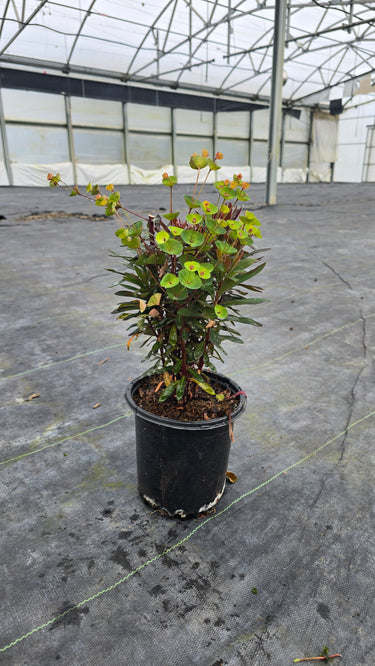
  • Narrow, lance-shaped foliage in deep, dark purple to almost black tones

  • Foliage retains strong color through most of the year, especially in full sun

  • Evergreen to semi-evergreen depending on climate

Flower Description

Showy clusters of chartreuse-yellow bracts appear in spring through early summer


Bracts create a dramatic contrast against dark foliage


True flowers are tiny and hidden within the bracts

Pruning & Maintenance

Remove spent flowering stems down to the base after blooming to encourage new basal shoots


Lightly shape the plant in midsummer if needed for tidiness


Wear gloves when pruning—Euphorbia sap is irritating to skin and eyes


In late winter to early spring, remove any winter-damaged stems

Water Needs

Low to moderate water needs


Drought tolerant once established, but benefits from deep watering during prolonged dry spells


Must have good drainage; excess moisture promotes root rot

Light Needs

Full sun is best for richest foliage color and strongest growth


Tolerates very light partial shade, but foliage may appear greener and less vibrant

Harvesting

Not typically harvested; stems may be used for arrangements if sap is seared to stop bleeding


Use gloves and caution due to toxic latex sap

Fertilizing

Low fertilizer needs; too much nitrogen causes weak growth and dull foliage


Apply a light layer of compost in spring to refresh soil nutrients


Avoid heavy feeding, which diminishes foliage color intensity

Additional Care Tips N/A
Pollination

Pollinated by insects, particularly bees and flies attracted to nectar-rich bracts


Produces fertile seed capsules, though propagation is usually by cuttings for true-to-type plants

Companion Plants

Contrasts beautifully with silver, blue, or chartreuse foliage plants such as Artemisia, Festuca glauca, Carex elata ‘Aurea’, and Lavandula


Complements drought-tolerant bloomers like Salvia, Coreopsis, Gaillardia, and Echinacea


Works well with ornamental grasses such as Pennisetum, Stipa, or Panicum for texture contrast


Ideal for rock gardens, Mediterranean-style beds, and mixed borders with succulents or xeric perennials

Flowering and Seasonality

Spring: fresh dark foliage and bracts appear


Summer: peak bloom period, foliage maintains deep purple color


Fall: foliage often deepens in tone with cooler nights


Winter: semi-evergreen in most climates, may thin in harsh cold

Showy clusters of chartreuse-yellow bracts appear in spring through early summer


Bracts create a dramatic contrast against dark foliage


True flowers are tiny and hidden within the bracts

Pet Friendly

No

Growing Zone
  • Zone 6
  • Zone 7
  • Zone 8
  • Zone 9

Click to enlarge