Growing Information

Growing zone guide
Growing Zone Zone 4, Zone 5, Zone 6, Zone 7, Zone 8, Zone 9
Sunlight Partial shade to full shade
Type of Soil Slightly acidic to neutral
Mature Height 12 to 18 inches
Maintenance Level Low maintenance
Water Requirement High water needs (twice a week)

Learn more about this plant

Additional Information
Growth Rate

Moderate; forms graceful clumps that slowly expand over time


Typically spreads wider rather than aggressively running

Colorful Leaves Yes
Flowering No
Bloom Color N/A
Ornamental Berries N/A
Disease resistant Yes
Cold Tolerant Yes
Heat Tolerant No
Drought Tolerant No
Deer Resistant Yes
Edible No
Wildlife Attraction

Provides habitat and cover for insects, amphibians, and other woodland organisms


Not a nectar or pollen source but contributes to garden biodiversity in shaded environments

Self-pollinating N/A
Seasonality

Spring: new fronds unfurl in vibrant silver-green with purple stems


Summer: peak foliage display with strong color contrast


Fall: fronds fade and die back to the crown


Winter: dormant, crown rests underground until spring

Ideal For

– Woodland gardens, shaded borders, foliage gardens, rock gardens, mixed plantings with Hostas or Heucheras, accent for shaded containers

Leaf Description
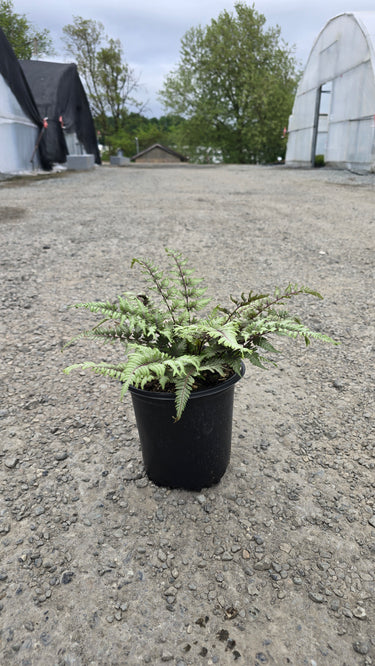
  • Arching, finely divided fronds with striking silver-gray to apple-green centers and purple to burgundy midribs

  • Creates a painterly, shimmering effect that is highly ornamental in shaded gardens

  • Deciduous; fronds die back in winter and return in spring

Flower Description

None; ferns reproduce by spores rather than flowers

Pruning & Maintenance

Cut back old fronds in late fall or early spring before new fronds emerge


Remove any damaged fronds during the growing season to maintain neat appearance

Water Needs

Needs consistently moist soil, especially during hot summer months


Avoid waterlogging but never allow soil to fully dry out


Mulch helps retain moisture around the root zone

Light Needs

Prefers partial to full shade; ideal under dappled trees or on the north/east side of buildings


Too much sun will scorch delicate fronds, though filtered morning sun can enhance foliage colors if soil is consistently moist

Harvesting

Occasionally fronds may be cut for floral or foliage arrangements, though delicate


Not typically harvested for regular use

Fertilizing

Benefits from organic mulching or top-dressing with compost or leaf mold in spring


Avoid heavy fertilizer applications; light feeding with a balanced, slow-release fertilizer in spring is sufficient

Additional Care Tips N/A
Pollination
  • Ferns reproduce by spores, not flowers; no pollination required

  • Spores appear in sori (clusters) on the underside of fertile fronds during summer

Companion Plants

Works beautifully with other shade perennials such as Hosta, Heuchera, Tiarella, Brunnera, and Pulmonaria


Combines well with Astilbe, Primula, and Dicentra for soft, layered plantings


Other ferns such as Dryopteris and Osmunda provide textural contrast


Complements dark-foliaged shrubs or Hydrangeas for striking foliage pairings

Flowering and Seasonality

Spring: new fronds unfurl in vibrant silver-green with purple stems


Summer: peak foliage display with strong color contrast


Fall: fronds fade and die back to the crown


Winter: dormant, crown rests underground until spring

None; ferns reproduce by spores rather than flowers

Pet Friendly

Yes

Growing Zone
  • Zone 4
  • Zone 5
  • Zone 6
  • Zone 7
  • Zone 8
  • Zone 9

Click to enlarge