Growing Information

Growing zone guide
Growing Zone Zone 3, Zone 4, Zone 5, Zone 6, Zone 7, Zone 8
Sunlight Bright light to partial shade
Type of Soil Slightly acidic to neutral
Mature Height 18 to 24 inches
Maintenance Level Moderate maintenance
Water Requirement High water needs (twice a week)

Learn more about this plant

Additional Information
Growth Rate
  • Fast; spreads aggressively by creeping rhizomes and can naturalize into large colonies

  • May need containment or regular thinning in garden settings

Colorful Leaves No
Flowering No
Bloom Color N/A
Ornamental Berries N/A
Disease resistant Yes
Cold Tolerant Yes
Heat Tolerant No
Drought Tolerant No
Deer Resistant Yes
Edible No
Wildlife Attraction
  • Provides cover for amphibians, insects, and other small wildlife in moist habitats

  • Fertile fronds provide winter habitat for insects and structure in naturalized gardens

Self-pollinating N/A
Seasonality

Spring: fiddleheads unfurl into large, lobed sterile fronds


Summer: lush green foliage; fertile bead-like fronds appear midseason


Fall: foliage turns yellow, then collapses with first frost


Winter: dormant; bead-like fertile fronds persist above ground, holding spores

Ideal For

– Rain gardens, pond edges, boggy areas, naturalized wetland plantings, shaded water features, woodland gardens with consistent moisture

Leaf Description

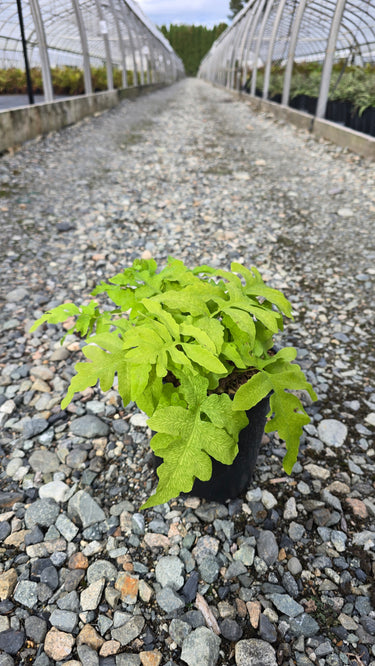
Large, bright green, leathery fronds divided into broad, lobed pinnae


Fertile fronds are distinct: shorter, bead-like, and brown, persisting through winter


Deciduous; sensitive fronds wither quickly with frost, giving the plant its common name

Flower Description

None; ferns reproduce by spores, not flowers

Pruning & Maintenance

Cut back fronds in late fall after frost kills foliage


Remove old, tattered fronds in early spring before new fiddleheads emerge


Can be cut back midseason if foliage becomes ragged; new growth will fill in

Water Needs

High water needs; thrives in consistently moist to wet soil


Can tolerate shallow standing water in pond margins or rain gardens


Not drought tolerant; soil must not be allowed to dry out

Light Needs

Grows well in partial shade to full sun if soil is consistently moist


In shaded sites, foliage is lush and green; in sunnier spots, requires ample water to prevent scorching

Harvesting

Not typically harvested; valued as an ornamental and for naturalizing


Sterile fronds may be used ornamentally in floral work; fertile bead-like fronds sometimes collected for dried arrangements

Fertilizing

Typically requires no supplemental fertilizer if grown in humus-rich soils


A spring application of compost or leaf mold supports vigorous growth


Avoid heavy synthetic fertilizers which can damage roots

Additional Care Tips N/A
Pollination

Ferns reproduce by spores, not flowers; no pollination required


Spores are produced on separate fertile fronds that appear in summer and persist through winter

Companion Plants
  • Moisture-loving perennials such as Ligularia, Astilbe, Filipendula, and Rodgersia

  • Ferns like Osmunda regalis, Matteuccia struthiopteris, and Athyrium filix-femina

  • Shade-tolerant wildflowers like Caltha palustris (Marsh Marigold), Iris versicolor, and Lobelia cardinalis

  • Works well in rain gardens, wetland plantings, and naturalized boggy areas

Flowering and Seasonality

Spring: fiddleheads unfurl into large, lobed sterile fronds


Summer: lush green foliage; fertile bead-like fronds appear midseason


Fall: foliage turns yellow, then collapses with first frost


Winter: dormant; bead-like fertile fronds persist above ground, holding spores

None; ferns reproduce by spores, not flowers

Pet Friendly

Yes

Growing Zone
  • Zone 3
  • Zone 4
  • Zone 5
  • Zone 6
  • Zone 7
  • Zone 8

Click to enlarge