Growing Information

Growing zone guide
Growing Zone Zone 5, Zone 6, Zone 7, Zone 8
Sunlight Partial shade to full shade
Type of Soil Slightly acidic to neutral
Mature Height 18 to 24 inches
Maintenance Level Low maintenance
Water Requirement Moderate watering (once a week)

Learn more about this plant

Additional Information
Growth Rate
  • Growth Rate: Moderate, reaching its mature size in 2-3 growing seasons.
  • Mature Size: Grows to a height of 18-24 inches and a spread of 24-30 inches, forming a dense, mounded clump of fronds.
Colorful Leaves No
Flowering No
Bloom Color N/A
Ornamental Berries N/A
Disease resistant Yes
Cold Tolerant Yes
Heat Tolerant No
Drought Tolerant No
Deer Resistant Yes
Edible No
Wildlife Attraction

The dense, feathery fronds of the Soft Shield Fern provide shelter for small insects and wildlife, contributing to the biodiversity of woodland gardens. While the fern does not attract pollinators, it is deer and rabbit resistant, making it an excellent choice for gardens where wildlife browsing is a concern.

Self-pollinating N/A
Seasonality
  • Semi-evergreen; retains some foliage in warmer climates but may die back in winter in colder regions.
Ideal For

Woodland and shade gardens

Fern-focused displays and borders

Underplanting for shrubs or trees

Moist, shaded slopes for erosion control

Naturalized areas with organic-rich soil


Leaf Description

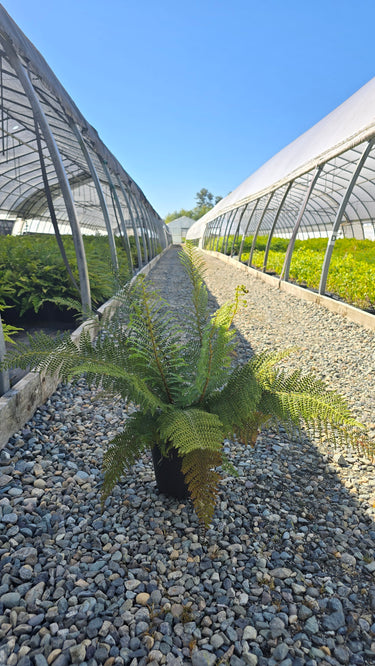
The fronds of 'Herrenhausen' are soft, finely divided, and deep green. The fronds grow in an elegant, arching form, creating a feathery, layered texture that brings a lush, natural look to shaded areas. Each frond is lance-shaped and can grow up to 24 inches in length, forming a dense, mounded habit. The soft texture of the foliage gives this fern its common name, “Soft Shield Fern.”

Flower Description

Ferns do not produce flowers. Instead, they reproduce via spores, which appear on the undersides of the fronds in late summer.

Pruning & Maintenance

Pruning is minimal for the Soft Shield Fern. In late fall or early spring, remove any dead or damaged fronds to encourage healthy growth. Regular removal of spent fronds helps keep the plant looking fresh and promotes new growth. The fern maintains its elegant form naturally without the need for heavy pruning.

Water Needs

Polystichum setiferum 'Herrenhausen' prefers consistently moist soil, particularly in the first growing season. Water regularly, keeping the soil evenly moist but not waterlogged. Established ferns can tolerate short periods of dryness but will perform best with consistent moisture.

Light Needs

This fern thrives in partial shade to full shade. It is well-suited to shaded areas with dappled sunlight or deep shade, making it ideal for woodland gardens, shaded borders, or areas under trees and shrubs. Too much direct sunlight can cause the fronds to scorch, so it is best planted in low-light environments.

Harvesting

Foliage Harvesting:

  • Mature fronds can be used in floral design due to their soft, finely dissected appearance.
  • Harvest only a few at a time to preserve the plant's health.
  • Ideal time: late spring through early summer, when fronds are fully unfurled.

Spore Harvesting (Propagation):

  • Spores ripen in late summer to early fall.
  • To collect spores:
  1. Snip a fertile frond with visible sori (small brown dots).

  2. Place frond sori-side down on a sheet of paper.

  3. Let it sit in a dry place for 1–2 days.

  4. Spores will drop like fine dust and can be stored or directly sown on moist peat.
Fertilizing

Fertilize in early spring with a balanced, slow-release fertilizer or organic compost to encourage healthy growth and vibrant fronds. A second light application of fertilizer in mid-summer can help sustain the plant’s vigor throughout the growing season. Avoid over-fertilizing, as this can lead to overly lush growth that may reduce the plant's structure.

Additional Care Tips
  • Mulching: Apply a 2-3 inch layer of mulch around the base of the plant to retain moisture, regulate soil temperature, and reduce weeds.

  • Pest and Disease Resistance: Herrenhausen is generally resistant to pests and diseases. Ensure good air circulation around the plant and avoid overly wet conditions to prevent fungal issues. It is also resistant to deer and rabbits.

  • Winter Care: In colder climates, the fern may die back in winter but will regrow in spring. No special winter protection is required, but adding a layer of mulch over the root zone can help insulate the plant during freezing temperatures.
Pollination
  • As a true fern, Polystichum setiferum reproduces by spores, not seeds or pollination.

Spores are located on the undersides of fertile fronds, in sori (spore clusters), and are wind-dispersed.

Companion Plants

Polystichum setiferum 'Herrenhausen' thrives in shady, moist, woodland-style gardens and pairs beautifully with:

  • Hosta – large-leaved contrast to finely divided fern fronds
  • Astilbe – colorful plumes that prefer similar moisture/shade
  • Heuchera (Coral Bells) – vibrant foliage contrast in shade
  • Pulmonaria – spotted leaves and spring blooms
  • Brunnera macrophylla – heart-shaped leaves with blue flowers
  • Tiarella (Foamflower) – similar moisture and light needs, spring flowers
  • Trillium – native woodland wildflower for natural settings
  • Epimedium – excellent groundcover for dry shade
  • Carex (Sedge) – adds grass-like texture and similar habitat preference

These combinations create a lush, textured understory in woodland or shade gardens.

Flowering and Seasonality
  • Semi-evergreen; retains some foliage in warmer climates but may die back in winter in colder regions.

Ferns do not produce flowers. Instead, they reproduce via spores, which appear on the undersides of the fronds in late summer.

Pet Friendly

Yes

Growing Zone
  • Zone 5
  • Zone 6
  • Zone 7
  • Zone 8

Click to enlarge