
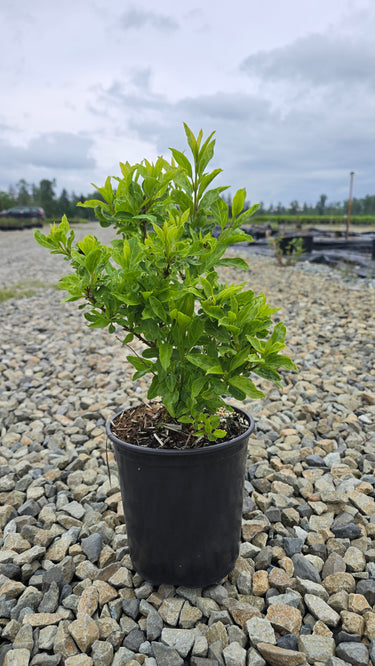

Mini Gold Forsythia
Extra-dwarf forsythia with a dense mounding habit and cheerful yellow spring blooms — ideal for low borders, rock gardens, and small spaces where traditional forsythia would overwhelm. (Forsythia intermedia Mini Gold 'Flojor')
Forsythia Mini Gold (‘Flojor’) is the perfect choice for small gardens and landscapes, delivering a burst of brilliant golden-yellow blooms in early spring. Unlike larger forsythias, this true dwarf variety grows only 2–3 feet tall and wide, forming a naturally compact mound that requires little pruning. Hardy in Zones 5–8, it thrives in full sun, adapts to most soils, and offers reliable color year after year. Ideal for containers, borders, foundations, or mass planting, Mini Gold brings the joy of spring flowering shrubs into even the smallest spaces.
Your payment information is processed securely. We do not store credit card details nor have access to your credit card information.
Growing Information
Growing zone guideLearn more about this plant
Additional Information
| Growth Rate | |
|---|---|
| Colorful Leaves | No |
| Flowering | |
| Bloom Color | Yellow |
| Ornamental Berries | N/A |
| Disease resistant | |
| Cold Tolerant | |
| Heat Tolerant | |
| Drought Tolerant | |
| Deer Resistant | |
| Edible | |
| Wildlife Attraction | |
| Self-pollinating | Cross-pollinating |
| Seasonality | |
| Ideal For | |
| Leaf Description | |
| Flower Description | |
| Pruning & Maintenance | |
| Water Needs | |
| Light Needs | |
| Harvesting | |
| Fertilizing | |
| Additional Care Tips | N/A |
| Pollination | |
| Companion Plants |
Flowering and Seasonality
Pet Friendly
Yes
Growing Zone
- Zone 5
- Zone 6
- Zone 7
- Zone 8
Click to enlarge
Growing Zone

You may also like


