
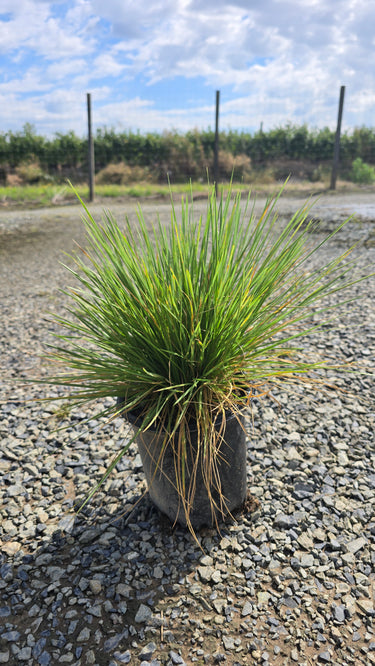

Tufted Hair Grass
Wispy airy summer flower clouds of silver-green dance above a fine-textured dark green clump — a cool-season native grass perfect for shade, moist borders, and naturalized meadow plantings. (Deschampsia cespitosa)
$25.00
/
Shipping calculated at checkout.
Deschampsia caespitosa is a graceful, cool-season ornamental grass known for its fine, arching foliage and airy flower panicles that shimmer in the breeze. Flowering in late spring to early summer, it thrives in sun to partial shade and moist, well-drained soils. Ideal for naturalistic plantings, meadows, and shade gardens, it adds a soft, flowing texture.
In stock (600)
Payment & Security
Your payment information is processed securely. We do not store credit card details nor have access to your credit card information.
Growing Information
Growing zone guide
Growing Zone
Zone 4,
Zone 5,
Zone 6,
Zone 7,
Zone 8,
Zone 9
Sunlight
Bright light to partial shade
Type of Soil
Slightly acidic to neutral
Mature Height
Maintenance Level
Water Requirement
Learn more about this plant
Additional Information
| Growth Rate | |
|---|---|
| Colorful Leaves | No |
| Flowering | |
| Bloom Color | Yellow |
| Ornamental Berries | N/A |
| Disease resistant | |
| Cold Tolerant | |
| Heat Tolerant | |
| Drought Tolerant | |
| Deer Resistant | |
| Edible | |
| Wildlife Attraction | |
| Self-pollinating | Cross-pollinating |
| Seasonality | |
| Ideal For | |
| Leaf Description | |
| Flower Description | |
| Pruning & Maintenance | |
| Water Needs | |
| Light Needs | |
| Harvesting | |
| Fertilizing | |
| Additional Care Tips | N/A |
| Pollination | |
| Companion Plants |
Flowering and Seasonality
Pet Friendly
Yes
Growing Zone
- Zone 4
- Zone 5
- Zone 6
- Zone 7
- Zone 8
- Zone 9
Click to enlarge
Growing Zone

You may also like

Smokey Saskatoon Berry
$27.60
/

William Baffin Explorer Rose
$51.00
/

Picobella Rosso Weigela
$45.24
/


Magical Daydream Winterberry
$51.00
/

