Growing Information

Growing zone guide
Growing Zone Zone 5, Zone 6, Zone 7, Zone 8, Zone 9
Sunlight Partial shade to full shade
Type of Soil Alkaline to neutral
Mature Height 12 to 16 inches
Maintenance Level Low maintenance
Water Requirement Moderate watering (once a week)

Learn more about this plant

Additional Information
Growth Rate

Moderate, forming tidy clumps over time.


Mature size: approximately 12–18 inches tall and 18–24 inches wide.


Slowly expands through short rhizomes, not invasive.

Colorful Leaves No
Flowering Yes
Bloom Color Pink , White
Ornamental Berries N/A
Disease resistant Yes
Cold Tolerant Yes
Heat Tolerant Yes
Drought Tolerant No
Deer Resistant Yes
Edible No
Wildlife Attraction

Bees and pollinators are attracted to the early nectar-rich flowers.


Deer and rabbits avoid it, as the foliage and sap are unpalatable.

Self-pollinating Self-pollinating
Seasonality

Bloom period: Late winter through early spring (February–April, depending on climate).


Foliage: Evergreen year-round, with peak lushness in spring and summer.

Ideal For

– Woodland gardens, shaded borders, underplanting for trees or shrubs, early-spring containers, or mixed shade beds

Leaf Description

Evergreen, leathery leaves divided into glossy, deep green leaflets.


Strong structure provides year-round texture in shaded beds.


Older leaves darken with age; new foliage emerges fresh green in spring.

Flower Description

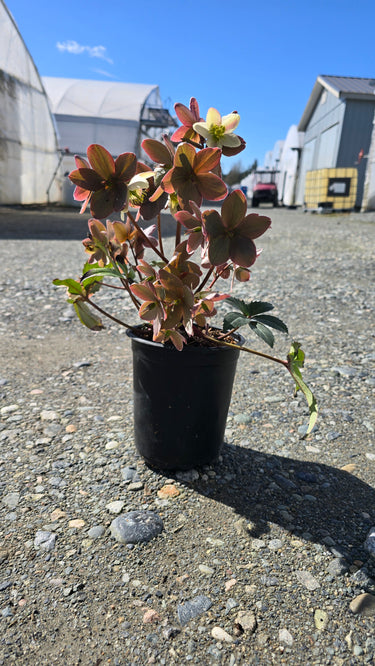
Large, outward-facing blooms in soft rose-pink to creamy white tones with a green flush at the center.


Each bloom lasts for several weeks, aging attractively to a muted pink-green hue.


Flowers are borne on sturdy stems above the foliage, adding winter and early spring color when few other plants bloom.

Pruning & Maintenance

Remove old or damaged leaves in late winter before new blooms appear to prevent disease and highlight flowers.


Deadhead faded blooms to keep a tidy appearance or leave them to form decorative seed heads.


Avoid cutting healthy evergreen foliage too early—these leaves feed the plant through winter.

Water Needs

Keep soil evenly moist, especially during spring and summer.


Once established, moderately drought tolerant, but prolonged dryness can reduce blooming.


Avoid waterlogging—well-drained soil is essential for healthy roots.

Light Needs

Thrives in partial shade (ideal: morning sun, afternoon shade).


Tolerates full shade but may produce fewer flowers.


In cooler climates, can grow in filtered sun with adequate moisture.

Harvesting

Not edible; toxic if ingested due to cardiac glycosides.


Sap can irritate skin—wear gloves when handling.


After flowering, small seed pods form; seeds can be collected for propagation but offspring vary from the parent plant.

Fertilizing

Feed lightly in early spring with a balanced, slow-release fertilizer or organic compost.


Avoid over-fertilizing; too much nitrogen encourages foliage at the expense of flowers.


A mid-summer compost dressing refreshes nutrients for next year’s blooms.

Additional Care Tips N/A
Pollination

Pollinated primarily by bees and early spring insects.


Self-fertile but cross-pollination can occur, resulting in natural hybrids.


Seedlings may vary in flower color and form.

Companion Plants

Woodland perennials: Heuchera, Tiarella, Pulmonaria, and Epimedium for complementary foliage and texture.


Spring bloomers: Brunnera, Primula, and Helleborus orientalis cultivars for overlapping flower periods.


Shade shrubs: Camellia, Daphne, or Skimmia for layered planting.


Bulbs: Snowdrops (Galanthus), Daffodils, and Crocus for early-season companions.

Flowering and Seasonality

Bloom period: Late winter through early spring (February–April, depending on climate).


Foliage: Evergreen year-round, with peak lushness in spring and summer.

Large, outward-facing blooms in soft rose-pink to creamy white tones with a green flush at the center.


Each bloom lasts for several weeks, aging attractively to a muted pink-green hue.


Flowers are borne on sturdy stems above the foliage, adding winter and early spring color when few other plants bloom.

Pet Friendly

No

Growing Zone
  • Zone 5
  • Zone 6
  • Zone 7
  • Zone 8
  • Zone 9

Click to enlarge