Growing Information

Growing zone guide
Growing Zone Zone 3, Zone 4, Zone 5, Zone 6, Zone 7, Zone 8, Zone 9
Sunlight Bright light to partial shade
Type of Soil Slightly acidic to neutral
Mature Height 12 to 18 inches
Maintenance Level Low maintenance
Water Requirement Moderate watering (once a week)

Learn more about this plant

Additional Information
Growth Rate

Moderate to fast – fills in quickly with clump-forming habit

– Matures in 1–2 seasons under ideal conditions

– Spreads via fleshy roots but is not invasive

Colorful Leaves No
Flowering Yes
Bloom Color Yellow
Ornamental Berries N/A
Disease resistant Yes
Cold Tolerant Yes
Heat Tolerant Yes
Drought Tolerant Yes
Deer Resistant No
Edible Yes
Wildlife Attraction

Attracts pollinators, especially bees and butterflies

– Hummingbirds may visit as well

– Not a major food source for wildlife otherwise

Self-pollinating Self-pollinating
Seasonality

Spring: Foliage emerges, clumps begin to fill out

Summer: Main bloom season, potential rebloom with deadheading and care

Fall: Foliage may persist; cut back as it yellows

Winter: Dormant in cold zones; semi-evergreen in warmer climates

Ideal For

Borders, mass plantings, containers, slopes, cottage gardens, low-maintenance perennial beds

Leaf Description

– Narrow, arching strap-like leaves

– Medium green, semi-evergreen in warmer zones

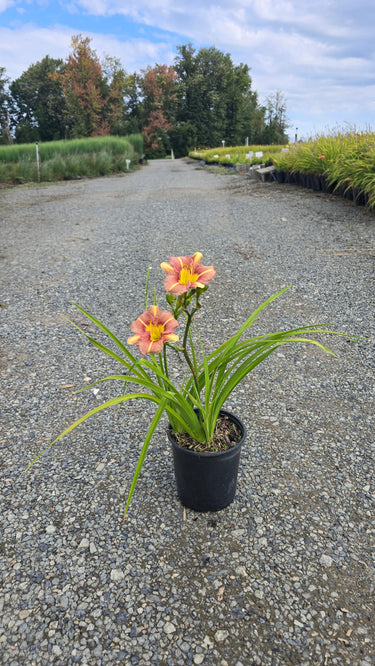
– Forms a neat, fountain-shaped clump 12–18 inches high

Flower Description

Bloom time: Early to mid-summer (with possible rebloom)

Color: Soft apricot to rose petals with a bright yellow throat

Form: Trumpet-shaped, about 3–4 inches wide

Bloom habit: Each flower lasts one day, but the plant produces many over several weeks

Pruning & Maintenance

Deadhead spent blooms regularly to promote tidy appearance and potential rebloom

Cut back flower stalks once they finish blooming

Remove yellowing foliage in late fall or early spring

Divide clumps every 3–5 years to rejuvenate and increase bloom

Water Needs

– Water regularly during establishment (first season)

– Once established, moderately drought tolerant

– Performs best with consistent moisture, especially during bloom season

– Avoid soggy soil to prevent root rot

Light Needs

– Prefers full sun (6+ hours per day) for best bloom performance

– Tolerates part shade, especially in hotter climates (but may bloom less)

Harvesting

Cut flowers: Can be used in short-term arrangements but each bloom only lasts one day

Edible: Flowers and buds are edible and used in salads or stir-fries

– Harvest blooms in the morning for freshest appearance

Fertilizing

– Apply a balanced slow-release fertilizer in early spring

– Optional second application after first bloom flush to encourage rebloom

– Avoid excessive nitrogen, which promotes foliage over flowers

Additional Care Tips N/A
Pollination

Self-pollinating – individual flowers contain both male and female organs

Cross-pollination by insects (especially bees) also occurs

– Seeds may form but are not typically used for propagation unless hybridizing

Companion Plants

Pairs well with plants that complement its low, arching foliage and extended bloom season:

Salvia nemorosa – Spiky blooms contrast with the round daylily flowers

Nepeta (Catmint) – Cool-toned blooms and soft texture complement apricot tones

Coreopsis verticillata – Long-blooming, airy daisy forms

Echinacea purpurea – Tall structure and bold color pairing

Sedum ‘Autumn Joy’ – Late-season interest and strong foliage

Lavender – Aromatic, drought-tolerant companion

Heuchera – Colorful foliage and mounding form work well in mixed beds

Shasta daisy – Adds brightness and contrasts form and bloom time

Flowering and Seasonality

Spring: Foliage emerges, clumps begin to fill out

Summer: Main bloom season, potential rebloom with deadheading and care

Fall: Foliage may persist; cut back as it yellows

Winter: Dormant in cold zones; semi-evergreen in warmer climates

Bloom time: Early to mid-summer (with possible rebloom)

Color: Soft apricot to rose petals with a bright yellow throat

Form: Trumpet-shaped, about 3–4 inches wide

Bloom habit: Each flower lasts one day, but the plant produces many over several weeks

Pet Friendly

No

Growing Zone
  • Zone 3
  • Zone 4
  • Zone 5
  • Zone 6
  • Zone 7
  • Zone 8
  • Zone 9

Click to enlarge