Growing Information

Growing zone guide
Growing Zone Zone 3, Zone 4, Zone 5, Zone 6, Zone 7, Zone 8, Zone 9
Sunlight Bright light to partial shade
Type of Soil Slightly acidic to neutral
Mature Height 12 to 18 inches
Maintenance Level Low maintenance
Water Requirement Moderate watering (once a week)

Learn more about this plant

Additional Information
Growth Rate
  • Growth Rate: Moderate to fast, reaching its mature size within 1-2 growing seasons.
  • Mature Size: Grows to a height of 10-12 inches with a spread of 12-18 inches, forming a compact, dense clump.
Colorful Leaves No
Flowering Yes
Bloom Color Yellow
Ornamental Berries N/A
Disease resistant Yes
Cold Tolerant Yes
Heat Tolerant Yes
Drought Tolerant Yes
Deer Resistant No
Edible Yes
Wildlife Attraction

Stella de Oro is a pollinator-friendly plant, attracting bees, butterflies, and other beneficial insects to the garden. Its nectar-rich flowers are a valuable food source for pollinators throughout its long blooming season. The dense foliage also provides shelter for small insects and wildlife.

Self-pollinating Self-pollinating
Seasonality
  • Seasonality: Herbaceous perennial; dies back in winter and regrows in spring.
  • Flowering Season: Late spring to fall, with peak blooming in early summer. 'Stella de Oro' is known for its long bloom period and frequent re-blooming.
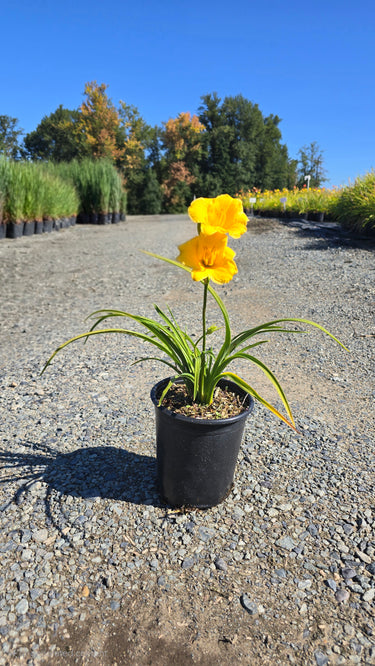
  • Bloom Description: The flowers of 'Stella de Oro' are a vibrant, golden-yellow trumpet shape, about 2.5-3 inches wide, with a soft fragrance. Each bloom lasts for just one day (hence the name "daylily"), but the plant produces numerous buds on each stalk, ensuring continuous blooms for weeks.
Ideal For

Borders, edging, mass planting, containers, pollinator gardens, low-maintenance landscapes

Leaf Description

The leaves of Hemerocallis 'Stella de Oro' are narrow, arching, and bright green, forming a dense, grass-like mound. The foliage remains attractive throughout the growing season, providing structure and texture even when not in bloom. This compact clump of foliage makes it ideal for borders or as a groundcover.

Flower Description

– Produces vibrant, golden-yellow, trumpet-shaped flowers with gently ruffled edges

– Each bloom measures approximately 2.5 to 3 inches across

– Flowers are held just above the foliage on strong, slender stems

– Blooms have a soft, sweet fragrance that attracts pollinators

– Reblooms continuously from early summer through fall, making it one of the longest-flowering daylilies

– Each individual bloom lasts only one day, but the plant produces a high volume of buds for an extended display

– Bright yellow color remains vivid in full sun and resists fading over the season

– Creates a cheerful, eye-catching accent in borders, mass plantings, or containers

Pruning & Maintenance

Pruning is minimal for 'Stella de Oro'. Deadhead spent blooms to encourage continuous flowering throughout the season. In late fall or early spring, cut back the dead foliage to the ground to allow new growth to emerge. Regular removal of old flower stalks and dead leaves helps maintain a tidy appearance.

Water Needs

'Stella de Oro' is relatively drought-tolerant once established but performs best with consistent moisture. Water regularly during the first growing season to establish strong roots, and continue watering during dry periods. It prefers well-drained soil and should not sit in waterlogged conditions.

Light Needs

Thrives in full sun to partial shade. For the best blooming performance and vibrant foliage, plant 'Stella de Oro' in a location that receives at least 6 hours of direct sunlight per day. It can tolerate partial shade, but too much shade may result in fewer blooms.

Harvesting

While 'Stella de Oro' is not commonly harvested for cut flowers, its bright, trumpet-shaped blooms can be enjoyed in floral arrangements for a short period. Each flower only lasts one day, so it is best to harvest in the morning when the blooms are fully open.

Fertilizing

Fertilize in early spring with a balanced, slow-release fertilizer or organic compost to promote healthy growth and abundant blooms. A second light feeding after the first flush of blooms can help extend the flowering period. Avoid over-fertilizing, as this can lead to excessive leafy growth at the expense of flowers.

Additional Care Tips
  • Mulching: Apply a 2-3 inch layer of mulch around the base to retain moisture, regulate soil temperature, and suppress weeds. Mulching also helps protect the shallow roots from temperature extremes.

  • Pest and Disease Resistance: 'Stella de Oro' is highly resistant to pests and diseases, making it a reliable and low-maintenance choice for gardens. Good air circulation and proper watering practices will help prevent any potential fungal issues, such as rust or leaf spot.

  • Winter Care: In colder climates, 'Stella de Oro' will die back to the ground in winter. No special winter care is needed; simply cut back the dead foliage and let the plant rest until it regrows in spring.
Pollination

'Stella D’Oro' is self-fertile and pollinated primarily by insects. While it does not require cross-pollination to produce seed, planting alongside other daylily varieties may encourage hybrid seed production for gardeners interested in propagation.

Companion Plants

Salvia nemorosa – Upright spikes of purple or blue flowers provide bold contrast and attract pollinators throughout the summer.

Coreopsis verticillata 'Zagreb' or 'Moonbeam' – Fine, airy foliage with soft yellow blooms creates a harmonious pairing and extends the blooming season.

Nepeta (Catmint) – Lavender-blue flowers and fragrant gray-green foliage add a soft, flowing texture and deter deer.

Sedum 'Autumn Joy' or 'Matrona' – Drought-tolerant succulents with fleshy foliage and late-summer pink blooms that pair well with the golden hues of the daylily.

Echinacea purpurea (Coneflower) – Tall, daisy-like flowers in purples, whites, or pinks add vertical interest and support bees and butterflies.

Geranium 'Rozanne' – Mounding groundcover with violet-blue flowers that blend well with daylilies and help fill garden gaps.

Lavandula angustifolia (English Lavender) – Fragrant, sun-loving plant with soft purple spikes that enhance color and texture contrasts.

Heuchera (Coral Bells) – Colorful foliage in tones of burgundy, bronze, or lime green creates contrast with the green strappy leaves of 'Stella D’Oro'.

Pennisetum alopecuroides (Fountain Grass) – Adds movement and soft texture with arching grass blades and fluffy seed heads.

Festuca glauca (Blue Fescue) – Compact, spiky blue foliage forms a colorful border and adds a cool-toned contrast to the warm blooms.

These companion plants not only enhance the visual impact of Hemerocallis 'Stella D’Oro' but also share similar cultural needs—full sun to light shade, well-drained soil, and low to moderate water—making them ideal for cohesive and resilient planting designs.

Flowering and Seasonality
  • Seasonality: Herbaceous perennial; dies back in winter and regrows in spring.
  • Flowering Season: Late spring to fall, with peak blooming in early summer. 'Stella de Oro' is known for its long bloom period and frequent re-blooming.
  • Bloom Description: The flowers of 'Stella de Oro' are a vibrant, golden-yellow trumpet shape, about 2.5-3 inches wide, with a soft fragrance. Each bloom lasts for just one day (hence the name "daylily"), but the plant produces numerous buds on each stalk, ensuring continuous blooms for weeks.

– Produces vibrant, golden-yellow, trumpet-shaped flowers with gently ruffled edges

– Each bloom measures approximately 2.5 to 3 inches across

– Flowers are held just above the foliage on strong, slender stems

– Blooms have a soft, sweet fragrance that attracts pollinators

– Reblooms continuously from early summer through fall, making it one of the longest-flowering daylilies

– Each individual bloom lasts only one day, but the plant produces a high volume of buds for an extended display

– Bright yellow color remains vivid in full sun and resists fading over the season

– Creates a cheerful, eye-catching accent in borders, mass plantings, or containers

Pet Friendly

No

Growing Zone
  • Zone 3
  • Zone 4
  • Zone 5
  • Zone 6
  • Zone 7
  • Zone 8
  • Zone 9

Click to enlarge