Growing Information

Growing zone guide
Growing Zone Zone 3, Zone 4, Zone 5, Zone 6, Zone 7, Zone 8, Zone 9
Sunlight Partial shade
Type of Soil Slightly acidic to neutral
Mature Height 15 to 18 inches
Maintenance Level Low maintenance
Water Requirement Moderate watering (once a week)

Learn more about this plant

Additional Information
Growth Rate

– Moderate to fast

– Mature height: 18–20 inches

– Mature spread: 36–40 inches

– Dense, mounding habit

Colorful Leaves Yes
Flowering Yes
Bloom Color Purple & Lavender
Ornamental Berries N/A
Disease resistant Yes
Cold Tolerant Yes
Heat Tolerant No
Drought Tolerant No
Deer Resistant No
Edible No
Wildlife Attraction

– Flowers attract bees and other pollinators

– Foliage may be browsed by deer and slugs unless protected

Self-pollinating Cross-pollinating
Seasonality

– Emerges in mid to late spring

– Maintains strong foliage color through summer into fall

– Blooms in midsummer

– Foliage dies back after frost; dormant in winter

Ideal For

– Bright accents in shaded beds
– Bold foliage interest
– Pairing with darker-leaved hostas
– Container plantings

Leaf Description

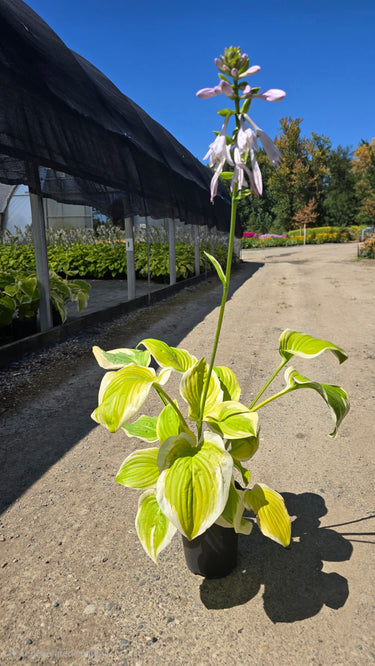
– Heart-shaped, broad leaves with glowing chartreuse centers and creamy white margins

– Leaves are thick and slightly shiny, offering improved slug resistance

– Color holds well through summer, especially with some morning sun

– Leaf texture is smooth with subtle veining

Flower Description

– Fragrant, pale lavender to white trumpet-shaped blooms

– Appear on 24–30 inch scapes in midsummer

– Fragrance is strongest in evening hours

– Adds vertical interest and attracts pollinators

Pruning & Maintenance

– Remove damaged or yellowing leaves during the season

– Cut foliage down to the ground after frost in late fall

– Remove flower scapes after blooming unless seed pods are desired

Water Needs

– Keep soil consistently moist, especially in summer heat

– Water deeply once or twice a week depending on rainfall

– Mulch helps retain soil moisture and suppress weeds

Light Needs

– Plant in early spring or fall for best establishment

– Choose a location with partial shade; morning sun tolerated, especially in cooler zones

– Prefers moist, well-drained, rich organic soil

– Plant with the crown at soil level and space plants 30–36 inches apart

– Mulch with 2 inches of compost or shredded bark to retain moisture

Harvesting

– Foliage and flowers can be cut for simple arrangements

– Best divided in early spring or late summer for propagation

Fertilizing

– Apply balanced, slow-release fertilizer in early spring

– Avoid excess nitrogen, which can reduce variegation and promote soft growth

– Top-dress with compost to improve soil over time

Additional Care Tips N/A
Pollination

– Pollinated by bees; flowers are fragrant and attract pollinators

– May produce viable seed but typically propagated by division

– Grown primarily for foliage, not seed

Companion Plants

– Heuchera for varied foliage tones and texture

– Astilbe for airy blooms and moisture compatibility

– Brunnera for cool-toned foliage contrast

– Tiarella for low-growing texture under taller hostas

– Ferns for structure and layered woodland composition

Flowering and Seasonality

– Emerges in mid to late spring

– Maintains strong foliage color through summer into fall

– Blooms in midsummer

– Foliage dies back after frost; dormant in winter

– Fragrant, pale lavender to white trumpet-shaped blooms

– Appear on 24–30 inch scapes in midsummer

– Fragrance is strongest in evening hours

– Adds vertical interest and attracts pollinators

Pet Friendly

Yes

Growing Zone
  • Zone 3
  • Zone 4
  • Zone 5
  • Zone 6
  • Zone 7
  • Zone 8
  • Zone 9

Click to enlarge